A personal message from Oregon Chang

Have you had a close encounter story or witnessed something unusual that you would like to share?

Do you wish to collaborate with Asia Paranormal through link or content exchange?

Do you have any enquiries or feedback?

Email us at AsiaParanormal@gmail.com

We look forward to hearing from you!

Follow us on Subscribe Asia Paranormal in your favorite reader. Follow Asia Paranormal in Facebook. Follow Asia Paranormal in Twitter. Follow Asia Paranormal Youtube channel.

Vote for us! We are listed at the www.topparanormalsites.com website. Click here to vote for us.. Thank you :-)

Best regards, on behalf of team AsiaParanormal

Master Orthodox Occultist Oregon Chang, The 17th generation Disciple of Seven Stars Sword Master Hebei China

Showing posts with label China. Show all posts

Wednesday, December 12, 2012

Banana Tree Spirit spellcrafts Method


Many spells, especially divinition spells require the invocation of certain spirits. Well, this can be good and bad. For the beginner, i'd advice against it. Amongst the dangers of spiritual invocations are possesion, where the spirit takes hold of your body. Although most spirits are virtually harmless, there are those who, over the years have gotten their own brand of magic, and it is there spirits you have to watch out for.

The ancient art of summoning spirits is known as necromancy. In some places, experienced necromancers summon spirits to posses them temporarily to get in contact with the "other side".

[Click here to read full article]
Read more >>

Tuesday, December 11, 2012

Method to summon Banana Tree Spirit


Local Chinese believe that some banana plants have spirit dwellers. This is especially true that if a banana plant is smeared with human blood; hence the banana plantation workers are very careful when working around banana plants. These types of spirits are normally manifested as female spirits. In the perspective of feng shui, banana plants are said of ‘yin’ type and tend to attract spirits.


Legend has it that the lady spirit of a banana plant is extremely beautiful and can be summoned for various purposes. These rituals must be done when a banana plant is blossoming:


[Click here to read full article]
Read more >>

Wednesday, December 5, 2012

Chinese Lanterns: Rashes of UFOs Appearing Along the India/China Border?

It’s is something we’ve been hearing about for weeks now: a number of news outlets have carried the story of what literally could be described as rashes of unidentified luminescent objects, seen hovering in the skies near the border between the Asian countries of India and China. While theories exist, news outlets (particularly in India) have seemed to indicate that the country’s military is concerned about the presence of these objects, and what their true origin may be. Others, however, have put forth the claim that these objects are simply mundane appearances of “Chinese Lanterns” (a famous, and very convenient “explanation” issued for the majority of UFO reports that emerge in recent years). But could there be something more to the stories of odd lights we’ve been hearing of in recent weeks? Are they truly the mere result of some mundane phenomenon, or might there be evidence of some technological presence present here? The reports are indeed curious, and although conventional explanations can’t be ruled out, official studies seem to remain inconclusive in determining what kind of phenomenon, specifically, may be underlying these strange appearances. The craft in question have variously been described as luminous “orbs” or “lobes,” and are objects capable of emitting a glowing light at both night and daytime. According to a report featured at the World News Tomorrow Website, which referenced material that originally appeared in India Today, military officials in the East do seem to remain stumped by the objects and their curious appearances: [Click here to read full article]
Read more >>

Tuesday, October 30, 2012

WereFox of the Oriental

Werefox or Kitsune

Magic: Kitsune abilities, foxmagic, and foxtails.

Kitsune were known for many abilities. The list of things kitsune were capable of seemed to change from story to story, but for the most part, many things were common enough to warrant being listed as 'kitsune powers'. These powers are called 'fox magic'.

[Click here to read full article]
Read more >>

Sunday, October 21, 2012

Weretigers or Werecats in Asian Mythlogy

In the cultures of the West, Werewolves and Vampires are very much popular.
However in the East, where Asians lived in, it is instead more about Weretigers.

While werewolves were thought to be the predators of vampire by nature but however, most of the time these predators are in the control of their prey, the Vampires in most stories.

So , Werewolves are by nature predators of Vampires and in turn the are the prey to their predators , the Weretigers whom are mostly Asian, their distant cousin!

We have all heard of the werewolf. The werewolf has a distant cousin, so to speak. Not as well known outside of Asia, is a mythical creature called a weretiger, also more recently known as a werecat. Before the late 19th century they were all known as weretigers. They are not to be mistaken for the spirit tiger which is a familiar under the control of a supernatural being or a “nat”. The familiar is used to do the bidding of the nat.

[Click here to read full article]
Read more >>

Thursday, October 18, 2012

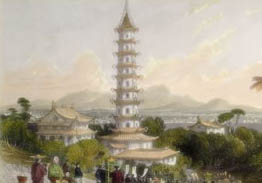
Ancient Asian Wonders of the World ( Porcelain Tower of Nanjing 南京陶塔 )


The Porcelain tower of Nanjing, also known as the Temple of Gratitude, is one of the marvels that appears on the list of the Seven medieval wonders of the world. This great construction was the highest building in China at the time of its construction and was set to dominate the banks of the River Yangtze for over 400 years before it met its grisly end. The porcelain tower of Nanjing was one of the most breathtaking constructions of its time and truly deserves its place in the 7 wonders of the medieval world category.


[Click here to read full article]
Read more >>

Wednesday, October 17, 2012

Ancient Asian Wonders of the World ( Great Wall )

Why and what makes the Great wall of China a Wonder of Ancient Asia ?

Please view videos :

The Great Wall of China is a series of stone and earthen fortifications in northern China, built, rebuilt, and maintained between the 5th century BC and the 16th century to protect the northern borders of the Chinese Empire. Since the 5th century BC, several walls have been built that were referred to as the Great Wall. One of the most famous is the wall built between 220206 BC by the first Emperor of China, Qin Shi Huang. Little of that wall remains; the majority of the existing wall were built during the Ming Dynasty.

The Great Wall stretches from Shanhaiguan in the east to Lop Nur in the west, along an arc that roughly delineates the southern edge of Inner Mongolia. The most comprehensive archaeological survey, using advanced technologies, has recently concluded that the entire Great Wall, with all of its branches, stretches for 8,851.8 km (5,500.3 mi). This is made up of 6,259.6 km (3,889.5 mi) of sections of actual wall, 359.7 km (223.5 mi) of trenches and 2,232.5 km (1,387.2 mi) of natural defensive barriers such as hills and rivers.


Read more >>

Monday, October 15, 2012

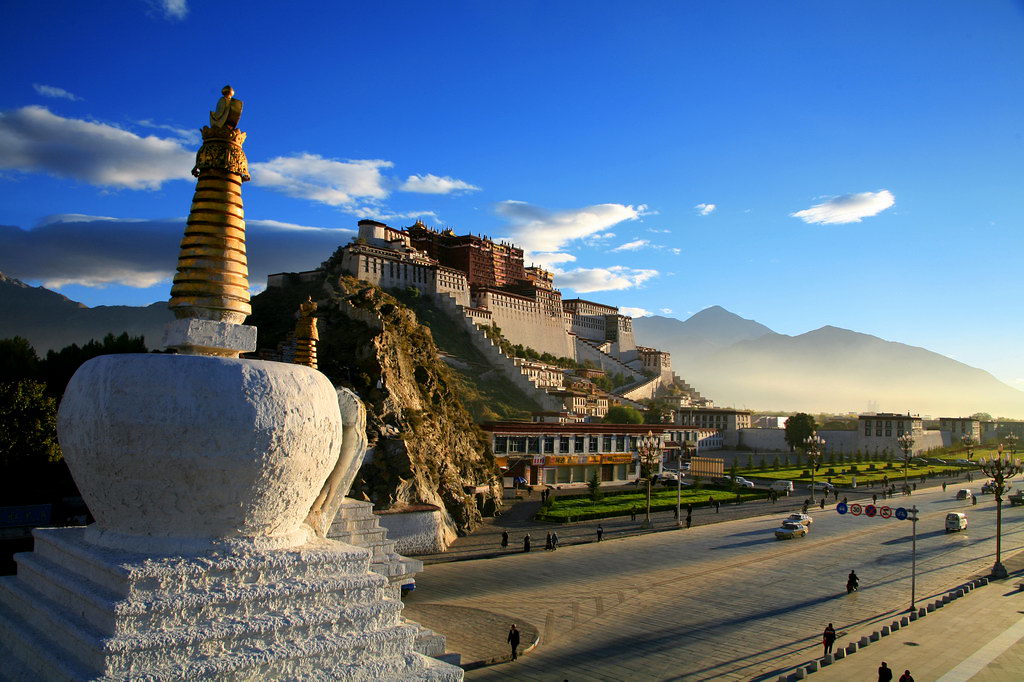
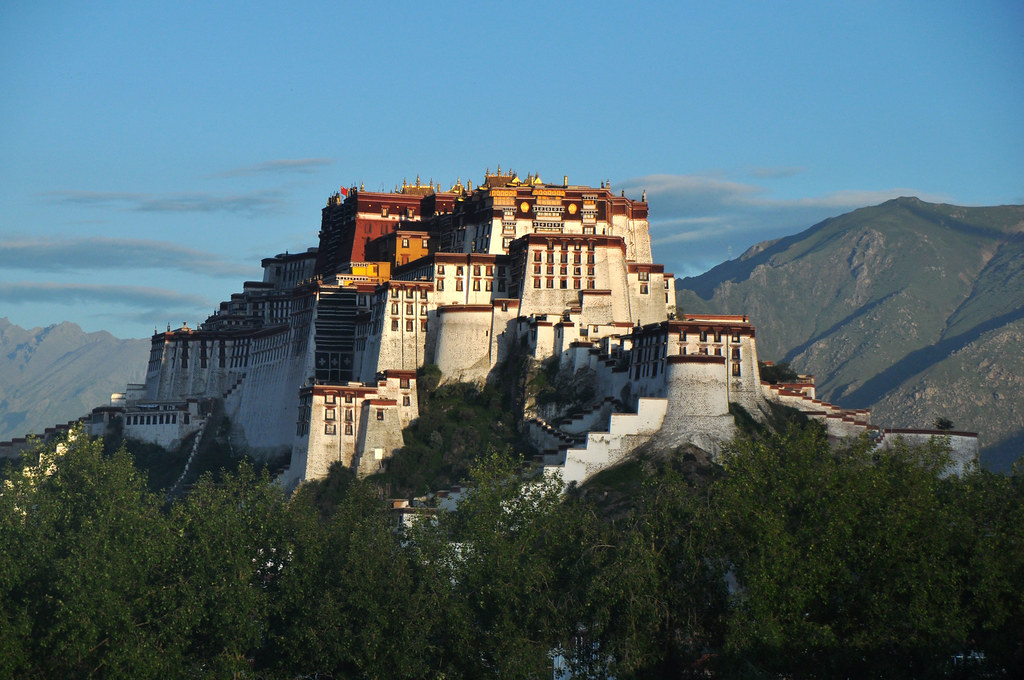
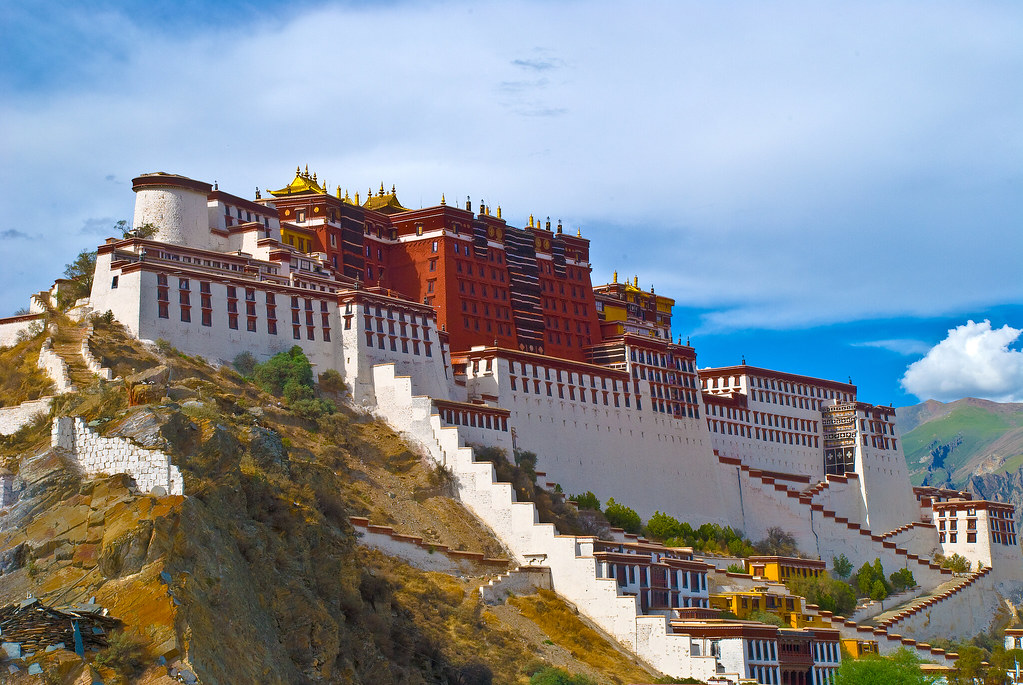
Ancient Asian Wonders of the World ( Potala Palace)


Potala Palace, the Indestructible Palace which is Earthquake Proof is in Tibet , China. It is classified as one of the Ancient Asian Wonders of the World


The building measures 400 metres east-west and 350 metres north-south, with sloping stone walls averaging 3 m. thick, and 5 m. (more than 16 ft) thick at the base, and with copper poured into the foundations to help proof it against earthquakes


[Click here to read full article]
Read more >>

Tuesday, October 9, 2012

Mystery Maze on Gobi desert

Read more >>

Monday, October 8, 2012

Something Strange spotted in Gobi desert


What is China up to? An extremely odd collection of objects has been discovered in the Gobi Desert, close to the border with Mongolia – and nobody is quite sure exactly what they are.

The objects were spotted using Google Maps and resulted in a substantial amount of speculation – especially among conspiracy theorists. Could we be looking at China’s equivalent of Area 51? Or signs of an ancient lost civilization? Or some form of guidance system for alien spacecraft? Or …?


[Click here to read full article]
Read more >>

Sunday, October 7, 2012

Daoist (Taoist) Magic and Sorcery

What I do know however is this; In ancient China there were two types of magic being used in the Taoist world, one that is known to me by "Taoist white magic" and the other "Taoist black magic" .

White magic users were reputed to have the abilities of what you may have seen in Crouching Tiger Hidden Dragon for example, flying , healing/transferring qi to a sick person , moving their internal organs at will ect. ect. ect.


Black magic users on the other hand preferred to be deceitful and used spells and curses against their foes summoning dead martial artist and evil spirits, and demons so that they could inhabit the summoners body and fight for them and steal your opponents QI

why Taoist made Black magic is still odd to me some say it was because of the yin and yang principal or perhaps the sages were just bat-S@#$ crazy.

both used alchemy I think and texts like the I Ching is considered white magic

[Click here to read full article]
Read more >>

Friday, October 5, 2012

Truth About Feng Shui and Religion

Is feng shui a religion? You might think so depending on what kind of feng shui book you are reading. Feng shui comes from China where the most popular religious practice is Buddhism.

Feng shui is not a Buddhist practice. Some Buddhists practice feng shui and some don‘t. When feng shui was introduced to America, it was altered from its classical form to what is known as Western or New Age feng shui.

They made it easy and fun so we would try it. American pop culture loves fun, easy things. Happy Buddhas, fortune kitties, lucky gods, lucky frogs, love symbols, wealth corners, and lucky bamboo plants are fun.

Today, businesses are even marketing products as having “good feng shui”. My grocery store sells bamboo plants with signs on them that read “lucky bamboo“.

[Click here to read full article]
Read more >>

Sunday, September 30, 2012

History of Mid-Autumn Festival

The Mid-autumn Festival dates back over 3,000 years, to moon worshipping in the Shang Dynasty. Ancient Chinese emperors worshiped the moon in the autumn, as they believed that the practice would bring them another harvest year. The word “mid-autumn” first appeared in the Zhou Dynasty. During that time, worshipping the moon on the 15th night of the eighth month had spread to high officials and rich families. The practice entailed placing a large table in the middle of the yard under the moon, and they put offerings such as fruits and snacks on the table. However, not until the early Tang Dynasty was the day officially celebrated as a traditional festival. It then became an established festival during the Song Dynasty, and has become as popular as the Spring Festival since the Ming and Qing Dynasties. Appreciating the moon has been a custom since the Tang Dynasty (618–907). Not only the rich merchants and officials, but also the common citizens, liked appreciating the moon together at that time. The rich merchants and officials held big parties in their big courts. They drank and appreciated the bright moon. Music and dances were also indispensable. The common citizens just prayed to the moon for a good harvest. The tradition of eating mooncakes during the festival bgan in Yuan Dynasty. At the end of Yuan Dynasty (1271–1368, a dynasty ruled by the Mongols), the Han people’s army wanted to overthrow the rule of the Mongols, so they planed an uprising, but they had no way to inform every Han who wanted to join them of the time of the uprising without being discovered by the Mongols. One day, the military counselor of the Han people’s army, Liu Bowen, thought out a stratagem related to mooncakes. Liu Bowen asked his soldiers to spread the rumor that there would be a serious disease in winter and eating mooncakes was the only way to cure the disease, then he asked soldiers to write "uprising, at the night of Mid-Autumn Festival" on papers and put them into mooncakes then sell them to common Han people. When the night of the Mid-Autumn Festival came a huge uprising broke out. From then on, people eat mooncakes every Mid-Autumn Festival to commemorate the uprising. [Click here to read full article]
Read more >>

Legend of Mid Autumn Festival

On the 15th day of the 8th month of the Chinese calendar every year, Mid-Autumn Festival (Zhong Qiu Jie) or what some called as Moon cake Festival or Lantern festival is being celebrated. On this very day, it will always be of a full moon without fail! The Moon on this very night will be always very big, bright and round. If you were looking at the moon, you will see some images.

What most people would see would be either a Maiden or a Rabbit! Very few people will see a toad! You should not see any other images than these 3 images. There is an explanation in fact to why it can only be one of those 3 images.

There are however several versions of this story and henceforth many arguments as a result. It has been said that each provinces of China has their own individual versions. The story that I know when I was a kid is as follows:

  [Click here to read full article]
Read more >>

Saturday, September 29, 2012

Chinese Cupid God, Yue Lao


Yue Lao

The Chinese version of the cupid would be Yue Lao. Cupid to the western is a young chap who is some sort of angel that shoots love arrows. All he needs to do is to shoot his first arrow at one person followed by the second arrow at another person. The person whom had been shot by his arrow would be connected together and fall in love with each other. Yue Lao on the other hand is an old man living in the moon. He is a matchmaker as well as the god of marriages. All humans have a piece of red string. All he needs to do is to tie a knot with the red threads as one piece. Whosoever whose strings is being tied together would fall in love and come together eventually.
[Click here to read full article]
Read more >>

Yue Lao 月老 ( God of Marriage) Birthday is on August 15 of the Lunar Calendar


There are many temples and shrines establish for the worship of Yue Lao. Yue Lao is seen as an elderly man holding the book of marriage 姻缘簿, in his left hand and a walking stick in his right hand. Sometimes, the red threads can be seen too along with clay dolls symbolizing the couple. His birthday is celebrated on the 15th day of the eight lunar month the same as the Mid Autumn Festival.
In these temples, there could be couples praying for a happy marriage, singles in search of love or parents eager for their children to be married.
In Taiwan, there is an often notice board where lovers or singles leave their wishes for Yue Lao.
Yue Lao is believed to be in charged of heterosexual relationships leading to the emergence of the Gay Rabbit God in charged of homosexual relationships. In Taiwan, there is a Gay Rabbit temple dedicated to this Rabbit God.
For the days of arranged marriage to today’s individual search for their special one, Yue Lao’s special help remains relevant and sought after.


[Click here to read full article]
Read more >>

Sunday, September 16, 2012

God's Chinese Son


Much has been written about and discussed about for many years by many people

This Book is just one of the them. 
Revolutionist, Cultist, Prophet, God's Son or just a mere Rebel ?

You decide on your own


Whether read for its powerful account of the largest uprising in human history, or for its foreshadowing of the terrible convulsions suffered by twentieth-century China, or for the narrative power of a great historian at his best, God's Chinese Son must be read. At the center of this history of China's Taiping rebellion (1845-64) stands Hong Xiuquan, a failed student of Confucian doctrine who ascends to heaven in a dream and meets his heavenly family: God, Mary, and his older brother, Jesus. He returns to earth charged to eradicate the "demon-devils," the alien Manchu rulers of China. His success carries him and his followers to the heavenly capital at Nanjing, where they rule a large part of south China for more than a decade. Their decline and fall, wrought by internal division and the unrelenting military pressures of the Manchus and the Western powers, carry them to a hell on earth. Twenty million Chinese are left dead.


[Click here to read full article]
Read more >>

Saturday, September 15, 2012

God’s Chinese Son , Hong Xiuquan ( the Second Great Awakening ? )

Was the Taiping Heavenly Kingdom Rebellion the said  Second Great Awakening  of the bible ?

Who is God's Chinese Son, Hong Xiuquan ?

the below will be some extracts

====================================================


The Taiping Rebellion of 1850-1864 was a millenarian war in the literal sense of the term. Inspired and led by the visionary Hong Xiuquan, it was a campaign with the ultimate goal of establishing the Kingdom of Heaven everywhere on earth. It very nearly succeeded in overthrowing the Qing Dynasty, which had ruled China since 1644. It was the most devastating conflict of the nineteenth century. The figure usually given for the number of deaths is twenty million. Most of these were civilians who died of famine or pestilence caused by the back-and-forth struggle of Taiping and Imperial Chinese forces.

A large percentage, however, were casualties of battles comparable in size to those of the contemporary Civil War in America. Millenarian insurrections have not been rare in human history, and the nineteenth century was particularly rich with them. Few if any, however, have matched the Taiping in size, sophistication and degree of success.

This account of the Taiping movement by Jonathan D. Spence, a Sterling Professor of History at Yale, is a rare delight. Spence is a veteran sinologist, notable for maintaining his critical integrity in a field traditionally marred by political kowtowing. The literature on the Taiping is understandably considerable, and a book on the subject could easily become distended into a general study of Chinese culture or of millenarian movements. Spence keeps close to the narrative history, giving just enough background information on Chinese (particularly southern Chinese) folk customs and religious beliefs to make the story comprehensible.

The result is an account that is objective but sympathetic to the principal figures. The book is short on analysis and uses speculation only to cover inevitable gaps in the sources. All in all, this is a very good way to cover a large subject.

In outline, at least, the history of the Taiping resembles the history of the Third Reich in its melodramatic simplicity. A prophet of humble birth had a vision. After a time of confusion and war, he formed a little cult. At first obscure, the cult suddenly became a crusading army, the Kingdom of Heaven on the march. In a few years they seized the second city of the empire and continued to expand militarily even as they established the divine order on earth.

The millennium turned out to be a nightmare, however, a totalitarian state racked by bloody purges. As his competent ministers died or fled, the prophet increasingly lost touch with reality. When he died, isolated in his palace during the final siege of his capital by the resurgent forces of the old order, the Kingdom of Heaven collapsed. In China and in Europe, the drama took just over half a generation to enact.


[Click here to read full article]
Read more >>

Friday, September 14, 2012

The Brother of Jesus Christ in China , Hong Xiu Quan


The Taiping Rebellion (1851-1864) is an event that has been lost in time and recently ignored except by the most passionate scholar of China. Even many who consider themselves students of modern China would not recognize the name Hong Xiuquan. Yet, this cataclysmic spectacle claimed more lives than any other world event excepting World War II. During this time of turmoil, over 20,000,000 Chinese died and the Qing Dynasty tottered on the brink of fall six decades before its eventual collapse. 

How was this failed member of the scholar gentry, who believed himself to be the younger brother of Jesus Christ and, thus, "God's Chinese Son" able to gather armies and challenge the Qing Mandate of Heaven? Previous Christian missions had been rewarded with little success. Yet, Hong's version of the gospel was indigenous and was introduced during a period of enormous population growth, goading poverty, and extreme economic dislocation. It was this combination of factors as much as his religious teachings that attracted the multitudes to the teachings of Hong Xiuquan. 

The eventual failure of the movement may be attributed to Hong's imperial and deistic pretensions, internal discord among the Taiping leadership, and foreign support for a dynasty that had recently yielded enormous concessions to European governments and traders. 

A student of this period may easily be bogged down in the theological tracts and imperial internecine warfare. For a true understanding of the movement and its leader, consult the works of Jonathon Spence* and approach your task using this quote from John Patrick Davies Jr. as a guide. 

". . .Had it not been for the great groundswell of popular discontent, Hung (Hong) would not have gone beyond an obscure religious crackpot, unnoticed in history." 
  
*The most interesting work on the period is "God's Chinese Son." Two lectures, which Spence gave at Baylor University in 1996, are also informative. These lectures have been reprinted under the title, "The Taiping Version of a Christian China."


[Click here to read full article]
Read more >>

Friday, September 7, 2012

False Alarm of Ghost in Red in 2011 ( China Beijing Subway Train)

Among the many ghosts, the ghost that the Chinese fears the most would be the Chinese ghost in red. However, there was one such "ghost" which became a amusement to the Chinese of China. in the end everyone realize that this ghost was fake you may refer to the below pictures and video

1) "Ghost" is somewhere, not that obvious and visible yet


2) "Ghost" Has Appeared ! boarding the Train with everyone


3) The " Ghost "  is next to you !


4) Ghost ? Ghost ?  Ghost ?


5) Hey SISTER ! you are a Human


6) FAKE Ghost discovered


 A "ghost" wearing a long red dress, was spotted on a subway train in Beijing, China. The woman who was also wearing a pair of red shoes with embroidery on them, appeared at Jingsong station and boarded a train. Passengers were apprehensive after seeing her standing still at the station alone in the beginning, but after finding out she was a real person, burst into laughter.

 Many curious passengers took out their cellphones and cameras to record down the pale-looking "ghost-like" woman whose long hair covered most of her face. Some even sat next to her to pose for pictures. A clip of the incident, posted on the Internet has gone viral. Netizens believe that it was a promotional stunt planned by the crew of Blood Stained Shoes, as "ghost" looks similar to the one in the movie.


[Click here to read full article]
Read more >>
 
Asia Paranormal Google Page Rank
AsiaParanormal Blogger Template "Sleek 2" Designed by HypeSeek © 2012