A personal message from Oregon Chang

Have you had a close encounter story or witnessed something unusual that you would like to share?

Do you wish to collaborate with Asia Paranormal through link or content exchange?

Do you have any enquiries or feedback?

Email us at AsiaParanormal@gmail.com

We look forward to hearing from you!

Follow us on Subscribe Asia Paranormal in your favorite reader. Follow Asia Paranormal in Facebook. Follow Asia Paranormal in Twitter. Follow Asia Paranormal Youtube channel.

Vote for us! We are listed at the www.topparanormalsites.com website. Click here to vote for us.. Thank you :-)

Best regards, on behalf of team AsiaParanormal

Master Orthodox Occultist Oregon Chang, The 17th generation Disciple of Seven Stars Sword Master Hebei China

Showing posts with label Historical Mysteries. Show all posts

Friday, October 19, 2012

Ancient Asian Wonders of the World (Pretra of Jordan )

Why and what makes Preta an ancient Asian wonder of the world ?
view videos as follows :


Petra Jordan one of the new world wonders, and rightfully so. Enjoy this spectacular rose red ancient city. The Treasury and Monastery Mysterious lands mythical locations paranormal activity ufo sighting ghost sighting Archaeologic site in Jordan famous for its many stone structures carved in rock. Re-discovered in 1812 by the Swiss explorer Johann Burckhardt, Petra was the capital of the ancient Nabateans and was the center of their caravan trade. They controlled the flow of water to the city creating a natural oasis


Al Khazneh, one of the ancient world's most magnificent ancient megastructures which humans display formidable resourcefulness and courageous endeavour to create. It was generally believed to be built between 100 BC and 200 AD. Petra is a historic and archaeological city in the Jordanian governorate of Ma'an that has rock cut architecture and water conduits system. Established sometime around the 6th century BC as the capital city of the Nabataeans, it is a symbol of Jordan as well as its most visited tourism attraction. It lies on the slope of Mount Hor in a basin among the mountains which form the eastern flank of Arabah, the large valley running from the Dead Sea to the Gulf of Aqaba. Petra was chosen as one of the New Seven Wonders of the World in July 7, 2007 and a World Heritage Site since 1985. Petra was chosen by the BBC as one of "the 40 places you have to see before you die". The site remained unknown to the Western world until 1812, when it was introduced by Swiss explorer Johann Ludwig Burckhardt. Stations 19 through 26 of the stations list of Exodus are places associated with Petra. (The stations list is the list of the 42 Stations or Mansions visited by the Israelites following their exodus from Egypt as described in the Bible). This part of the country was Biblically assigned to the Horites, the predecessors of the Edomites.

Read more >>

Thursday, October 18, 2012

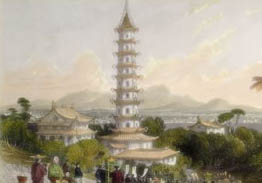
Ancient Asian Wonders of the World ( Porcelain Tower of Nanjing 南京陶塔 )


The Porcelain tower of Nanjing, also known as the Temple of Gratitude, is one of the marvels that appears on the list of the Seven medieval wonders of the world. This great construction was the highest building in China at the time of its construction and was set to dominate the banks of the River Yangtze for over 400 years before it met its grisly end. The porcelain tower of Nanjing was one of the most breathtaking constructions of its time and truly deserves its place in the 7 wonders of the medieval world category.


[Click here to read full article]
Read more >>

Wednesday, October 17, 2012

Ancient Asian Wonders of the World ( Great Wall )

Why and what makes the Great wall of China a Wonder of Ancient Asia ?

Please view videos :

The Great Wall of China is a series of stone and earthen fortifications in northern China, built, rebuilt, and maintained between the 5th century BC and the 16th century to protect the northern borders of the Chinese Empire. Since the 5th century BC, several walls have been built that were referred to as the Great Wall. One of the most famous is the wall built between 220206 BC by the first Emperor of China, Qin Shi Huang. Little of that wall remains; the majority of the existing wall were built during the Ming Dynasty.

The Great Wall stretches from Shanhaiguan in the east to Lop Nur in the west, along an arc that roughly delineates the southern edge of Inner Mongolia. The most comprehensive archaeological survey, using advanced technologies, has recently concluded that the entire Great Wall, with all of its branches, stretches for 8,851.8 km (5,500.3 mi). This is made up of 6,259.6 km (3,889.5 mi) of sections of actual wall, 359.7 km (223.5 mi) of trenches and 2,232.5 km (1,387.2 mi) of natural defensive barriers such as hills and rivers.


Read more >>

Tuesday, October 16, 2012

Taj Mahal May not be a Tomb but instead a Palace Temple to Shiva

Is there more to meets the eye ?
Has History deceived us all ?
or is this claim wrong ?

you decide


Taj mahal is not a tomb, it was an ancient shiva temple (Taj mahal--The real truth)

Read more >>

Monday, October 15, 2012

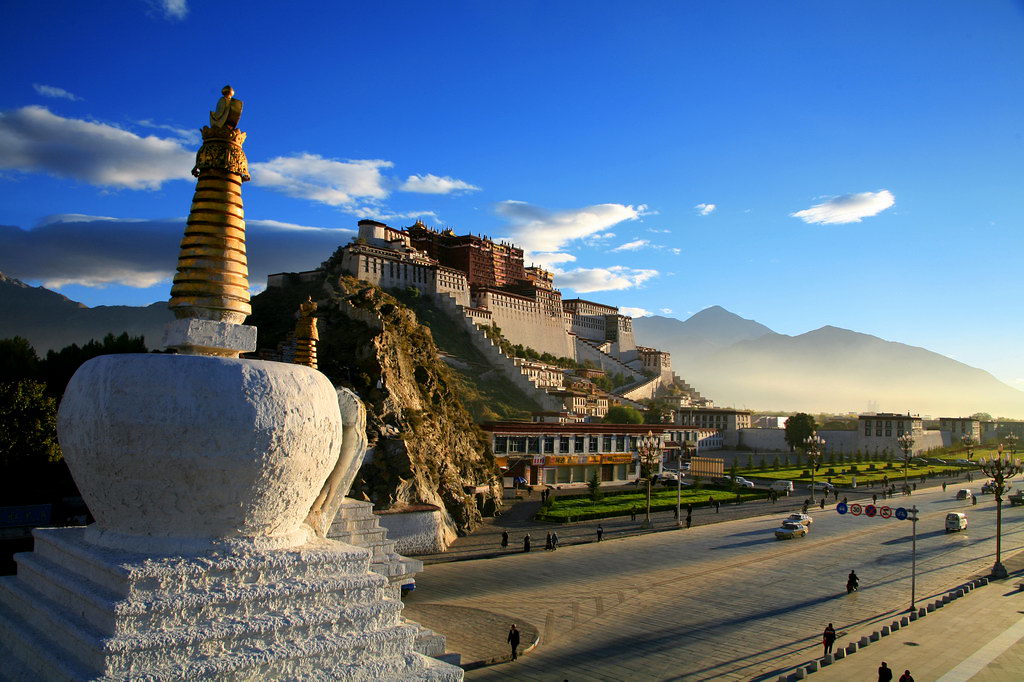
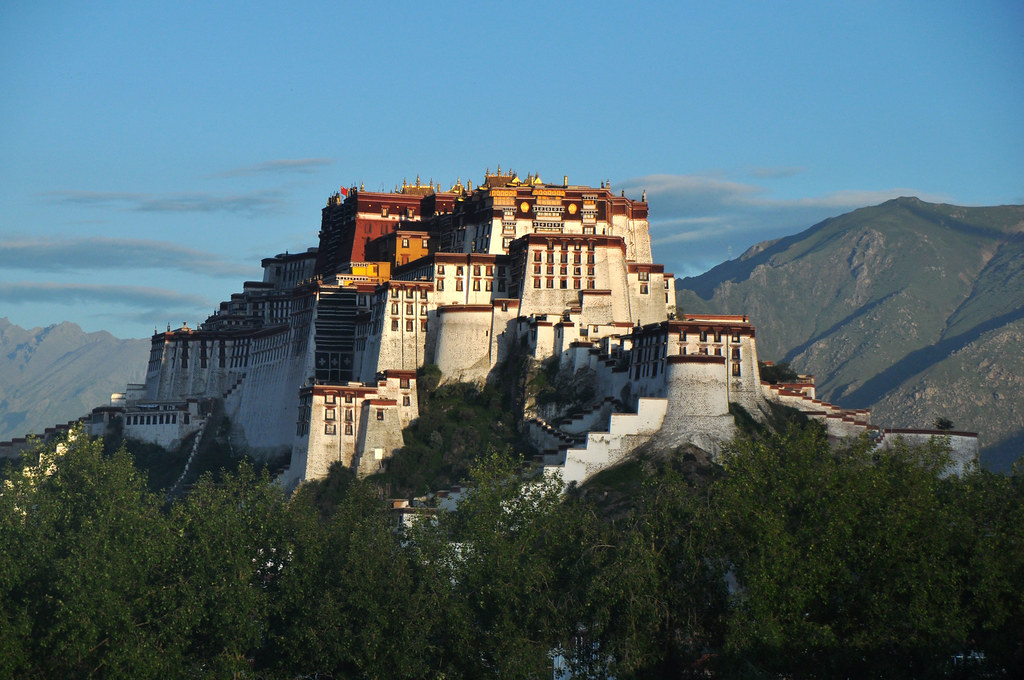
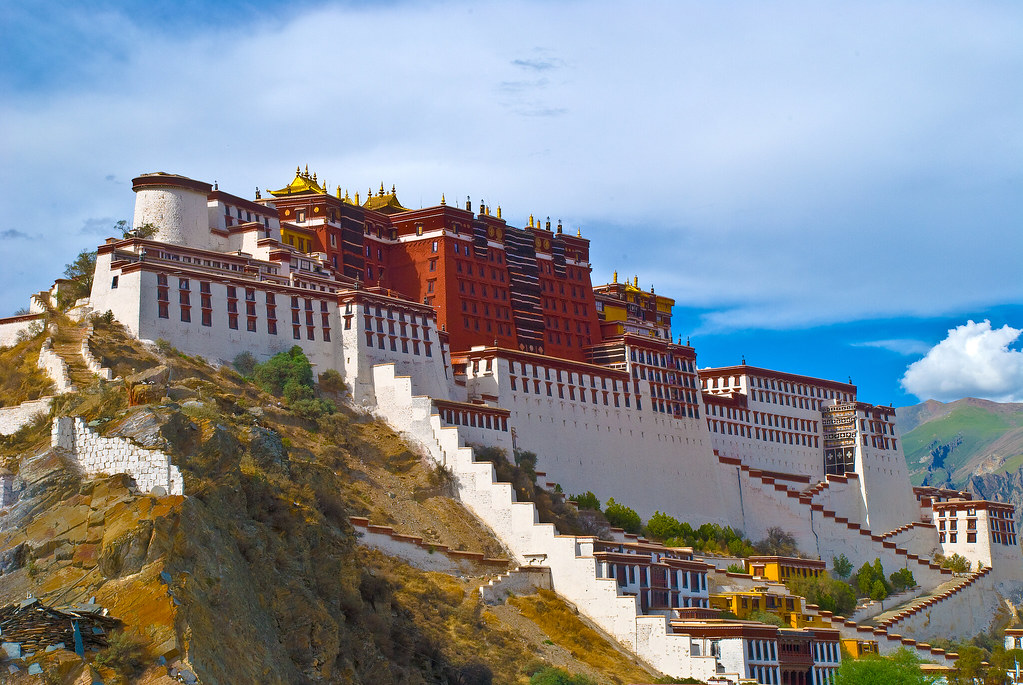
Ancient Asian Wonders of the World ( Potala Palace)


Potala Palace, the Indestructible Palace which is Earthquake Proof is in Tibet , China. It is classified as one of the Ancient Asian Wonders of the World


The building measures 400 metres east-west and 350 metres north-south, with sloping stone walls averaging 3 m. thick, and 5 m. (more than 16 ft) thick at the base, and with copper poured into the foundations to help proof it against earthquakes


[Click here to read full article]
Read more >>

Ancient Asian Wonders of the World ( Taj Mahal)

What and why makes the Taj Mahal an ancient Asian wonder of the world ?

Please view video as follows :

The Taj Mahal (also "the Taj"), located in Agra, is considered the finest example of Mughal architecture, a style that combines elements from Persian, Turkish, Indian, and Islamic architectural styles. The focus of the Taj Mahal is the white marble tomb, which stands on a square plinth consisting of a symmetrical building with an iwan, an arch-shaped doorway, topped by a large dome. It was built by the Mughal emperor Shah Jahan (1628-1658), grandson of Akbar the great, in the memory of his queen Arjumand Bano Begum, entitled 'Mumtaz Mahal'. The plinth and tomb took roughly 12 years to complete. The remaining parts of the complex took an additional 10 years and were completed in order of minarets, mosque and jawab and gateway. A labour force of 20,000 workers was recruited across northern India.


The Taj Mahal was built on a parcel of land to the south of the walled city of Agra. Shah Jahan presented Maharajah Jai Singh with a large palace in the center of Agra in exchange for the land. An area of roughly three acres was excavated, filled with dirt to reduce seepage and leveled at 50 meters above riverbank. In the tomb area, wells were dug and filled with stone and rubble as the footings of the tomb. Instead of lashed bamboo, workmen constructed a colossal brick scaffold that mirrored the tomb. The scaffold was so enormous that foremen estimated it would take years to dismantle. According to the legend, Shah Jahan decreed that anyone could keep the bricks taken from the scaffold and thus was dismantled by peasants overnight. A fifteen kilometer tamped-earth ramp was built to transport marble and materials to the construction site. Teams of twenty or thirty oxen were strained to pull blocks on specially constructed wagons. An elaborate post-and-beam pulley system was used to raise the blocks into desired position. Water was drawn from the river by a series of purs, an animal-powered rope and bucket mechanism into a large storage tank and raised to large distribution tank. It was passed into three subsidiary tanks, from which it was piped to the complex.

The plinth and tomb took roughly 12 years to complete. The remaining parts of the complex took an additional 10 years and were completed in order of minarets, mosque and jawab and gateway. Since the complex was built in stages, discrepancies exist in completion dates due to differing opinions on "completion". For example, the mausoleum itself was essentially complete by 1643, but work continued on the rest of the complex. Estimates of the cost of the construction of Taj Mahal vary due to difficulties in estimating construction costs across time. The total cost of construction has been estimated to be about 32 million Rupees.

The Taj Mahal was constructed using materials from all over India and Asia. Over 1,000 elephants were used to transport building materials during the construction. The translucent white marble was brought from Rajasthan, the jasper from Punjab, jade and crystal from China. The turquoise was from Tibet and the Lapis lazuli from Afghanistan, while the sapphire came from Sri Lanka and the carnelian from Arabia. In all, twenty eight types of precious and semi-precious stones were inlaid into the white marble.

A labour force of twenty thousand workers was recruited across northern India. Sculptors from Bukhara, calligraphers from Syria and Persia, inlayer from southern India, stonecutters from Baluchistan, a specialist in building turrets, another who carved only marble flowers were part of the thirty-seven men who formed the creative unit. Some of the builders involved in construction of Taj Mahal are:

The main dome was designed by Ismail Afandi (a.k.a Ismail Khan),of the Ottoman Empire and was considered as a premier designer of hemispheres and domes.
Ustad Isa of Persia (Iran) and Isa Muhammad Effendi of Persia (Iran), trained by Koca Mimar Sinan Agha of Ottoman Empire, are frequently credited with a key role in the architectural design, but there is little evidence to support this claim.
'Puru' from Benarus, Persia (Iran) has been mentioned as a supervising architect.
Qazim Khan, a native of Lahore, cast the solid gold finial.
Chiranjilal, a lapidary from Delhi, was chosen as the chief sculptor and mosaicist.
Amanat Khan from Shiraz, Iran was the chief calligrapher. His name has been inscribed at the end of the inscription on the Taj Mahal gateway.
Muhammad Hanif was a supervisor of masons and Mir Abdul Karim and Mukkarimat Khan of Shiraz, Iran (Persia) handled finances and management of daily production.


Commissioned in 1632 by the Mughal emperor Shah Jahan to house the remains of his cherished wife, the Taj Mahal stands on the southern bank of the Yamuna River in Agra, India. The famed mausoleum complex, built over more than 20 years, is one of the most outstanding examples of Mughal architecture, which combined Indian, Persian and Islamic influences. At its center is the Taj Mahal itself, built of shimmering white marble that seems to change color depending on the sunlight or moonlight hitting its surface. Designated a UNESCO World Heritage site in 1983, it remains one of the world's most celebrated structures and a stunning symbol of India's rich history.

Taj Mahal: Shah Jahan's Romantic Gesture
Shah Jahan was a member of the Mughal dynasty that ruled most of northern India from the early 16th to the mid 18th-century. After the death of his father, King Jahangir, in 1627, Shah Jahan emerged the victor of a bitter power struggle with his brothers, and crowned himself emperor at Agra in 1628. At his side was Arjumand Banu Begum, better known as Mumtaz Mahal ("Chosen One of the Palace"), whom he married in 1612 and cherished as the favorite of his three queens.

In 1631, Mumtaz Mahal died after giving birth to the couple's 14th child. The grieving Shah Jahan, known for commissioning a number of impressive structures throughout his reign, ordered the building of a magnificent mausoleum across the Yamuna River from his own royal palace at Agra. Construction began around 1632 and would continue for the next two decades. The chief architect was probably Ustad Ahmad Lahouri, an Indian of Persian descent who would later be credited with designing the Red Fort at Delhi. In all, more than 20,000 workers from India, Persia, Europe and the Ottoman Empire, along with some 1,000 elephants, were brought in to build the mausoleum complex.


Wonderfull documentary by National Geographic about the Taj Mahal, world's greatest and divine symbol of true love.


Read more >>

Sunday, October 14, 2012

Ancient Asian Wonders of the World ( Mausoleum at Halicarnassus )

why and what makes Mausoleum at Halicarnassus a wonder of ancient world of Asia in present day Turkey?

View the Video

The Mausoleum at Halicarnassus or Tomb of Mausolus (in Greek, Μαυσωλεῖον τῆς Ἁλικαρνασσοῦ) was a tomb built between 353 and 350 BC in the Greek colony of Halicarnassus for Mausolus, a satrap in the Persian Empire, and Artemisia II of Caria, his wife and sister. The structure was designed by the Greek architects Satyros and Pythis. It stood approximately 45 m (148 ft) in height, and each of the four sides was adorned with sculptural reliefs created by each one of four Greek sculptors — Leochares, Bryaxis, Scopas of Paros and Timotheus. The finished structure was considered to be such an aesthetic triumph that Antipater of Sidon identified it as one of his Seven Wonders of the Ancient World.


The Mausoleum of Halicarnassus:
The Mausoleum at Halicarnassus or Tomb of Mausolus (in Greek, Μαυσωλεῖον τῆς Ἁλικαρνασσοῦ) was a tomb built between 353 and 350 BC at Halicarnassus (present Bodrum, Turkey) for Mausolus, a satrap in the Persian Empire, and Artemisia II of Caria, his wife and sister. The structure was designed by the Greek architects Satyros and Pythius of Priene. The Mausoleum stood approximately 45 m (148 ft) in height, and each of the four sides was adorned with sculptural reliefs created by each one of four Greek sculptors — Leochares, Bryaxis, Scopas of Paros and Timotheus. The finished structure of the mauloseum was considered to be such an aesthetic triumph that Antipater of Sidon identified it as one of his Seven Wonders of the Ancient World.


Read more >>

Saturday, October 13, 2012

Ancient Asian Wonders of the World (Hagia Sophia)

Hagia Sophia was a legacy of the Byzantium (Roman Empire), the Eastern Roman Empire established in present day Turkey.

What and why makes this building a wonder ?

View the videos


Hagia Sophia-The legacy of Byzantium
Hagia Sophia Cathedral (Holy wisdom) was build up by two Greek architects Anthemius and Isidorus during the reign of Emperor Justinian.

Hagia Sophia (from the Greek: Ἁγία Σοφία, "Holy Wisdom"; Latin: Sancta Sophia or Sancta Sapientia; Turkish: Aya Sofya) is a former Orthodox patriarchal basilica, later a mosque, and now a museum in Istanbul, Turkey. From the date of its dedication in 360 until 1453, it served as the cathedral of Constantinople, except between 1204 and 1261, when it was converted to a Roman Catholic cathedral under the Latin Patriarch of Constantinople of the Western Crusader established Latin Empire. The building was a mosque from 29 May 1453 until 1934, when it was secularized. It was opened as a museum on 1 February 1935


Hagia Sophia (Άγια Σοφία in Greek), the Church of Holy Wisdom, known variously as Sancta Sophia in Latin or Ayasofya in Turkish, is an ancient cathedral of the Church of Constantinople located in modern-day Istanbul, Turkey. It was converted to a mosque by the Turks and is now used as a museum. It is universally acknowledged as one of the great buildings of the world and a reference point in history of architecture. (The church is sometimes mistakenly called "Saint Sophia," as though it were named for a saint called Sophia.)

The first great church on the site was built by Constantius II, the son of Constantine the Great, but was burned down during the Nika riots of 532. The building was rebuilt in its present form between 532 and 537 under the personal supervision of emperor Justinian the Great. It is one of the greatest surviving examples of Byzantine architecture. Of great artistic value was its decorated interior with mosaics and marble pillars and coverings. The temple itself was so richly and artistically decorated that Justinian is believed to have said Νενίκηκά σε Σολομών: "Solomon, I have surpassed you!"
Interior of Hagia Sophia

The architects of the church were Isidore of Miletus and Anthemius of Tralles, professors of geometry at the University of Constantinople. Justinian's basilica was at once the culminating architectural achievement of late antiquity and the first masterpiece of Byzantine architecture. Its influence, both architecturally and liturgically, was widespread and enduring in the Orthodox, Roman Catholic, and Muslim worlds alike.

Hagia Sophia is covered by a central dome with a diameter of 31 meters (102 feet), slightly smaller than the Pantheon's. The dome seems rendered weightless by the unbroken arcade of arched windows under it, which help flood the colorful interior with light. The dome is carried on pendentives: four concave triangular sections of masonry which solve the problem of setting the circular base of a dome on a rectangular base. In Hagia Sophia the weight of the dome passes through the pendentives to four massive piers at the corners. Between them the dome seems to float upon four great arches.

At the western (entrance) and eastern (liturgical) ends, the arched openings are extended by half domes carried on smaller semidomed exedras. Thus a hierarchy of dome-headed elements build up to create a vast oblong interior crowned by the main dome, a sequence unexampled in antiquity.

The structure has been severely damaged several times by earthquakes. The dome collapsed after an earthquake in 558; its replacement fell in 563. There were additional partial collapses in 989 and 1346.

All interior surfaces are sheathed with polychrome marbles, green and white with purple porphyry and gold mosaics, encrusted upon the brick. On the exterior, simple stuccoed walls reveal the clarity of massed vaults and dome.

For over 900 years the Hagia Sophia was the seat of the Patriarch of Constantinople and a principal setting for imperial ceremonies. It was converted to a mosque at the Fall of Constantinople to the Ottoman Turks under Sultan Mehmet II in 1453. Since Islam considers the depiction of the human form to be blasphemous— that is, it is iconoclastic—Hagia Sophia's iconographic mosaics were covered with plaster. For almost 500 years the principal mosque of Istanbul, Ayasofya, served as model for many of the Ottoman mosques of Constantinople such as the Shehzade Mosque, the Suleiman Mosque, and the Rustem Pasha Mosque.
Read more >>

Friday, October 12, 2012

Ancient Asian Wonders of the World ( Hanging Garden)

The Hanging Gardens are one of the Wonders of the World from the ancient world of the Asians of Babylonia , present day Iraq

Does it really exists , today ?
What makes it a Wonder and why ?

View the video below


The Hanging Gardens of Babylon are considered to be one of the original Seven Wonders of the Ancient World. They were built in the ancient city-state of Babylon, near present-day Al Hillah, Babil, in Iraq. They are sometimes called the Hanging Gardens of Semiramis (in reference to the legendary Queen Semiramis).

The gardens were supposedly built by the Babylonian king Nebuchadnezzar II around 600 BC. He is reported to have constructed the gardens to please his homesick wife, Amytis of Media, who longed for the trees and fragrant plants of her homeland Persia. The gardens were destroyed by several earthquakes after the second century BC.

View more links as below

http://www.youtube.com/watch?v=IIVw4JkXpY4&feature=share&list=LPLzYuJQeAoDY


http://www.youtube.com/watch?v=HDRze962yFU&feature=share&list=LPLzYuJQeAoDY

Read more >>

Thursday, October 11, 2012

Ancient Asian Wonders of the World ( AngKor Wat)

What truly makes this legendary and famous Historical Site, Angkor Wat of Cambodia a wonder of the world ?

Why is it consider as a wonder?
View video to learn more


How Khmer built Angkor that it is very wonderful temple in the world.
Angkor Wat  is a temple complex at Angkor, Cambodia, built by King Suryavarman II in the early 12th century as his state temple and capital city.


One of the best old ancient complex engineering structures on the world.
Before dying, here the place where we should see


There are two great complexes of ancient temples in Southeast Asia, one at Bagan in Burma, the other at Angkor in Cambodia. The temples of Angkor, built by the Khmer civilization between 802 and 1220 AD, represent one of humankind's most astonishing and enduring architectural achievements.

 From Angkor the Khmer kings ruled over a vast domain that reached from Vietnam to China to the Bay of Bengal. The structures one sees at Angkor today, more than 100 stone temples in all, are the surviving remains of a grand religious, social and administrative metropolis whose other buildings - palaces, public buildings, and houses - were built of wood and have long since decayed and disappeared


Angkor Wat is a temple complex at Angkor, Cambodia, built by King Suryavarman II in the early 12th century as his state temple and capital city. As the best-preserved temple at the site, it is the only one to have remained a significant religious centre since its foundation -- first Hindu, dedicated to the god Vishnu, then Buddhist. The temple is at the top of the high classical style of Khmer architecture.

Angkor Wat combines two basic plans of Khmer temple architecture: the temple mountain and the later galleried temple, based on early South Indian Hindu architecture, with key features such as the Jagati. It is designed to represent Mount Meru, home of the devas in Hindu mythology: within a moat and an outer wall 3.6 kilometres (2.2 mi) long are three rectangular galleries, each raised above the next. At the centre of the temple stands a quincunx of towers.

The initial design and construction of the temple took place in the first half of the 12th century, during the reign of Suryavarman II (ruled 1113 -- c. 1150). Dedicated to Vishnu, it was built as the king's state temple and capital city. In the late 13th century, Angkor Wat gradually moved from Hindu to Theravada Buddhist use, which continues to the present day.
Read more >>

Tuesday, October 9, 2012

Mystery Maze on Gobi desert

Read more >>

Monday, October 8, 2012

Something Strange spotted in Gobi desert


What is China up to? An extremely odd collection of objects has been discovered in the Gobi Desert, close to the border with Mongolia – and nobody is quite sure exactly what they are.

The objects were spotted using Google Maps and resulted in a substantial amount of speculation – especially among conspiracy theorists. Could we be looking at China’s equivalent of Area 51? Or signs of an ancient lost civilization? Or some form of guidance system for alien spacecraft? Or …?


[Click here to read full article]
Read more >>

Wednesday, July 4, 2012

Islam Creates Europe

Modern Europeans tend to have mixed feelings about the rise of Islam: Islam and Christianity have, after all, been butting heads for the last fifteen hundred years. What is not normally appreciated though is the fundamental role Islam had in creating Europe.

Islam, it will be remembered, was born in the Middle East in the early seventh century. By Mohammed’s death in 632 all the tribes of Arabia had been united into one bloc. Then, by 700, the armies of Islam had poured out of the Middle East across northern Africa and into Spain, and through Persia towards the Ganges; some had even made their way across the Sahara and into Sub-Saharan Africa. This ‘Empire’ was not destined to last: it would splinter into a hundred shards. But Islam would become the religion of the majority in these territories.

So what has this to do with Europe? First, it must be recalled that Europe did not, in any real sense, exist prior to the Islamic invasions. What we refer to as Western Civilisation was the Roman Empire and the Roman Empire was a Mediterranean Empire: with the Red Sea and Britain standing as distant and rather unimportant outliers. A family in Rome had far more in common with a family in Egyptian Alexandria than it did with a family in Britain let alone unconquered and tribal Germany. The Mediterranean was linked by city life that characterised every coastline on that sea: whereas city life never took off in what we think of today as northern Europe, where often towns and villages were lacking.

[Click here to read full article]
Read more >>

Monday, July 2, 2012

Romans in Japan?!

Beach has long since pioneered the wrong place, wrong time tags that set out examples of artifacts, languages, ideas and even DNA turning up in unexpected places or unexpected time periods. These have included such wonders as the last Latin speakers of Africa, Japanese torpedo boats in the Baltic and Turkish in medieval Cambodia. Today he wanted to push the boat out a little further with a recent report on Roman finds from Japan.

Tests have revealed three glass beads discovered in the fifth-century ‘Utsukushi’ burial mound in Nagaoka, near Kyoto, were probably made some time between the first and the fourth century, the Nara National Research Institute for Cultural Properties said.

The glass beads in question – reports differ but there seem to be three – do look Roman – note the tell-tale gilt, but they are only 5mm in length. And, as Beach has learnt to his peril, in archaeology as in linguistics, small things are more easily mistaken than bigger things. The Japanese scientists have claimed – in press releases, no academic publications have yet emerged – that their evidence is also chemical.

Japan was badly burnt in 2000 by the archaeological forgeries associated with Shinichi Fujimura. It is unlikely, after that fiasco, that as august a body as the Nara National Research Institute for Cultural Properties would have lightly announced such a discovery. Then again as always with these ‘far-out’ stories, if the glass turns out to have been made by, say, some talented craftsmen in Korea there will be no correction in the international press… So if you are reading this in 2013 go out and hunt down the academic work and see what the real deal is.

[Click here to read full article]
Read more >>

Friday, June 29, 2012

Why are there spaceships in Medieval art?

Medieval art can sometimes surprise you, with its rich colors and expressive subjects. But sometimes, you're also caught off guard by the shock of noticing the presence of a guy in a spaceship in a painting of the crucifixion. Find out why there are so many UFOs in paintings from hundreds of years ago.
So, you are wandering around the streets of Metohia, Yugoslavia, as one does, and decide to spend some time in the Visoki Decani Monastery. You take in the atmosphere slowly, looking at the thickness of the walls — built in 1330 and still standing — and the wooden sarcophagus of King Stefan. And gradually you come up to the altar, looking at the fresco above it. Reading the informational sign next to it, you see that it was completed in 1350, which, you think, is fine, but could someone explain to you why someone in 1350 was doodling space ships above the scene of the crucifixion?

To the left of Jesus, in the sky, is something that looks like a comet with a multifaceted trail behind it. One side, though, is transparent, and inside sits a small figure. In the sky on the far right of the painting is something that wouldn't look out of place in a drawing from the height of the 1960s space age. There's a rounded ship with a pointed nose cone in front, a transparent scooped window for a cockpit, and three turrets in the back that look like landing struts. The shape and aesthetic are so familiar that it's impossible to read as anything other than a spaceship.

That example is what people first point to when they talk about UFOs in medieval art, but it's not the only thing they point to. In other artwork there are golden disks shooting down lights that look like tractor beams onto the faithful. There are random ovals, with what look like wires coming out of them, over the shoulder of the Virgin Mary while she's holding the baby Jesus. There are disks in the sky in some paintings and what look like crude pictures of the flying saucer in the "I Want To Believe" poster above people's heads in others.

But the space ship in the Decani fresco is the most obvious picture of what we would think of as a spaceship. What are they?

[Click here to read full article]
Read more >>

Thursday, June 28, 2012

Mysterious 12,000-Year-Old Gobekli Tepe

June 16, 2012 Gobekli Tepe 8 miles northeast of Sanliurfa, Turkey - On Wednesday, June 13, 2012, as the sun rose I was standing on the Gobekli Tepe hilltop. Ramps have been built around the archaeological excavations of mysterious, thin, tall (16 to 19 feet), T-shaped, elegantly carved limestone pillars placed carefully in circular patterns over some 30 acres a thousand feet above the valley floor and sculpted with odd, even unrecognizable, animals, insects and humanoid figures to be detailed in Part 2.

I joined Boston University geologist Robert M. Schoch, Ph.D., his wife Katie and their Turkish tour team of Gregory Poplawski and Jack Jakubowsky from Poland and Turkish guide Suat
Dokumaci, who led our group of about 40 Americans from Istanbul through many other ancient Greek, Roman and Byzantine archaeological sites as we traveled southeastward to Gobekli Tepe during the first two weeks of June 2012.

Gobekli Tepe in Turkish means a “potbelly hill” first studied in a 1964 survey by Istanbul University and University of Chicago scientists, who concluded the hill could not be an entirely natural feature. But not until 1994 did German archaeologist Klaus Schmidt, Ph.D., begin excavating layer-by-layer, carefully dating and studying the surrounding soils as he dug.

[Click here to read full article]
Read more >>

Thursday, June 14, 2012

Huge Ancient Civilization's Collapse Explained

The mysterious fall of the largest of the world's earliest urban civilizations nearly 4,000 years ago in what is now India, Pakistan, Nepal and Bangladesh now appears to have a key culprit — ancient climate change, researchers say.

Ancient Egypt and Mesopotamia may be the best known of the first great urban cultures, but the largest was the Indus or Harappan civilization. This culture once extended over more than 386,000 square miles (1 million square kilometers) across the plains of the Indus River from the Arabian Sea to the Ganges, and at its peak may have accounted for 10 percent of the world population. The civilization developed about 5,200 years ago, and slowly disintegrated between 3,900 and 3,000 years ago — populations largely abandoned cities, migrating toward the east.

"Antiquity knew about Egypt and Mesopotamia, but the Indus civilization, which was bigger than these two, was completely forgotten until the 1920s," said researcher Liviu Giosan, a geologist at Woods Hole Oceanographic Institution in Massachusetts. "There are still many things we don't know about them."

Nearly a century ago, researchers began discovering numerous remains of Harappan settlements along the Indus River and its tributaries, as well as in a vast desert region at the border of India and Pakistan. Evidence was uncovered for sophisticated cities, sea links with Mesopotamia, internal trade routes, arts and crafts, and as-yet undeciphered writing.

"They had cities ordered into grids, with exquisite plumbing, which was not encountered again until the Romans," Giosan told LiveScience. "They seem to have been a more democratic society than Mesopotamia and Egypt — no large structures were built for important personalitiess like kings or pharaohs."

[Click here to read full article]
Read more >>

Wednesday, June 13, 2012

In tree rings, Japanese scientists find 8th-century mystery

In the late eighth century, Earth was hit by a mystery blast of cosmic rays, according to a Japanese study that found a relic of the powerful event in cedar trees.

Analysis of two ancient trees found a surge in carbon-14 -- a carbon isotope that derives from cosmic radiation -- which occurred just in AD 774 and AD 775, the team report in the journal Nature on Sunday.

Earth is battered by protons and other sub-atomic particles which are blasted across space by high-energy sources.

The particles collide with the stratosphere and react with nitrogen to create carbon-14, which is then absorbed into the biosphere.

A team led by Fusa Miyake of Nagoya University found that levels of carbon-14 in the two cedars were about 1.2 percent higher in 774 and 775 compared to other years.

This may not sound much, but in relation to background concentrations of carbon-14, the difference is huge.

One source of cosmic rays is the Sun, whose activity varies in phases called Schwabe cycles. Our star also throws the occasional tantrum, spouting bursts of energy called solar flares.

But Miyake's team say that the cosmic whack of 774-775 cannot be attributed to the Schwabe cycle of the time -- and it is far bigger than any known flare from the Sun.

The other possibility is a supernova, or a star that explodes at the end of its life in a welter of gamma radiation.

It burns brightly for a few years before cooling into a remnant that can glow sullenly for centuries.

But there is no documented record in the northern hemisphere of a supernova at around 775.

[Click here to read full article]
Read more >>

Wednesday, June 6, 2012

Seized from smugglers, the leather-bound 'gospel' which Iran claims will bring down Christianity and shake world politics

A leather-bound religious text, thought to date from the fifth century but discovered only 12 years ago, will cause the collapse of Christianity worldwide, claims Iran.

The book, written on animal hide, apparently states that Jesus was never crucified and that he himself predicted the coming of the Prophet Muhammad, according to the the Iranian press.

Written in Syriac, a dialect of Aramaic, the gospel even predicts the coming of the last Islamic messiah, the report adds.


Turkish authorities believe it could be an authentic version of the Gospel by Jesus's disciple Barnabas, and the Iranian press report has claimed that its contents will trigger Christianity's downfall by proving that Islam is the final and righteous religion.

Others have dismissed the Iranian claims as 'laughable' anti-Christian propaganda.

The Basij Press claims the text was written in the 5th or 6th century and it predicted the coming of the Prophet Muhammad and the religion of Islam. It says the Christian world denies the existence of such a gospel.

[Click here to read full article]
Read more >>

Tuesday, May 15, 2012

‘Sylvester Stallone’ spotted in 16th century painting

There's always something new to discover in Vatican City. Anthony Zonfrell, 20, a visitor to the holy city did a double take when he saw Sylvester Stallone in one of Raphael's masterpieces.
OK, so it wasn't really Stallone. But the man who brought to life "Rocky," "Rambo" -- and is reprising his role in "The Expendables 2" this summer -- does bear more than a passing resemblance to an unnamed onlooker in a 1511 painting of Pope Gregory IX approving the Vatical Decretals.

Note the cheekbones. Note the heavy eyelids. Note the nose, the hair, the chiseled chin. Heck, everything about the holy man in the painting looks like Sly.

It's interesting to note that Stallone is himself a painter.

Of course, this isn't the first time a current celebrity was thought to resemble someone from way back when. Some wonder if Jack Black and Paul Revere are one and the same. A year or so ago, somebody discovered an old photo of a Civil War soldier who looked a lot like Nicolas Cage.
In an interview with David Letterman, Cage acknowledged the similarities, but insisted that he wasn't a time traveler from the 19th century.

Stallone's publicist had no comment.

[Click here to read full article]
Read more >>
 
Asia Paranormal Google Page Rank
AsiaParanormal Blogger Template "Sleek 2" Designed by HypeSeek © 2012