A personal message from Oregon Chang

Have you had a close encounter story or witnessed something unusual that you would like to share?

Do you wish to collaborate with Asia Paranormal through link or content exchange?

Do you have any enquiries or feedback?

Email us at AsiaParanormal@gmail.com

We look forward to hearing from you!

Follow us on Subscribe Asia Paranormal in your favorite reader. Follow Asia Paranormal in Facebook. Follow Asia Paranormal in Twitter. Follow Asia Paranormal Youtube channel.

Vote for us! We are listed at the www.topparanormalsites.com website. Click here to vote for us.. Thank you :-)

Best regards, on behalf of team AsiaParanormal

Master Orthodox Occultist Oregon Chang, The 17th generation Disciple of Seven Stars Sword Master Hebei China

Showing posts with label Mysterious Artifacts. Show all posts

Tuesday, September 4, 2012

Snowing Penang


PENANG: People may have said you were crazy, but if you thought you saw flecks of snow during the downpour here yesterday morning, you are not alone.

Executive Marina Ab. Jalil, who works on the 12th floor of Menara BHL on Jalan Sultan Ahmad Shah, was called back to her office to witness the ‘strange phenomenon’.

“My boss, who comes from Beijing, called me to tell me that he and another colleague were seeing snow out the window.

“I was driving at the time and thought he was joking. Since when does it snow in Malaysia? However, when I got back to the office, I did see white things falling with the rain,” she said.
Marina, 36, described the falling particles as dust-like with a cotton texture.

[Click here to read full article]
Read more >>

Friday, November 25, 2011

Is the Hope Diamond Really Cursed?

Legend has it that the infamous Hope diamond brings misfortune to whoever owns it. Well, the Smithsonian National Museum of Natural History added the magnificent sky-blue gemstone to its collection 53 years ago today (Nov.10), and the institution has fared just fine so far.

As the museum states on its website, it "appears to have maintained the Hope curse-free."

So what's the evidence that the Hope diamond is cursed?

There are plenty of stories of the stone's owners meeting horrible fates, but scholars tend to believe that many of these tales were cooked up or embellished on, at one time or another, by the gem's various owners, in hopes that an incredible history would fetch the diamond a better price in a sale. The diamond has changed hands many times, and for a few periods in its life, the name of the owner is lost to history.

Here, we'll focus on the people who owned the rock for the most significant chunks of time, and whose fates historians can confirm.

The most commonly accepted origin of the curse dates back to 1653, when a French merchant named Jean Baptiste Tavernier obtained the original 115-carat blue diamond in India. The story goes that Tavernier plucked the gem from one of the eyes of a Hindu idol and, for this sacrilege, was later mauled to death by dogs. In fact, the story is a myth: Tavernier returned to France and sold the gem to King Louis XIV for a pretty penny, after which he retired to Russia and died peacefully there. Scholars even question how Tavernier came upon the gem, as a second diamond never turned up, and no one else ever found the statue in question.

[Click here to read full article]
Read more >>

Tuesday, November 1, 2011

Ka’aba and its Mysterious Black Stone

The Black Stone is a Muslim relic, which according to Islamic tradition dates back to the time of Adam and Eve. Historical research claims that the Black Stone marked the Kaaba as a place of worship during pre-Islamic pagan times. It is the eastern cornerstone of the Kaaba, the ancient stone building towards which Muslims pray, in the center of the Grand Mosque in Mecca, Saudi Arabia. The Stone is a dark rock, polished smooth by the hands of millions of pilgrims, that has been broken into a number of fragments cemented into a silver frame in the side of the Kaaba. Although it has often been described as a meteorite, this hypothesis is still under consideration.

Muslim pilgrims circle the Kaaba as part of the Tawaf ritual of the Hajj. Many of them try, if possible, to stop and kiss the Black Stone, emulating the kiss that Islamic tradition records that it received from the Islamic Prophet Muhammad. If they cannot reach it, they point to it on each of their seven circuits around the Kaaba.

Physical description

The Black Stone, surrounded by its silver frame and the black cloth kiswah on the Kaaba in Mecca.

The Black Stone consists of a number of fragments held together by a silver frame, which is fastened by silver nails to the Stone. Some of the smaller fragments have been cemented together to form the seven or eight fragments visible today. The Stone's exposed face measures about 20 centimetres (7.9 in) by 16 centimetres (6.3 in). Its original size is unclear; its recorded dimensions have changed considerably over time, as the stone has been remodelled. In the 10th century, an observer described it as being one cubit (slightly over 1.5 feet (0.46 m) long). By the early 17th century, it was recorded as measuring 1.5 yards (1.4 m) by 1.33 yards (1.22 m). According to Ali Bey in the 18th century, it was 42 inches (110 cm) high, and Muhammad Ali reported it as being 2.5 feet (0.76 m) long by 1.5 feet (0.46 m) wide.

The Black Stone was first described in Western literature in the 19th and early 20th centuries by European travelers in Arabia, who visited the Kaaba in the guise of pilgrims. Swiss traveler Johann Ludwig Burckhardt visited Mecca in 1814, and provided a detailed description in his 1829 book Travels in Arabia:

It is an irregular oval, about seven inches in diameter, with an undulated surface, composed of about a dozen smaller stones of different sizes and shapes, well joined together with a small quantity of cement, and perfectly well smoothed; it looks as if the whole had been broken into as many pieces by a violent blow, and then united again. It is very difficult to determine accurately the quality of this stone which has been worn to its present surface by the millions of touches and kisses it has received.

It appeared to me like a lava, containing several small extraneous particles of a whitish and of a yellow substance. Its colour is now a deep reddish brown approaching to black. It is surrounded on all sides by a border composed of a substance which I took to be a close cement of pitch and gravel of a similar, but not quite the same, brownish colour. This border serves to support its detached pieces; it is two or three inches in breadth, and rises a little above the surface of the stone. Both the border and the stone itself are encircled by a silver band, broader below than above, and on the two sides, with a considerable swelling below, as if a part of the stone were hidden under it. The lower part of the border is studded with silver nails.

[Click here to read full article]
Read more >>

Monday, October 10, 2011

10 Ancient Mysteries of Asia (Part 2)

by Joan Seth (joanseth77@gmail.com)

Part 2 of the article.

1. Mahram Bilqis, Yemen

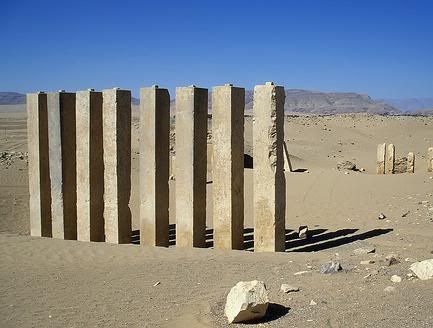
This mysterious ruin is found in Yemen and is almost entirely covered with sand. According to legends, this holy site is attributed to the Biblical Queen of Sheba. The temple is surrounded by a wall of 260 metres length which is about 3-5 metres thick and may have once reached about 16 metres.

In the hall of the temple there are still a few of the 32 pillars that once supported the roof. The 8 monumental pillars that seem to watch the site as fierce guards look like as they have been casted as concrete.

Archaeologists have dated the site to 1500 – 1200 BC and possible older, definitely older than the times of Solomon and the Queen of Sheba.


[The Queen of Sheba]

2. Masuda boulder, Japan

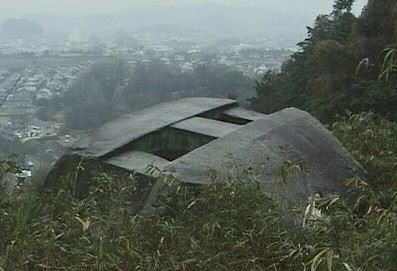
This mysterious boulder is found near Masuka Lake in Japan. It seems to have been thrown from heaven. It is strange because of its unusual shape: it contains two large square holes. The boulder is about 11 meters in length, 8 meters wide and about 4.7 meters high. The upper surface is smooth and some lower parts show signs of possible carving techniques.

The location and purpose of this boulder remains a mystery. The squares have flat surfaces and sharp corners, the construction of which requires the same technological abilities used in Egypt or South-America.

This Masuda boulder is another example of inimitable technology: applied in an inaccessible remote place, and apparently without any clear purpose.


[The Mystery of Masuda]

3. Marayoor Dolmens, India

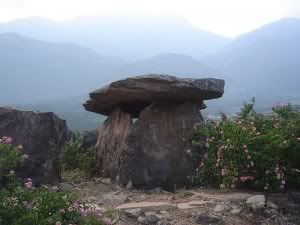
Numerous dolmens can be found in Marayoor, India. The dolmens usually consist of 4 standing stones and a cap stone on top of them. All dolmens are made of hard granite.

Some of the stones are so neatly dressed that it is believed that they originate from the Iron Age while the less sophisticated worked stones are believed to be from the Stone Age.

During the Stone Age, the same types of dolmens were built in very remote regions like Western Europe, the Caucasus, Korea and India. Did the inhabitants of these regions invent the same idea, or did they have mutual contacts?


[Marayur dolmens losing the battle with time]

4. Nan Madol, New Guinea

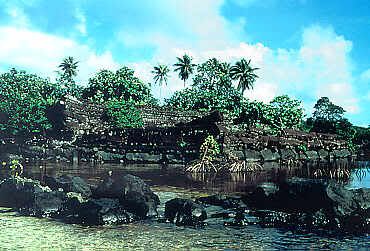
Strange ruins of basalt pillars are to be found on the island of Pohnpei which is located at about 2000 km to the north-east of New Guinea. Some of the constructions are positioned in the water and an underwater tunnel connects a building with the sea which indicates that the site much be extremely old. According to historians, the site was erected around 1250 AD.

250 million tons of basalt logs were estimated to have been used to construct the whole city. The exact details of how this was done remain unknown. Each basalt log could have weighed around 50 tons. Furthermore, all of these were done on water.


[The Mystery Behind the Ancient Stone City of Nan Madol]

5. Petra, Jordan

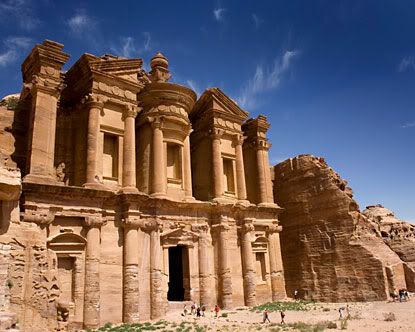
Petra is a city in Jordan without houses but made up of only temples and tombs which all have been hewn from the rocks. It is not easy to reach this city since its access is very narrow. The light from the afternoon sun gives the red sand stone a unique appearance. The city was supposedly founded by the Nabateans, hundreds of years before Christ.

The top of this mountain was carved and cut by at least 7 metres, resulting in two remarkably tapering pillars. The purpose of building these pillars and their functions remain a mystery till today.


[The Ancient City of Petra in Jordan]

6. Yonaguni, Japan

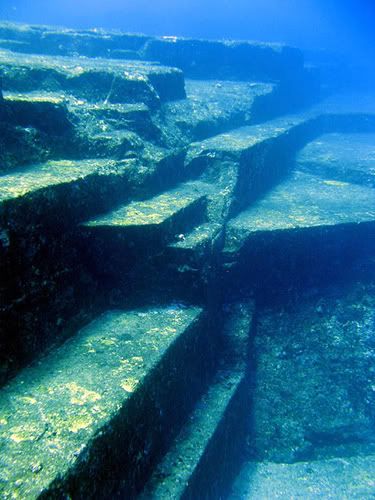
Yonaguni is an underwater ziggurat type of construction, about 30 meters beneath the water surface. Yonaguni is a Japanese island near Okinawa and Taiwan.

It is a 5 layer platform hewn out of the bedrock, having straight planes and precisely defined sharp angles. It is about 200 meter wide and 30 meter high. Since it is 30 meters below sea level it is at least 10000 years old since in that time the sea level was - because of the melting of the icecaps at the end of the ice age; at a lower level than now.

This means that the structure is one of the oldest buildings in the world - together with the Sphinx in Egypt and Tihuanacu in Bolivia. Its exact purpose and origins still remains a mystery.


[The Mystery at Yonaguni]

7. Marib Dam, Yemen

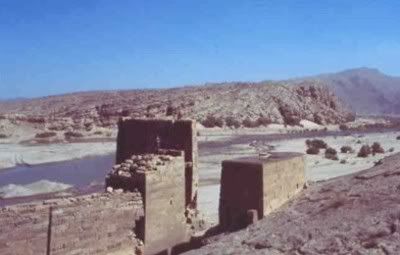
The Marib Dam is in the north of Yemen, about 120 km to the east of Sana’a. Archaeologists have discovered that the first dam started back in 2000 BC, though many repairs and rebuilding occurred in later times.


Today, only the north side and south side, together with spillway channels and sluices remains. The dam has a width of about 580 meters, was originally 4 meters and later 16 meters in height, which initiated the irrigation of a wide area.
The ancient peoples manage to build a massive dam strong enough to withstand the enormous water mass without cement. Till date, how this was achieved remains a mystery.


[Marib Dam - Yemen]


8. The Plain of Jars, Laos

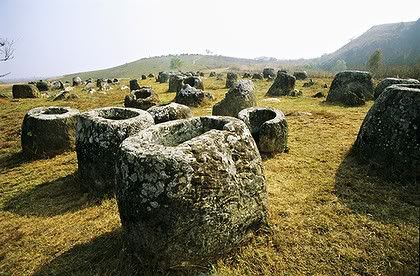
This mysterious plain found in Laos contains thousands of megalithic jars. These stone jars appear in clusters, ranging from a single or a few to several hundred jars at lower foothills surrounding the central plain and upland valleys.

Till today, their exact purpose and origins are still unknown. Local legends tell of an ancient king who defeated a race of giants. To celebrate his victory, he ordered the jars created to brew and store large amounts of Lao wine.


[Ancient Mystery of Plain of Jars]


9. Mehrgarh, Pakistan

This ancient ruined city was discovered in 1921 in Pakistan. It is estimated to date back to the 7th to 8th millennium BC, making it almost 9000 years old. If this was accurate, the entire concept of the Indus Civilization will be changed.

The city consists of a great public bath, upstairs bathrooms in houses and covered sewers. Such technological advances were near impossible to replicate during such ancient times.


[Mehrgarh, Pakistan: Discovery of a 9000-Year-Old Civilized Settlement]

10. Piri Reis Map, Turkey

This map was discovered in 1929 in Turkey, and was determined to be created by Ottoman-Turkish admiral Piri Reis in 1513.

The remaining half of the map that survived shows the western coasts of Europe and North Africa and the eastern coast of Brazil with surprising accuracy. Various Atlantic islands including the Azores and Canary Islands are also depicted. Some claim that the map also depicts Japan.

Some claims this map supports a theory of global exploration by a pre-classical undiscovered civilization, supported by the amazing accuracy of this map. Others claim that this map was merely created by combining a set of different maps.


[The Piri Reis Map]

Some pictures and text in this article are granted permission to copy, distribute and/or modify this document under the terms of the GNU Free Documentation License, Version 1.2 or any later version published by the Free Software Foundation; and as such are reproduced in this article.

Read more >>

Sunday, October 9, 2011

10 Ancient Mysteries of Asia (Part 1)

by Joan Seth (joanseth77@gmail.com)

Our planet Earth has existed for about 4.5 billions of years, while humans have only existed for a few thousand years. But there are still a lot of things that we humans do not know about our past.

In this article, we take a look at some mysterious ancient structures and artifacts, whereupon we ask ourselves these questions: Where did ancient man obtain advanced knowledge? Where has this knowledge gone to? Did a deity or extraterrestrials give ancient man a helping hand?

1. Baalbek, Lebanon

Baalbek in Lebanon is one of the most mysterious places on earth. Ancient builders crafted the largest and heaviest stones on earth. There are blocks of about 10 metres long, 5 metres high and 3–4 metres deep. They weigh more than 450 tons each. At least 24 blocks have been discovered.

There are 3 even bigger blocks above these megaliths, weighing approximately 1000 tons each.

The mystery here is that even today, hardly any machinery exists to transport, lift and position such enormous blocks in such a restricted area. And of course, it is unimaginable that in ancient times people could have done this with manpower and ropes.
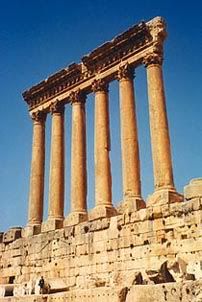


[The Mystery of Baalbek]

2. The Baghdad Battery, Iran

This object was unearthed at Khuyut in 1936. This mysterious object was estimated to date from a period between a few hundred years BC to some hundreds of years AD.

The Baghdad Battery is about 15 cm high with a lid of asphalt and an oxidised iron rod in the middle, surrounded by a 9 cm copper cylinder with a diameter of about 26 mm. When the vase is filled with an electrolyte, such as lemon juice or vinegar, it is able to deliver an electrical charge of approximately 1 volt.

It is however too small to provide any reasonable power. Dozens of these batteries would have to be connected. Furthermore, the similarity to the first batteries invented in 1867 is striking.
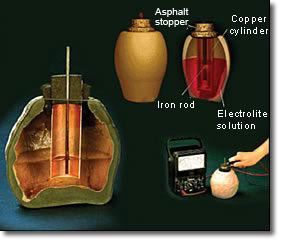


[The Baghdad Battery]

3. Borsippa, Iraq

In ancient times Borsippa or ‘Birs Numrud’ was the location of the Ezida temple, which was devoted to the god Marduk and in earlier times to the god Nabu.

The south westerly mound, the Birs proper, is probably the most conspicuous and striking ruin in all of Iraq. It is split down the centre and surrounded by huge masses of vitrified brick. Single enamelled bricks, most bearing an inscription of Nebuchadnezzar are also found around the site. They are twisted, curled and broken, as if damaged by great heat.

The mystery here is the intensity of the destruction since vitrified bricks can only be created by heat exceeding 1100 degrees Celsius in open air, which is impossible to achieve using standard means.

The only known vitrification in the open has resulted from nuclear explosions or impacts of comets. The latter can be ruled out in the case of Borsippa. The general belief is that lightning caused the vitrification, a theory which has proven to be impossible.
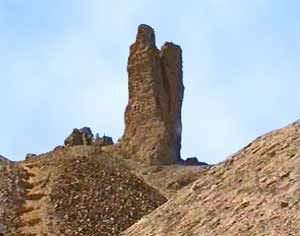


[The Mystery of Borsippa]

4. Candi Sukuh, Indonesia

The Candi Sukuh pyramid is located on the island of Java in Indonesia. It is the only pyramid on the Indonesian archipelago. Each stone in the pyramid has been tailor made. The pyramid would have been built in or around 1430 according to archaeologists.

The pyramid was mysteriously built using the same architectural techniques as per the pyramids in Mexico and Guatemala. Could these same techniques somehow managed to travel across the ocean thousands of kilometres apart and applied by people in different countries and cultures?
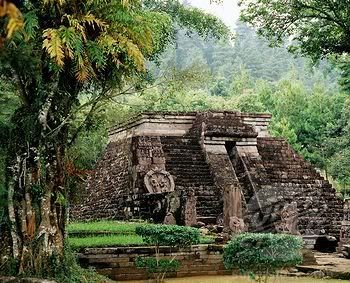


[Sukuh Temple is still A mystery]

5. Catal Hüyük, Turkey

Catal Hüyük existed from about 7250 BC till about 5600 BC. It is located in the central part of Turkey and was discovered by locals in 1958.

There are no streets; the houses were built one against the other. The only entrance was from above. In course of time, deteriorating houses were broken down and on top of the layer of rubble new houses were erected.

The larger rooms were plastered with white chalk and used for living; the smaller ones were stores. There were no buildings for governing or other public duties. It is a mystery why the entrances to the houses were only on the roof of the houses.
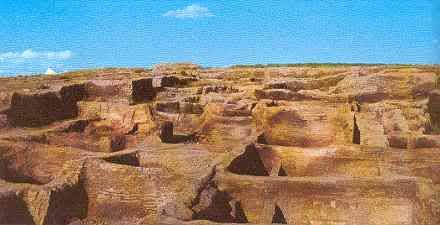


[The Religion of Catal Huyuk]

6. Chinese Pyramids, China

The existence of pyramids in China was discovered during the Second World War by an American pilot named Gaussmann.

In the area to the north of the city of Xian, there are about 25 pyramids. The biggest of these is near the famous ‘Terracotta Army’ and with a base of 350 x 370 metres is significantly larger than the Great Pyramid in Egypt. It is still smaller than the largest pyramid in the world, the Cholula pyramid in Mexico.
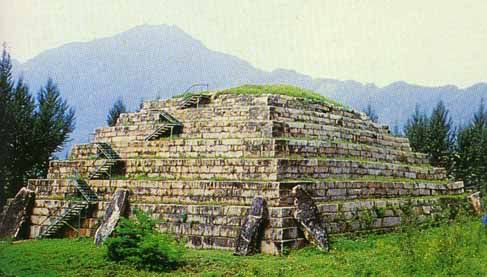


[China’s Great Pyramids Controversy]

7. Göbekli Tepe, Turkey

This is one of the oldest temples in the world. In the vicinity of the little town of Sanliurfa near the Syrian border, there is an archaeological excavation, Göbekli Tepe, which consists of a number of circular buildings which are made of limestone blocks that weigh several thousand kilograms each.

The structures date back to 9500 BC. Many of the stone circles have yet to be excavated, but the few that have been brought to light have diameters of up to 30 metres and the stones are decorated with reliefs of animals. There is no evidence of habitation and no consumer goods have been found which suggests that the site is an early temple.

The mystery in question is how it is possible that in a scarcely populated world, a world where mankind lived in a primitive manner, such a sophisticated building for which a high level of organisation would have been required could have been constructed.
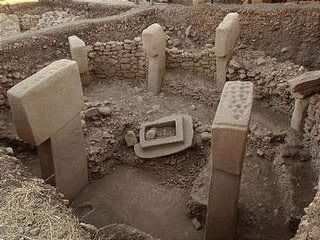


[World’s First Known Religious Temple at Göbekli Tepe]

8. Jericho, Palestine

Jericho, located at Tell es-Sultan is believed to be the oldest city in the World. The earliest human habitation took place in about 9000 BC, though the first permanent settlers came in 8000-7000 BC. The site then consisted of a few walls and a tower, and measures about 40 hectares.

The development of cities is strongly related to the invention and development of agriculture which enabled the establishment of larger populations. However, mysteriously, the construction of Jericho predates the invention of agriculture. It is likewise a mystery why the city needed walls. Who could be an enemy in a rather empty world?
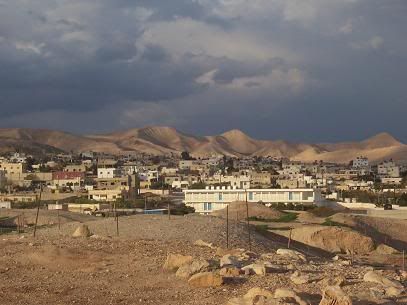


[Mystery of Ancient Jericho Monument Revealed]

9. Korean Dolmens, Korea

More than 40% of the world's dolmens are found in Korea. It is believed that they date back from the seventh century BC to around the third century BC.

There are two main types of dolmens. The table type, where a flat stone is supported by three or four standing stones. In the second type, the supportive stones are partially underground.

The great similarity to dolmens in Ireland, the United Kingdom and France suggests transatlantic contact during ancient times. Till date, their exact purpose still remains a mystery.
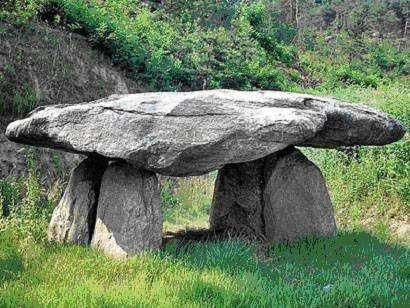


[History mystery: Dolmens stone formation]

10. Madain Salleh, Saudi Arabia

Madain Salleh is a city in Saudi Arabia. It is a sister city of Petra, built by the Nabateans more than 2000 years ago.

This mysterious city does not contain any houses, but it is actually made up of only temples and tombs which all have been hewn from the rocks. The site is about 13 km long.
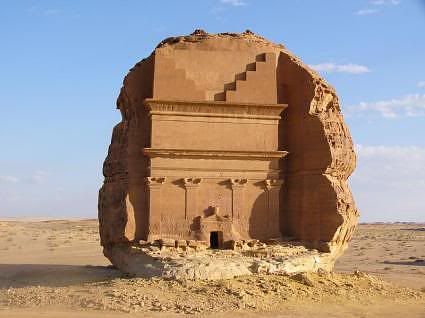


[The Mystery of Madain Saleh]

Some pictures and text in this article are granted permission to copy, distribute and/or modify this document under the terms of the GNU Free Documentation License, Version 1.2 or any later version published by the Free Software Foundation; and as such are reproduced in this article.

Read more >>

Wednesday, September 21, 2011

The Ancient Mystery of the ‘Plain Of Jars'


Maybe you noticed already, that I’m a fan of Laos. This has a number of reasons, one being, that Laos is today, what Thailand was 20 years ago. It’s a laid-back secluded country, with lot’s of mysteries, unique activities and quirky originalities.`

Can you imagine a place on earth, where huge stone jars are scattered on a giant plain; like the Gods just stood up from their meal and left all their pots and containers lie around? This is how it looks in a secret place in Laos - welcome to the ‘Plain of Jars’:

The Plain of Jars is an historic cultural site in Laos, containing thousands of enormous stone or clay jars, which lie scattered throughout the Xieng Khouang plain in the Laotian Highlands at the northern end of the Annamese Cordillera, the principal mountain range of Indochina.

Lao stories and legends claim that there was a race of giants who once inhabited the area. Local legend tells of an ancient king called Khun Cheung, who fought a long, victorious battle against his enemy. He supposedly created the jars to brew and store huge amounts of lao lao rice wine to celebrate his victory.

Although there is no scientific explanation as to how these jars found their way onto the plain, nor what purpose they served, Archaeologists have come up with the wildest theories, among them a claim declaring them brewery cauldrons.

Other say, the jars are enormous urns, around 2,000 years old. There is speculation again, that the plain was at the connection point of old Caravan Routes coming from India and the jars were simply unloaded here, but forgotten in time.
Read more >>

Thursday, September 8, 2011

The Dropa Stones

THE GRAY OVERCAST sky hung low in the isolated valley on the cool autumn afternoon. The surrounding mountain peaks had been masked by the heavy clouds for days. A deep rumble shook the ground, sending animals scurrying and startling birds from their roosts in the trees. The thunder-like rumbling from above the clouds grew louder. The valley had never heard thunder like this. The rumbling intensified to a heavy roar.

A small group of hunters stalking deer cast their eyes to the sky, expecting the clouds to break open from the deafening thunder with a torrent of rain. But this wasn't thunder at all. A bright flash burst forth from the ceiling of clouds. The hunters realized this was not lightning. They had never seen anything like this before. A glowing orb streaked through the sky above their heads as they watched in dazed disbelief. The orb wobbled and veered as it fell, as if it were trying to fight gravity and keep itself from smashing into the ground.

The hunters readied their weapons, not knowing what threat this mystery from the sky might present. Suddenly the thundering roar stopped, and the orb made one final veer and a slight upward turn before slamming into the earth. The hunters were nearly knocked off their feet from the shockwave. The thing - whatever it was - hit the ground just beyond a line of trees, perhaps an hour's walk away, the hunters estimated.

[Click here to read full article]
Read more >>

Thursday, July 21, 2011

The Nanjing Belt

Beachcombing always comes to China with a certain trepidation. After all, he doesn't have much Mandarin (i.e. absolutely zilch), he has an embarrassingly modest knowledge of Chinese historiography and yet he must admit to having nothing but fascination for the exotic flowers that grow in the swamps of the Chinese past – recent oriental posts have included manned kite flight and (alleged) Roman legionaries in ancient China.

The danger, of course, is that the sirens pull you into the mud and before you know it the water’s pouring over the top of your Wellington boots. And how much worse that water feels when ‘China’ combines with another unknown like, say, ‘metallurgy’. Welcome, please, oh reader, the Nanjing Belt.

Beachcombing will quickly get the routine details out of the way. The Nanjing Belt was discovered in a tomb in 1952 around a skeleton. The tomb and the body dated to the Jin Dynasty that brings us back to the early centuries A.D (265-420) and luckily the name of the occupant was established through an inscription. He was one Zhou Chou (obit 297) who died fighting, of all people, the Tibetans.

[Click here to read full article]
Read more >>

Friday, May 13, 2011

The mystery of the Singapore Stone


The Singapore Stone, sandstone slab, ancient relic, currently on exhibit at Singapore History Museum. The slab is one of three pieces of a large boulder discovered in June 1819 and blown up in 1843 to widen the mouth of the Singapore River. It had an indecipherable ancient script, pointing to a possible extension of the Majapahit civilization on the island.

A monolithic, weathered boulder made of coarse sandstone, the original Singapore Stone rose to about 3 m high and was 3 m wide. It stood at a promontory known as the Rocky Point, at the Southeast side of the mouth of the Singapore River. Its location was known at various times as Artillery Point, Fort Fullerton and the Master Attendants Office.

The Merlion Statue had previously been located at an extension of that spot. Munshi Abdullah in 1819, noted that curious onlookers of all nationalities came in crowds to see the stone. Most significant, the rock had about 50 lines of indecipherable inscriptions which is believed to hold secrets to Singapore's ancient history. This rock had often been mistaken for another stone found nearby and revered as a religious object, called Batu Kepala Todak (in Malay means "swordfish rock" because of its shape) by the Orang Laut (in Malay means "sea gypsies").

Along with the ancient walls around Fort Canning, the stone points to an ancient civilisation linked to the Majapahit era which had set root on the island. The original rock was discovered in June 1819 by labourers clearing forest trees and jungle, on a spot called 'Rocky Point'.

The first effectual study of the fragments was by epigrapher and Dutch scholar H. Kern. He succeeded in deciphering a few words, and gave the probable date of inscription as around 1230 AD. Even Sir Thomas Stamford Raffles was involved in trying to decipher the inscriptions on this huge rock. Abdullah bin Abdul Kadir (a.k.a. Munshi Abdullah) recorded Sir Stamford Raffles taking Rev. Claudius Henry Thomsen and himself, to see what he described as a 'remarkable stone' in October 1822.

Other scholars believed the stone engravings to be in an ancient script, possibly in ancient Sanskrit, commonly used between the 12th and 14th century Majapahit era. Many historians believed these writings held the keys to Singapore's ancient past but none could decipher its contents.

In 1843, it was blown upon the orders of acting Settlement Engineer, Captain Stevenson, to clear and widen the passageway at the mouth of the Singapore River; and to provide space for Fort Fullerton and its living-quarters. Various sources note that George D. Coleman was responsible for the stone's destruction, but he had been on leave at the time of its blasting.

Lt-Colonel James Low, who had opposed the blasting, arrived at the scene shortly after the blast and managed to salvage at least three slabs with the inscription. Two slabs were sent to the Royal Asiatic Society's Museum in Calcutta for analysis, where they arrived in about June 1848. The only surviving relic of the Singapore Stone is on exhibit at the Singapore History Museum, formerly the Singapore National Museum, at Stamford Road.

[Click here to read full article]
Read more >>

Monday, April 25, 2011

2,000-year-old nails 'may be tied to crucifixion'

JERUSALEM — Two Roman nails dating back 2000 years, found in the burial cave of the Jewish high priest who handed Jesus over to the Romans, may be linked to the crucifixion, an Israeli filmmaker has claimed.

The gnarled bits of iron, which measure around three inches (eight centimetres) each, were shown to reporters in Jerusalem on Tuesday at the premier of a television documentary series examining the question of whether they could have been the nails used to crucify Jesus.

The series is to air from Wednesday in the United States, Canada and South America, and in Israel from May 15.

The two nails were first found in Jerusalem 20 years ago when archaeologists uncovered a family tomb believed to be that of Caiaphas, the high priest who handed Jesus over to the Romans to be crucified.

One nail was found inside one of 12 limestone coffins found inside the cave, while the second was lying on the floor of the tomb.

[Click here to read full article]
Read more >>

Monday, March 14, 2011

Ancient Jade Discs

Mysterious ancient discs made from nephrite jade discovered in China (2005) are raising scientific eyebrows in China and elsewhere. Among the earliest surviving Chinese artifacts, the discs are called ‘Bi’ and have been associated by some scholars with the Shang Dynasty (16th-11th century B.C.); however, they may be much older, representing neolithic art from 6000 to 2000 B.C. Showing clear evidence of advanced precision tooling, though, the ‘Bi’ discs present scientists with an unexplainable anomaly.

It is difficult, if not impossible, to imagine how they could have been made with the primitive stone tools and abrasives usually associated with the period. The original function and significance of the bi are unknown, as the Neolithic cultures have left no written history.

From these earliest times they were buried with the dead, as a sky symbol, accompanying the dead into the after world or "sky", with the cong which connected the body with the earth.They were placed ceremonially on the body in the grave of persons of high social status.

[Click here to read full article]
Read more >>

Sunday, August 8, 2010

Dead Sea Scrolls Mystery Solved?

The recent decoding of a cryptic cup, the excavation of ancient Jerusalem tunnels, and other archaeological detective work may help solve one of the great biblical mysteries: Who wrote the Dead Sea Scrolls?

The new clues hint that the scrolls, which include some of the oldest known biblical documents, may have been the textual treasures of several groups,

hidden away during wartime—and may even be "the great treasure from the Jerusalem Temple," which held the Ark of the Covenant, according to the Bible.

The Dead Sea Scrolls were discovered more than 60 years ago in seaside caves near an ancient settlement called Qumran. The conventional wisdom is that a breakaway Jewish sect called the Essenes—thought to have occupied Qumran during the first centuries B.C. and A.D.—wrote all the parchment and papyrus scrolls.

[Click here to read full article]
Read more >>

Thursday, March 25, 2010

Asia's Lost Treasure of WW2 is in Philippines

During the Japanese occupation of Asia of world war 2 whereby Japan was conquering much lands of asia as part of their empire led by general Yamashita, much of the treasures across of asia that was found was being send to one particular place for keeping.


This place eventually became the place whereby any treasures that the Japanese has found would be send to this common point of storage for the Japanese empire. This place was located in the Philippines in a certain very remote forest. There was a guardian or a so called protector of this place. This keeper guarded and protected theses treasures with his life for many years and had very little contact with people of outside.

When the war was over, this keeper was still unaware of it and still continued to guard and protect the treasures. One fine day when reports of people being unknowingly and mysteriously killed in a certain particular place was told, this resulted in people who went to find out what was going on?

When they came to know of the existance of the person behind and the reason why, it brought about many treasure seekers and hunters and eventually this Japanese soldier was finally being brought out to the outside world. He was too shocked and could not belived that war was lost. It was something unaccpetable to him.

Although he no longer return to the forest anymore after learnning what has happened after so many years, the secrets of the hidden treasures of asia was not being revealed. It was even said that he commited suiside to join his fellow comrades.

After this incident, the local government send batches of well trained and experienced commandos and gurellias as well as scouts together with many other people of various professions and expertists to find the treasures. However, after much efforts and long durations of finding, it still remained unknown till today.
Read more >>

Wednesday, March 17, 2010

7 Ton Giant Jars Mystery of Laos

Located in Laos, near the Eastern border with Viet Nam, the stone jars are found in small clusters. At the most well known site, Ban Ang, the jars seem to be positioned on top of a steep hill. The jars, often weighing as much as 7 tons, appear to have been made at a different site and then moved to their present locations. They are from 3 to 10 feet in height and some span more than a meter in diameter. All are made from very hard stone, mostly granite but some have been carved from sandstone containing quartz, feldspar and mica.


Picture is (C) copyright to Viewzone.com

Carving the jars, considering that there are thousands of them, must have been a remarkable feat for such a sparcely populated region. Scientists estimate that the age of these jars is around 2500 to 3000 years old. Some are so finely carved that it appears they must have been made on a huge lathe. Others are artistically carved in a prism shape. Some have even been found with human forms decorating them.


Picture is (C) copyright to Viewzone.com

[Click here to read full article]
Read more >>
 
Asia Paranormal Google Page Rank
AsiaParanormal Blogger Template "Sleek 2" Designed by HypeSeek © 2012