A personal message from Oregon Chang

Have you had a close encounter story or witnessed something unusual that you would like to share?

Do you wish to collaborate with Asia Paranormal through link or content exchange?

Do you have any enquiries or feedback?

Email us at AsiaParanormal@gmail.com

We look forward to hearing from you!

Follow us on Subscribe Asia Paranormal in your favorite reader. Follow Asia Paranormal in Facebook. Follow Asia Paranormal in Twitter. Follow Asia Paranormal Youtube channel.

Vote for us! We are listed at the www.topparanormalsites.com website. Click here to vote for us.. Thank you :-)

Best regards, on behalf of team AsiaParanormal

Master Orthodox Occultist Oregon Chang, The 17th generation Disciple of Seven Stars Sword Master Hebei China

Showing posts with label Tibet. Show all posts

Monday, October 15, 2012

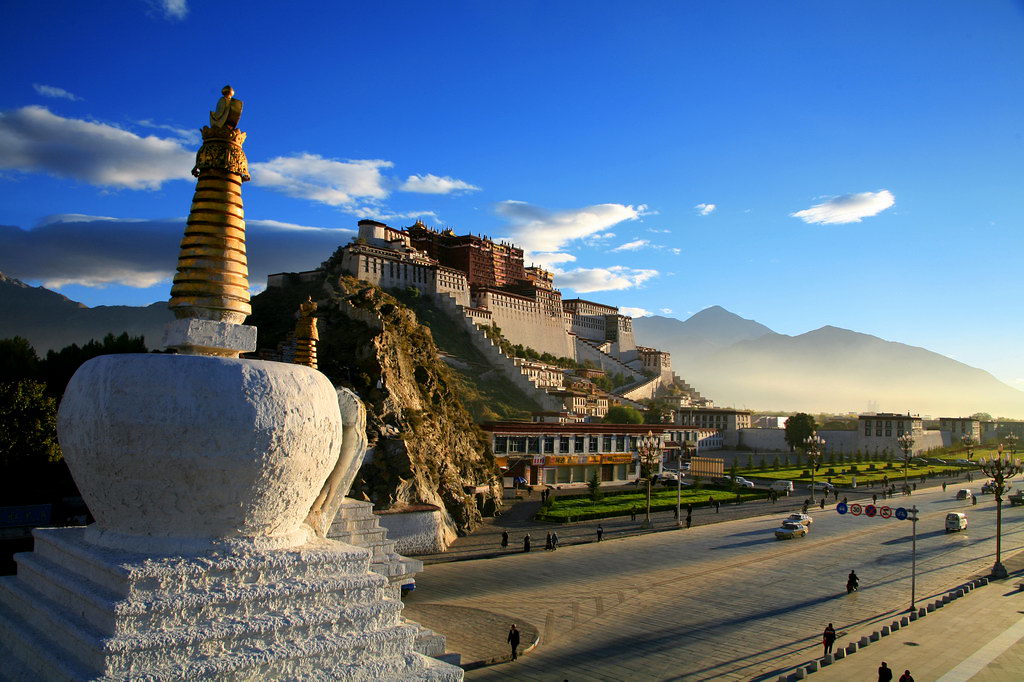
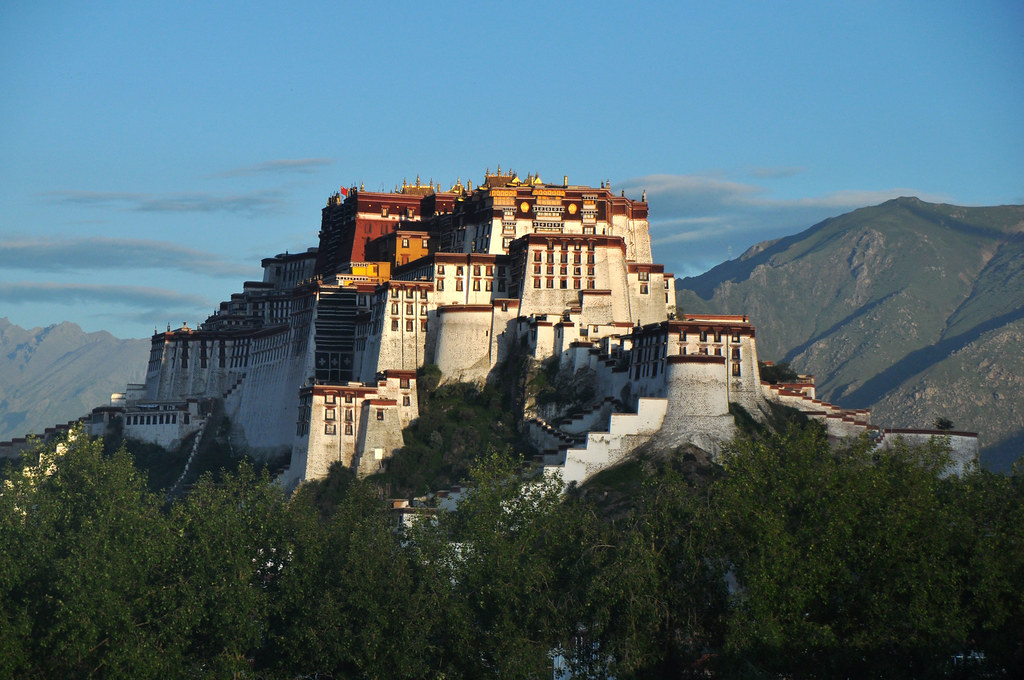
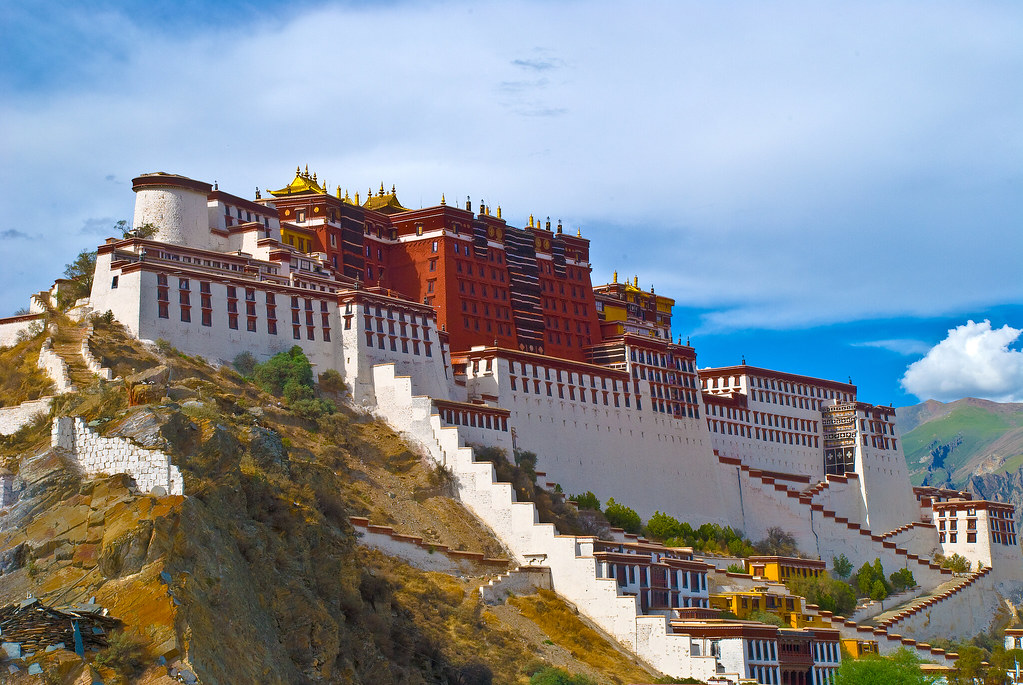
Ancient Asian Wonders of the World ( Potala Palace)


Potala Palace, the Indestructible Palace which is Earthquake Proof is in Tibet , China. It is classified as one of the Ancient Asian Wonders of the World


The building measures 400 metres east-west and 350 metres north-south, with sloping stone walls averaging 3 m. thick, and 5 m. (more than 16 ft) thick at the base, and with copper poured into the foundations to help proof it against earthquakes


[Click here to read full article]
Read more >>

Friday, June 15, 2012

From Aliens To Tibetan Mystics: "They" Might Truly Be Among Us! Who Are The Walk-Ins?

Are you a Walk-In? Has the soul you were born with been removed and replaced by a more advanced soul with a mission we can only dimly comprehend? Did you ever have a time in your life when you were severely depressed, only to suddenly be able to tap into a surprising flow of positive energy and newfound optimism?

There are varying definitions of a Walk-In available in occult literature, but perhaps it would be best to start with the concept as laid out by the late Christian psychic Ruth Montgomery, author of a book on Walk-Ins called “Strangers Among Us.” Montgomery wasn’t just another New Age hack. She had a long and prestigious career in mainstream journalism, becoming the first female reporter in the Washington Bureau of “The New York Daily News.” She was also a syndicated columnist for Hearst Headlines and United Press International and wrote of her 25 years covering Washington in a book called “Hail To The Chiefs: My Life And Times With Six Presidents.”

Beginning in 1952, Montgomery sometimes wrote about psychic Jeanne Dixon in her columns – in one of which Dixon accurately predicted the assassination of John F. Kennedy – and wrote a 1965 book on Dixon called “A Gift Of Prophecy” that sold over 3 million copies.

So we can approach Montgomery’s research and journalism skills with some degree of confidence when she says, “Walk-Ins were souls on the other side who had earned the right, in previous lifetimes, that if they wanted to, could come in and replace a soul that was in desperate need of leaving that body – one who either does not want to maintain it or who is dying and can’t keep it alive.”

For example, as stated above, a person may be suffering from extreme depression or could even be contemplating suicide. The Walk-In steps in to relieve the unhappy person’s earthly trials, and the Walk-Out moves on to the spirit world just like a person who has died. The souls of the Walk-Ins are not “perfect,” in moral terms, but they are greatly spiritually advanced, called “aware” souls. Meanwhile, no blame is attached to the Walk-Out, for it has labored greatly to develop itself but simply cannot conquer the problems with which it is faced.

[Click here to read full article]
Read more >>

Saturday, February 11, 2012

The Tibetan Oracles

Cloaked in secrecy for over 400 years, the State Oracle of Tibet has been a strange and mystical aspect of the Tibetan Buddhist tradition. This ancient spirit, which has inhabited a succession of thirteen human mediums, advises the Dalai Lama on matters of public and religious policy. To witness the eerie spectacle of a medium entering a trance state and being possessed by the Oracle is to confront profound questions about the very nature of human consciousness.

With permission from the Dalai Lama that had never been granted before, The Oracle explores the ancient practice of consulting spirits.

Read more >>

Sunday, November 20, 2011

Eating People Isn’t Wrong (in Tibet)

A crisis of sorts tonight in the Beachcombing household. Mrs B is leaving the family home to go and organise an academic conference in the heart of darkness (aka Brussels). This means that Beach – a better husband than a father – and the Beachcombing’s au pair are being left on their own to look after little Miss B and tiny Miss B for three days. As Kurtz put it: ‘the darkness, the darkness’ ,which in blogging terms means that service may be spotty for the next 72 hours.

In these difficult times Beach thought that he would offer up a peculiar Tibetan version of cannibalism that he recently stumbled upon: regular readers will know that this blog has, after all, sometimes examined questions of homophagy.

Now one evening this same Choga Tsang [a drunk lama, a kind of Tibetan rasputin] unexpectedly called up one of his trapas. ‘Saddle two horses, we are going’, he ordered him. The monk remonstrated with the Lama saying that it was already late and that it would be better to wait the next morning. ‘Do not answer back’, said Choga Tsang laconically, ‘let us go’. They start, ride in the night and arrive at some spot near a river. There they alight from their horses and walk toward the river bank. Though the sky is completely dark a spot on the water is ‘lighted by sun rays’, and in that illuminated place a corpse is floating up-stream, moving against the current. After a while it comes within reach of the two men. ‘Take your knife, cut a piece of flesh and eat it,’ commands Choga Tsang to his companion. And he adds ‘I have a friend in India who sends me a meal every year at this date. Then he himself began to cut and to eat. The attendant is struck with terror, he endeavours to imitate his master but does not dare to put the morsel into his mouth and hides it in his ambag [breast pocket]. Both return to the monastery where they arrive at dawn. The lama says to the monk. ‘I wished you to share the favour and the most excellent fruits of this mystic meal, but you are not worthy of it. That is why you have not dared to eat the piece which you have cut off and hidden under your dress.’ Hearing these words the monk repents of his lack of courage and puts his hand into his ambag to ake his share of the corpse, but the piece of flesh is not longer there.’

This appears in an early twentieth century work on Tibet and almost as interesting as the flesh-eating is the Blavatsky-style blather about it. Never has eating human flesh been made to seem so civilised. Think Hannibal Lecter in tails and a top hat:

‘There exist, so they said, certain human beings who have attained such a high degree of spiritual perfection that the original material substance of their bodies has become transmuted into a more subtle one which possesses special qualities. Few people can discern the change which has come over these exceptional men. A morsel of their transformed flesh, when eaten, will produce a special kind of ecstasy and bestow knowledge and supernormal powers upon the person partaking of it.’

So there you are.

[Click here to read full article]
Read more >>

Thursday, September 8, 2011

The Dropa Stones

THE GRAY OVERCAST sky hung low in the isolated valley on the cool autumn afternoon. The surrounding mountain peaks had been masked by the heavy clouds for days. A deep rumble shook the ground, sending animals scurrying and startling birds from their roosts in the trees. The thunder-like rumbling from above the clouds grew louder. The valley had never heard thunder like this. The rumbling intensified to a heavy roar.

A small group of hunters stalking deer cast their eyes to the sky, expecting the clouds to break open from the deafening thunder with a torrent of rain. But this wasn't thunder at all. A bright flash burst forth from the ceiling of clouds. The hunters realized this was not lightning. They had never seen anything like this before. A glowing orb streaked through the sky above their heads as they watched in dazed disbelief. The orb wobbled and veered as it fell, as if it were trying to fight gravity and keep itself from smashing into the ground.

The hunters readied their weapons, not knowing what threat this mystery from the sky might present. Suddenly the thundering roar stopped, and the orb made one final veer and a slight upward turn before slamming into the earth. The hunters were nearly knocked off their feet from the shockwave. The thing - whatever it was - hit the ground just beyond a line of trees, perhaps an hour's walk away, the hunters estimated.

[Click here to read full article]
Read more >>

Saturday, July 16, 2011

Flying/Levitating/Jumping in Modern Tibet

Beachcombing knows virtually nothing about Tibet and has rarely visited the country in this blog – though he does have some happy memories of reincarnation and Queen Victoria. However, he recently stumbled on a fascinating account of levitation or flying in the Himalayas that he could hardly pass by.

Our source is a western author, which is usually a bad sign, given that in the early 1900s Tibet was being Blavatskied and more generally being made into the magic lantern of spiritual types in Europe and the Americas. But our author was the real deal. She lived and travelled in Tibet in the 1920s. She was a French Buddhist – naturally – and was a first-class witness and a stimulating writer.

[Click here to read full article]
Read more >>

Saturday, May 28, 2011

Remote viewing Tibetan monks see Extra Terrestrial powers saving the World from destroying itself in 2012

Remote viewing is nothing new in Tibetan monasteries. For thousands of years remote viewing in the middle of other spiritual activities have dominated Tibetan culture. What some Indian tourists came to learn from a few Tibetan monasteries under the current Chinese rule is extremely alarming and fascinating.

According to these tourists remote viewers are seeing world powers in the course of self-destruction. They also see that the world will not be destroyed. Between now and 2012 the world super powers will continue to engage in regional wars. Terrorism and covert war will be the main problem. In world politics something will happen in and around 2010. At that time the world powers will threaten to destroy each other.

Between 2010 and 2012, the whole world will get polarized and prepare for the ultimate dooms day. Heavy political maneuvers and negotiations will take place with little progress.

[Click here to read full article]
Read more >>

Saturday, April 2, 2011

China: Tibet won't fall apart if Dalai Lama dies

By Alexa Olesen, Associated Press / March 7, 2011

Dalai Lama reincarnation: The Dalai Lama, who is regarded as 14th in a line of reincarnations dating to the 14th century, has at times insisted his successor would be born in exile, but he has also said the tradition could end with his death.

Tibet will likely experience small shock waves when the Dalai Lama dies, but a Chinese official said Monday that the government would not now allow any serious instability to rock the region.

Although the Tibetan region is quiet now, it was roiled by violent anti-government riots three years ago that killed at least 22 people and set off a wave of protests across Tibetan areas of western China. Beijing blamed the unrest on followers of the Dalai Lama, who it says are seeking to separate Tibet from China. The Tibetan spiritual leader has denied that, saying he is working only for a high degree of autonomy under Chinese rule.

In the wake of the riots, China closed off the remote Himalayan region, barring international tourists for about a year. On Monday, Chinese travel agents said they had been ordered not to allow foreign visitors into the region around the upcoming third anniversary of the riots. Foreigners heading to Tibet have always needed special permits in addition to their Chinese visas and must travel with tour groups.

[Click here to read full article]
Read more >>

Tuesday, December 21, 2010

Shambhala - The Mythical Kingdom

For thousands of years rumors and reports have circulated that somewhere beyond Tibet, among the icy peaks and secluded valleys of Central Asia, there lies an inaccessible paradise, a place of universal wisdom and ineffable peace called Shambhala. Legends say that only the pure of heart can live in Shambhala, enjoying perfect ease and happiness and never knowing suffering, want or old age. Love and wisdom reign and injustice is unknown.

The inhabitants are long-lived, wear beautiful and perfect bodies and possess supernatural powers; their spiritual knowledge is deep, their technological level highly advanced, their laws mild and their study of the arts and sciences covers the full spectrum of cultural achievement, but on a far higher level than anything the outside world has attained. By definition Shambhala is hidden. Of the numerous explorers and seekers of spiritual wisdom who attempt to locate Shambhala, none can pinpoint its physical location on a map, although all say it exists in the mountainous regions of Eurasia. Many have also returned believing that Shambhala lies on the very edge of physical reality, as a bridge connecting this world to one beyond it.

In Tibetan Buddhist tradition, Shambhala (also spelled Shambala or Shamballa; Tibetan: bde 'byung, pron. De-jung) is a mythical kingdom hidden somewhere in Inner Asia. It is mentioned in various ancient texts, including the Kalachakra Tantra and the ancient texts of the Zhang Zhung culture which predated Tibetan Buddhism in western Tibet. The Bön scriptures speak of a closely related land called Olmolungring.

Whatever its historical basis, Shambhala gradually came to be seen as a Buddhist Pure Land, a fabulous kingdom whose reality is visionary or spiritual as much as physical or geographic. It was in this form that the Shambhala myth reached the West, where it influenced non-Buddhist as well as Buddhist spiritual seekers--and to some extent, popular culture in general. The Sanskrit name means “place of peace, of tranquility.” Though it’s true location has never been found, its beginnings are unknown and its existence is unproven, Shambhala is recognized and honored by at least eight major religions, and is regarded by most esoteric traditions as the true center of the planet and the world’s spiritual powerhouse.

[Click here to read full article]
Read more >>

Thursday, November 25, 2010

Ethnic Chinese Groups Vampires ( 中华僵尸)


Despite that Egypt and India has been considered the birthplace of the vampire. However , the home of the vampire is actually from Tibet. The Greece's Santorini island is traditionally the most vampire-infested place in the world

Contradict speaking, European Sources claimed that the world's first vampire was from China ! In the past, based on many ancient European sources, it has been firmly believed by many that Vampires originated from China and it was through the silk road it next spread over into India followed by the middle east , then the Mediterranean eventually into the whole of Europe.



Chinese vampires is being known as the Jiang Shi. The types of Vampires in China can varies from the different region , provinces & even Ethnic groups. Chinese Vampires has many variations. The below 2 would some examples.

The Beheaded Vampire
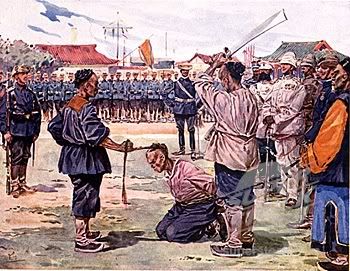


This a vampire whose head has been chop off ! The head flies around during the night constantly seeking for it's own body with the objective of uniting with it's own original body.
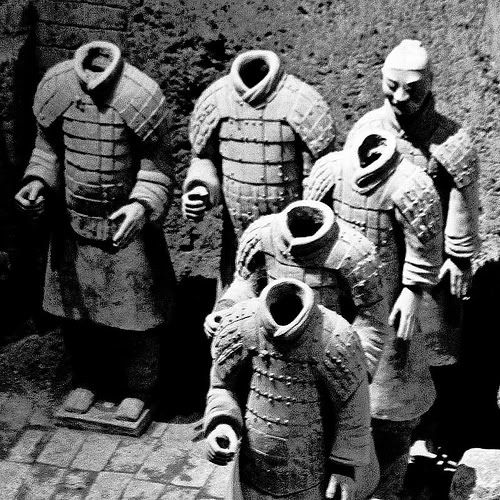


By itself, this flying head is a vampire and is very powerful. Do bare in mind that this beheaded vampire must never reunite with a body. This is because once it does, it will become even far much more powerful and unstoppable than before. You will have to once again separate it from the body and separately destroy the body and head in order to fully destroy it.
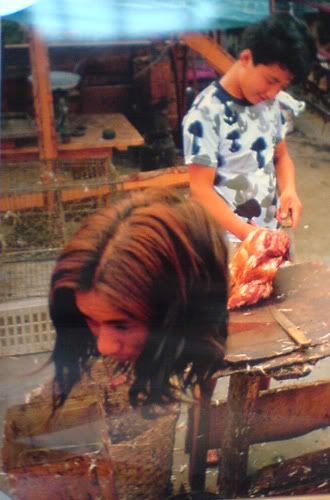

Sometimes it can operate separately ! The head is looking for the body and the body is looking for it's own head. However this is not in every case.

There are also cases where which this head will seek for substitute body. In such cases, this substitute will be from a living human.

Blood Demon (血魔)



Very little is known about this demon. What is known is that this demon is far much more superior than the vampire. Vampires in comparison with this Blood Demon (血魔) is considered to be very inferior. Even a gang of vampires cannot defeat one single Blood Demon (血魔) at all !

The Blood Demon (血魔) comprises from the element of blood. It has been said that it was a ill fated human who led a life of misery, Hate, anger, and vengeance whom under some form of encounters that had him transformed into a demon of blood element which is known to be as the Blood Demon (血魔).

When a blood curse from this Blood Demon (血魔) is being casted on it's victim, The victim will become extremely insanely murderous, merciless , brutal, cruel & violent. This victim will have inhumanly behavior like some unleashed beast or monster that cannot be contained. He or She will have a Strong passion for killing and loves the sight of blood.

There are only 56 Ethnic groups which are being classified and categorized as the official and recognized ethnic groups of mainland China. Any other Ethnic groups who do not belong to this 56 are considered to be as unofficial and unrecognized in China.

Let's have a look a few of these various vampires of the different ethnic Chinese groups or different Chinese regions.

Ethnic Manchurian Chinese Vampire
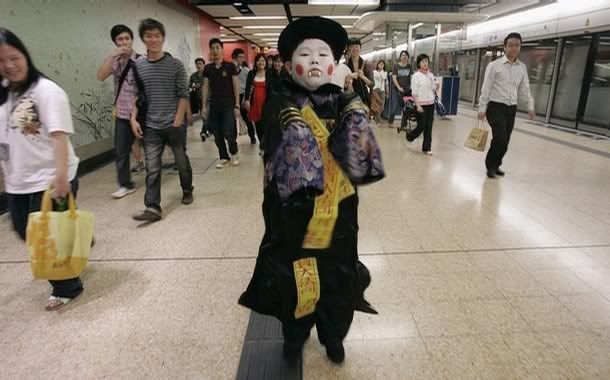


The Most common Vampires known to most of us from the media is the Ethnic Manchurian Chinese Vampires which is very zombie like and it jumps and hops around. They rise from their graves or coffins to find victims. They don't speak human languages as they communicate with one another in their own vampire language. Their body is very stiff and hard. They also do not feel any pain.

Ethnic Mongolian Chinese Vampire

In the province of Inner Mongolia which is part of China as well as it's neighbor, Mongolia, The Mongol Ethnic groups also have their own versions of Vampires as well.

The Mongol's Version of Vampire would be :
Aniukha
Mongolian God of Time
Mongolian Death Worm ( Sometimes considered to be as a Vampire)


Aniukha

This Ethnic Mongolian Chinese vampire, Aniukha is the spirit of a shaman who has used his power to return from the dead. All shamans have returned from the dead once: a ritual death and rebirth is part of their initiation into becoming a shaman.

However, even though the shaman exists on the threshold between life and death, he is expected to use the powers this grants him only for the good of his community. When he uses these powers for his own ends, he can become a fearsome being indeed. Once a shaman has become an Aniukha, the best way to dispose of him is to drive an aspen stake through his corpse and then cremate him

Ethnic Tibetan Chinese Vampires

The below would be a list of some of Vampire types from the Tibet province of China.

1) Bhagavan Vajra Heruka
2) Vajra Krotishaurima
3) Ratna-Herucka
4) Padma-Heruka
5) Dark-Green Ghasmari
6) Kerimas
7) The Lotus Order
8) Dakini
9) Khadro
10) Tibetan Lord of Death
11) Yama the Tibetan Devil

China's province of Tibet and many of the other regions of China is just like India as in that they possesses rich pantheon of supernatural entities and that many of them had some form of vampiric qualities. Much of it was also shared with neighboring nations such as Nepal, Sikkim, Mongolia and many more.

As for the Tibetans, the most visible of the vampiric entities were the so-called Wrathful Deities who appeared in The Tibetan Book of the Dead. This volume described what Tibetan Buddhists believed would be experienced by individuals in the days immediately following their death.

During these days, the deceased generally wandered into an area dominated by karma (the law of consequences) where the higher impulses of the heart gave way to the reasonings of the brain centers. The heart impulses were personified by the Peaceful Deities.

The brain reasonings were personified by the Wrathful Deities. Contemporary writers on Tibetan Buddhism have generally emphasized that the deities were not objectively real, but were the products of the person picturing aspects of the self. However, in traditional Buddhist lore, they were pictured as part of a true supernatural realm.

The Wrathful Deities are also known as the 58 blood-drinking deities, these vampires were figures representing the brain's reason and the deceased's vampire activities, which appeared to the spirit of the recently dead from the eight day onwards whilst they wandered the karma-dominated zones of the afterlife in Buddhist teachings. These include:
Bhagavan Vajra- Heruka, Vajra-Krotishaurima, Ratna-Herucka, Padma-Heruka, Dark-Green Ghasmari, plus Eight Kerimas and The Lotus Order.

For example, the blood-drinking deities of the Vajra order appeared on the ninth day. Here the intellect was represented by Bhagavan Vajra-Heruka. In one hand he held a human scalp. He was embraced by his mother, Vajra-Krotishaurima, whose right hand held a red shell filled with blood that she placed at her son's mouth.

On the next day, one encountered Ratna-Heruka, who appeared like Vajra-Heruka, but was yellow rather than blue. The red Padma-Heruka appeared on the eleventh day. On the twelfth day, the blood-drinking deities of the Lotus Order were encountered. On the thirteenth day, the eight Kerimas were encountered. These deities had the heads of various animals and engaged in different vampiric and ghoulish actions.

One, the Dark-Green Ghasmari, for example, held a scalp filled with blood that she stirred with a dorje (a holy object) then drank from it. Other similar deities appeared daily throughout the fourteenth day. The dying person was given instructions on relating to the deities and prayers to acknowledge them. Individuals were also told to call upon the name of their own guru and their personal deity to sustain them in the loneliness of the after-death realms. It should be noted that these deities did not attack the individual who encountered them, rather they were pictured as general representations of vampiric actions previously committed by the deceased.

Dakini

A terrible and beautiful demi-goddess from the Tibetan tradition. The Dakinis appear to a person during the process of dying, and they are part of the long visionary journey that ensues after physical death and before the deceased chooses to reincarnate.

The Dakinis are ambivalent beings for they appear in frightening and terrible forms to the deceased, but only in order to get the dead person to address issues about his past life and resolve his attachments so he can move on to a higher existence. Many of the Dakinis are vampyric in nature, being described as naked women, sometimes with the heads of animals, who drink blood from chalices made of human skulls.

The Dakinis appear with the “peaceful and wrathful deities,” beings who, like the Dakinis, exhibit ghastly vampyric natures in an attempt to convince the deceased of the impermanency of the flesh.

Tibetan Lord of Death

The Tibetan Lord of Death, who, like the Nepalese Lord of Death and the Mongolian God of Time, subsisted by drinking the blood of sleeping people. This Tibetan god had a green face and a blue-green body. In his clawed hand he held the Wheel of Life.

The Nepalese god had three blood-shot eyes with flames issuing from his eyebrows and thunder and lightning from his nostrils. In his hands, he carried a sword and a cup of blood. He was decorated with human skulls. The Mongolian god, with his prominent canine teeth, was seen amidst a storm over a bloody sea.

There was also a belief in the pursuit of the living by the dead. The dead were cremated, in part, to prevent the soul from attempting to re-enter it. The soul after death, like person before death, became the object of ritual, in this case to keep it from interacting improperly with the realm of the living.

Sikkim Vampire

Sikkim is a neighbor to Tibet and during early eighteenth century, Princess Pedi Wangmo, the monarch's half-sister, plotted to kill her half-brother. With the assistance of a Tibetan doctor, she bled Chador Namgyal to death and drank his blood. She escaped the palace but was soon caught. Both she and her accomplice were killed. It was believed, by some, that after death she became a vampire. Her story was recounted in a fresco in a monastery in Sinon near Mt. Kanchenjunga.

Regions, Provinces and Neighbors' Vampires of China
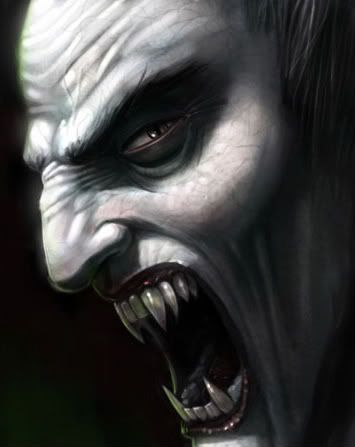


In fact, much of the vampires from India, Nepal and Bhutan can also be found in Tibet. Some of the Tibetan vampires can be found in her neighboring nations or regions.


As for the province of Yunan, much of the Thai (Siamese) and Myanmar ( Burma) vampires can also be found there and likewise some of the Chinese vampires from Yunan province can also be found in Indo-China , Myanmar (Burma) and Thailand ( Siam).


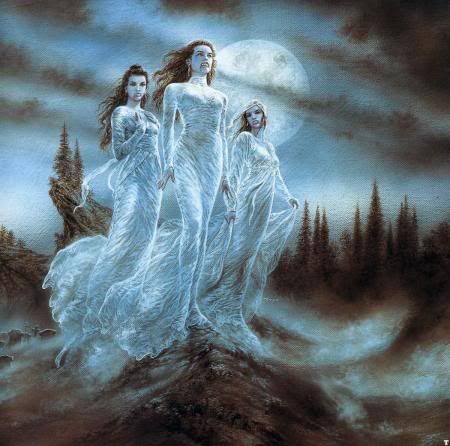
For the province of Xinjiang where the Ugyhur ethnic group are one of the main and biggest groups in that region, it is very likely that the vampires there are mainly those Turkish and Middle eastern Vampires types.


In the province of Heilongjiang which borders Manchuria region, and Mongolia as well as Russia, There, lies many Ethnic Russian Chinese and hence Russian Vampires can also be found near that region of China.
Read more >>

Tuesday, November 9, 2010

What ARE Myanmar Vampires all about

Among one of the most Fierce Vampires in the continent of Asia are those of India, Thailand and Myanmar.

Thaye - Tases

Thaye or Tasei were disembodied evil spirits with appearances of people that are tall , dark, huge ears, long tongues and tusk-like teeth. They resided near villages at the local cemeteries. On occasion they assumed characteristics of vampires and ghouls and fed on corpses or went into the village to attack living people.They entered the towns during the noon or by dark and causes minor illness.

Most of the Myanmar vampires were when human, evil ! The thaye / tasei, were malevolent ghosts that because of their evil earthly life, condemned to their disembodied state until they had worked out their karmic difficulties and were eventually reborn into another body. These disembodied ghosts, at times, took on a kind of visible materiality.

In the folklore, protection from ghosts was provided by a Lehpwe, an amulet for a variety of purposes. One such amulet consisted of a drawing of an elephant made from the letters of the Myanmar alphabet. Popular in earlier centuries was tattooing of the body in the area between the navel and the knee. There were also specific rituals to banish ghosts from a village, both brief ones for individual use and longer ones for the community.

Akathaso


It is an evil tree-spirit similar to the Yara-Ma-Yha!

They are natss (spirits) who inhabit trees in Burmese folklore. They are believed to live on the tops of trees, and are guardians of the sky. Yokkhaso and bhummaso are are also nats that live on the trunks and roots of the trees respectively.

Kephn


KEPHN is one of the Burmese Vampires species that's both a Vampire as well as a powerful Sorcerer. Among the Karen tribes of Burma generally linked to sorcery, Kephn is in the shape of a floating head and stomach and it's preferred meal is the human soul.

The description of the Kephn is very similar to the 'Penanggalan of Malysia/Indonesia and the Phii Krasue of Thailand. This Sorcerer which has a pact with the demonic forces, transforms at the dead of night into a ghoulish floating head and stomach. When in this new apparition shape, the Kephn sucks the souls of the living and can even transport these souls into the bodies of the long deceased - creating zombie slaves.

The Kephn are incredibly strong and deceptively crafty. They can be easily disposed of in the daytime ( when still in the form of the human sorcerer which summoned it), decapitation and immediate cremation is recommended.

When this brutal creature roams the night in the full supernatural splendor, it's best to hunt it with a team of up to a dozen prepared and well armed people. Decapitation and burning the remains is still the most noted course of action.

The only human being known to have been able to defeat a Kephn in one-on-one combat was a Ghurka, a well trained Burmese soldier, using a superbly crafted KUKRI KNIFE based on legends.

TASE

Another Evil Burmese creatures is the TASE ! This psychic entities are difficult to distinguish between a vampire or a ghost. They are a breed of blood drinking specters associated with spreading plague and disease.

Actually, there are three subspecies of the Tase, the first and most rare among is the Hminza-Tase. It is a demon which possesses the bodies of animals such as owls, crocodiles, tigers or other creatures, and then slaughters the species. Afterwards it proceeds to lure humans into remote parts of the woods, rip them to pieces and drink their blood.

The second subspecies is the Thabet-Tase, consisting of the angry spirit of woman who has died in childbirth. They feed of the sexual energies of men, especially in their sleep, and delight in trying to stop newly married couples from having any children.

The third is the Thaye-Tase, disgusting giants which spread disease, and are believed to be trapped spirits who've gone insane from being stuck between planes of existence.

Swawmx

Despite involved in much vampiric activities, A Swawmx is likely to be a Vampire Deity worshiped by the Burmese.
Read more >>

Sunday, November 7, 2010

How to Create a Tulpa - ThoughtForms and Manifestations

A 'Tulpa' is a 'ThoughtForm', a psychospiritual melding of mind and energy used to create consciousness simply through willing it into existence. Tulpas are artificially created non-physical entities brought into being through the powers of meditation and visualization, in essence and theory Tulpas are powerful slaves created from the minds of their Masters, conjured forth and given being from chaos, to perform specific tasks.

The Tulpa being of no mass may travel vast distances freely and with great speed, performing the duties of those who create them. And Tulpas may be used to act out virtuous errands, or those more nefarious.

Historically the Tulpa are creatures associated with Tibetan Buddhism, and the Buddhist religion suggests that it is the mind that creates this world of appearances in which we now dwell, and as such the mind is capable of creating any physical object desired, simply through will.

[Click here to read full article]
Read more >>

Friday, November 5, 2010

What are Indian Vampires All About? ( क्या भारतीय पिशाच है सब के बारे में? )

Out of the many Vampires throughout Asia, the Vampires of India especially and particularly are among one, out of the many the most fearsome ones of Asian Vampires. Indian Vampires can be generally classified as Demigods (Half God and Half Human or Demon).

The BrahmarākŞhasa / Brahmaparusha
The first is a North Indian Vampire known as the BrahmarākŞhasa or what some called as the Brahmaparusha. This vampire had a head encircled by intestines and drinks blood through it's skull which it would always carry around.


This evil vampire enjoyed eating humans and drinks it's victim blood from the skull it carried thereafter eating the brain. After this is done, it will wrap the intestines of the victim around it's own body to perform a ritual dance.

Bhuta / Prét
Bhuta is basically a vampire ghost. This ghost is of a person who died an untimely death like execution, accident, or suicide or leaded an unholy or immoral life. Bhutas appear as flickering lights or misty apparitions that cast no shadows and linger above the ground. They appear as dark shadows, Bhutas haunt forests and empty dwellings by day and night.

Occasionally, they would enter a corpse and lead it in its ghoulish state to devour living persons. Something similar to the Bhuta would be the Brahmaparusha from northern India.

Bhutas lived around cremation grounds, old ruins and other abandoned locations, and in deserts. They can transform into owls or bats. In Indian believes, it is considered unlucky to hear the owl's hoot, possibly fatal if heard in a burial ground. Owl flesh could be used in black magic rituals.

Bhutas were the ever-present evil spirits and were considered dangerous for a wide variety of reasons. They ate filthy food and were always thirsty. They liked milk and would attack babies who had just fed. They could enter the body through various orifices and possess a person. While the Bhutas might act in a vampirish way on occasion, they generally were seen as simply malevolent beings.

Churel / Chudail / Churail Devanagari चुडेल
A Churel is ghost like vampire that is vicious and vengeful. She is very unhappy ghost ! She hates life, and keeps all her greatest spite for her relatives


Usually the case of a woman who died while pregnant during the Diwali festival or considered to be unclean at any point of time. She could be a woman who died in child birth or when menstruating. They have vile appearances, processes pendulant/ sagging breasts, unkept / untidy hair , thick ugly lips and long thick black tongues. Often, her feet are backwards.

However, she can also be very beautiful and has what it takes to charm any man and usually it is young , handsome and strong man. She keeps them as captive and drains life slowly until they become into withered old and weak men. As her death has been said to be connected with young man, she hence preys on them.

The churel usually lives near small rivers or springs. She is either seen wearing a white or a red sari, representing a widow or a bride respectively. Along with this there's also a group of people telling that a churel is a spirit with enormous power who has sacrificed herself by giving her back part of meat in some ceremony of getting powers through black magic and that they can be at times be found at the place of their death too.

Masani
Is a female vampire of India; she is said to be the spirit of the burial grounds. The Masani is black in appearance and her hunts are conducted at night, starting as she emerges from a funeral pyre. Anyone passing the burial site will be attacked.

Masan
A vampire from India said to be usually the ghost of a child that delights in tormenting and killing children. The Masan is said to be able to curse a child that walks in its shadow. It will also follow a woman home should she allow her gown drag on the ground over his shadow.

Rakshasas / Rakshasis
The Rakshasas (female is Rakshasis) the most well known vampires from the Tal. they were nocturnal wanderers of the night. They had a fearsome appearance with elongated fangs. The natural enemy of the rakshasas was Agni, the dispeller of darkness and officiator at sacrificial ritual, and people called on Agni to destroy or ward off demons.


It is a ogres or demon like vampire and viewed as a demigod by many. It lives near the cemeteries and disturbs affairs of human by the means of disrupting rituals and devotions. The most loathsome thing that of it will be the slaying of infants.

Rakshasas has a variety of froms. some are males and females, some are humanoid and some half animals.
A Deity, Hanuman, which appeared in the form of a monkey, was reported to have observed rakshasas in every imaginable shape when he entered the city of Lanka as an envoy of Ramam.

In several Indian epics such as Mahabharata and the Ramayana , Rakshasas are often being characterized. In fact, many of the deities and mythical heroes gained their reputation by slaying rakshasas.

Vetala / Vental
This Vampire is a Zombie like spirit also known as Betail and it both inhabits and animated bodies of the dead. Ventals are in many indian stories and legends the very subject of it.
This such vampire that lives in corpses leave at night searching for a prey. For as long as they are the habitat of a vampire, the corpse will remain incorruptible. The body does become monstrous looking and does not resemble the host after inhabitation.  They can be described as humanoid versions of the fruit bats that are native to the region.


Pacu Pati
A powerful vampire from India. The creature is deemed lord of all beings of mischief. It is seem at night in cemeteries and places of execution.

Baital / Baitala
A vampire from India is a half-man/half bat creature, which stands around 4ft tall.


Pisacha
A vampire from India, said to be a creature created by humanity’s vices. While it is in general an evil deity, its favorite past time being the consumption of fresh corpses, it can also cure diseases if enticed too.


Chordewa
A witch found among the Oraons, (Bengal) capable of turning her soul into a form of vampire cat. It is said that if the cat licks person’s lips that they will die soon after.

Gayal
A vampiric spirit from India. Usually created due to the death of a man who has no one to properly perform the burial rites at his funeral. When he returns the Gayal reeks his revenge upon the sons of others and upon his on relatives. The threat of a relative returning as a Gayal usually ensures that the proper funeral rites are performed.


Hahn Saburo
Living in forests of India these vampires will attempt to drive or lure travelers into the forest to attack them. They also have the ability to control dogs.

Jigarkhwar
A vampiric sorceress found in the Sind region of India. She feeds by extracting a person’s liver through a piercing stare and various incantations. The liver is then cooked on a fire and eaten, at which time the victim dies.


Kali / Kalika
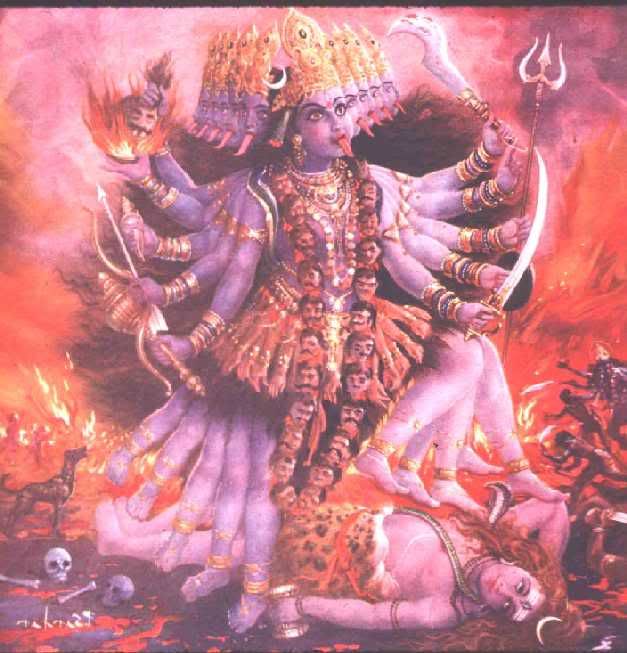
Has fangs or sharp teeth and black skin. She is seen as the dark goddess and is said to control the dark creatures.  It is said she got her vampirism after having to drink the blood of Raktaviya, the King of Demons, in order to defeat him.

Read more >>

Monday, November 1, 2010

What is a Chinese Vampire All About ? 华人殭屍是什麼一回事?


What is a Chinese Vampire all about? Well, the impression that most of us have is those from the movies and we would often thought that only during the Qing dynasty which was the last dynasty of china that has vampires.

In actual fact, those you see from the movies are Manchurian Vampires to be more exact.

Chinese Vampires is all about that skipping, hopping , jumping or leaping around.

There are many grades of them. The rather lower grade ones, ya , they are the jumping ones something somewhat similar to what you see in the movies. However, the higher grades ones do not.

所谓吸血僵尸是什么?
我们大家都熟习的中华式吸血僵尸,恐怕只限于清朝。
其清朝为中国最后朝代,而电影中所见的吸血僵尸,只限于清朝而已。
有人视为满洲式僵尸。

中华式吸血僵尸, 所谓行走方式为一步一步往前跳。

吸血僵尸分阶级。低级的如电影中一步一步跳。高级才非也。


The Higher grades ones have the ability of transformations in animals etc.. and some even have the ability of elemental summoning or other forms of summoning !

The only way to really have a Chinese Vampire destroyed is by the means of cremation. They are really destroyed once they have been turned into ashes.

As long as they are not turned into ashes, they are never destroyed in the first place. If you want to destroy a Chinese, Do really destroy it and do not allow it a chance to escape and recover.

The reason would that once it fully recovers from the wounds and injuries you have inflected on it, it will be become more and more powerful that before. Defeating and destroying it simply just gets harder and harder each time by then.

The Common point of Vampires of Asia regardless which race or nationality it is from, as long as they are Asians they share a common point which is that they cannot cross water!

I am talking about rivers, lakes , oceans etc.. when i am say that they cannot cross waters. The only way is unless they are being transported across the waters by other means such as boat etc... But if it just crossing of the waters by themselves on their own, they are not able to do so.

高级吸血僵尸, 具有变身成动物等等, 或者操作火水风雷。

毁灭吸血僵尸的唯一方法,只限于焚化烧尸。 化成灰为灭。

不化成灰, 非灭。要毁灭中华式吸血僵尸就要彻底。

如果被打伤而有机恢复痊愈,就成不如前之强化敌军,随着败北次数愈难攻愈不落。

亚洲吸血鬼共同点乃: 无法渡水。

所谓水为川,湖,海。渡水体唯一方式为搭船。否则,渡海不可。

Things that can be used on a Chinese Vampire when exorcising it or protecting yourself would be as follows :
1) Garlic 大蒜
2) Glutinous rice 糯米 (they must not be cooked !)
3) Salt 鹽

The rest not mentioned, leave it to the exorcist master !
The above mentioned 3 are already fundamental and basic enough.

For your information, the Western or the Caucasian way of Vampire exorcism such as Holy water, the Cross, Bible or by the means of piercing the heart of the vampire cannot defeat or exorcist a Chinese Vampire. It is defiantly not applicable and has no effects on the Chinese Vampire.

There are many ways how a Vampire can come into existence. The below would just some out of the many.

1) Victims of Premature burial
2) Improper Death
3) Suicide 自殺
4) Desires to cause trouble to the living after death
5) Coffin exposed to Moonlight
6) Improper Burial Procedures
7) Died of a Violet Death
8) An angry and restless deceased when alive
9) or angry and restless dead on the living for postponing burial
10) A Black Cat that jump over the coffin 黑貓跳過棺材

To simplify how come a person can become into a vampire, it defiantly has something to do with the soul or spirit having troubles living the body when it really had should ! Hence, it became into a vampire, half dead half alive ! A dead not able to be really dead and the living that is not able to be alive.

It is only by the means of cremation that it can in peace finally once it has been turned into ashes. You can keep the ashes if you want to, but keep it properly this time and be very careful of it.

In any event that this ash is stolen, people who knows witchcraft and black magic can have this Vampire brought back to life again from the ashes. However if the ashes is being blown away by the wind and already scattered then this possibility is zero in the first place.

打退僵尸护身法,只唯有以下三点。

1) 大蒜
2) 糯米 (勿煮)
3) 盐

其他方式,由除魔高手处理。
以上三点为基。

西洋吸血鬼打退护身法例如:圣水,十字架,圣书,刺穿心脏,都无法打退中华僵尸 (下文省略成‘’中僵‘)。

中僵产生理由可多:例子如下

1) 过早埋葬
2)死法非自然
3)自杀
4)死后欲复生而在人间捣乱
5)棺材嗮月光
6) 不适合埋葬手续
7)暴力性死亡
8)死者生时持有执着
9)因埋葬日延期,走不下黄泉路
10)黑猫跳过棺材

人成中僵,有关人死后就魂无法脱尸。
结果,成为了半生半死的中僵。

只有焚化烧尸才能够让亡魂安息。
诺欲保管骨灰,要严管,要万分注意。

如果骨灰被夺走,黑魔术及亚述高手能够利用骨灰,让僵尸死而复生。

但如果骨灰被风吹散,死而复生可能性一切归零。
Read more >>

Tuesday, March 30, 2010

Da Gua (Beating ghost) Ceremony in Lama Temple

Monks in costumes attend a religious ceremony, known as "Da Gui" or "beating ghost", at Yong He Gong, also known as the Tibetan Buddhist Lama Temple, in Beijing March 15, 2010. The ceremony is held annually during the Tibetan New Year as it is believed to expel evil spirits from the monastery.


Picture is (C) copyright to Sina English

Monks watch a religious ceremony, known as "Da Gui" or "beating ghost", at Yong He Gong, also known as the Tibetan Buddhist Lama Temple, in Beijing March 15, 2010. The ceremony is held annually during the Tibetan New Year as it is believed to expel evil spirits from the monastery.


Picture is (C) copyright to Sina English

[Click here to read full article]
Read more >>

Thursday, January 7, 2010

Tibetan Sound Levitation Of Large Stones Witnessed By Scientist

by Bruce Cathie

A New Zealand scientist recently gave me an intriguing extract from an article published in a German magazine, relating to a demonstration of levitation in Tibet. After obtaining a translation by a German journalist, in English, I was amazed at the information contained in the story, and was surprised that the article had slipped through the suppression net which tends to keep such knowledge from leaking out to the public.

All the similar types of stories that I had read up until now were generally devoid of specific information necessary to prove the veracity of the account. In this case a full set of geometric measurements were taken, and I discovered, to my great delight, that when they were converted to their equivalent geodetic measures, relating to grid harmonics the values gave a direct association with those in the unified harmonic equations published in my earlier works.

The following extracts are translations taken from the German article: 'We know from the priests of the far east that they were able to lift heavy boulders up high mountains with the help of groups of various sounds...the knowledge of the various vibrations in the audio range demonstrates to a scientist of physics that a vibrating and condensed sound field can nullify the power of gravitation. Swedish engineer Olaf Alexanderson wrote about this phenomenon in the publication, Implosion No. 13.

The following report is based on observations which were made only 20 years ago in Tibet. I have this report from civil engineer and flight manager, Henry Kjelson, a friend of mine. He later on included this report in his book, The Lost Techniques. This is his report.

Click here to read full article

Read more >>

Sunday, November 29, 2009

Shangri-La: has it been found?

Shangri-La, the mystical mountain fastness and magnet for some unusual beliefs (including being the target of a Nazi expedition), but has it been found?

Shangrila Cliff

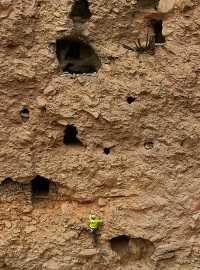
Climber Renan Ozturk watches a local Tibetan look at an illuminated manuscript found during an August 2008 expedition to remote Himalayan caves in the ancient kingdom of Mustang, today part of Nepal.

The folio is part of a treasure trove of 15th-century Tibetan art and manuscripts that could be linked to the real-world inspiration for Shangri-La, a fictional paradise described by British writer James Hilton in his popular 1930s novel Lost Horizon.

Until recently few have been able to explore the mysterious caves--carved high into sheer cliff faces--because Upper Mustang is a restricted area of Nepal that was long closed to outsiders. Today only a thousand foreigners a year are allowed into the region.

Click here to read full article
Read more >>

Friday, November 27, 2009

Boy chosen by Dalai Lama turns back on Buddhist order

As a toddler, he was put on a throne and worshipped by monks who treated him like a god. But the boy chosen by the Dalai Lama as a reincarnation of a spiritual leader has caused consternation – and some embarrassment – for Tibetan Buddhists by turning his back on the order that had such high hopes for him.

Instead of leading a monastic life, Osel Hita Torres now sports baggy trousers and long hair, and is more likely to quote Jimi Hendrix than Buddha.

Yesterday he bemoaned the misery of a youth deprived of television, football and girls. Movies were also forbidden – except for a sanctioned screening of The Golden Child starring Eddie Murphy, about a kidnapped child lama with magical powers. "I never felt like that boy," he said.

He is now studying film in Madrid and has denounced the Buddhist order that elevated him to guru status. "They took me away from my family and stuck me in a medieval situation in which I suffered a great deal," said Torres, 24, describing how he was whisked from obscurity in Granada to a monastery in southern India. "It was like living a lie," he told the Spanish newspaper El Mundo.

Despite his rebelliousness, he is still known as Lama Tenzin Osel Rinpoche and revered by the Buddhist community. A prayer for his "long life" still adorns the website of the Foundation to Preserve the Mahayana Tradition, which has 130 centres around the world. The website features a biography of the renegade guru that gushes about his peaceful, meditative countenance as a baby.

In Tibetan Buddhism, a lama is one of a lineage of reincarnated spiritual leaders, the most famous of which is the Dalai Lama.

Click here to read full article
Read more >>
 
Asia Paranormal Google Page Rank
AsiaParanormal Blogger Template "Sleek 2" Designed by HypeSeek © 2012