A personal message from Oregon Chang

Have you had a close encounter story or witnessed something unusual that you would like to share?

Do you wish to collaborate with Asia Paranormal through link or content exchange?

Do you have any enquiries or feedback?

Email us at AsiaParanormal@gmail.com

We look forward to hearing from you!

Follow us on Subscribe Asia Paranormal in your favorite reader. Follow Asia Paranormal in Facebook. Follow Asia Paranormal in Twitter. Follow Asia Paranormal Youtube channel.

Vote for us! We are listed at the www.topparanormalsites.com website. Click here to vote for us.. Thank you :-)

Best regards, on behalf of team AsiaParanormal

Master Orthodox Occultist Oregon Chang, The 17th generation Disciple of Seven Stars Sword Master Hebei China

Showing posts with label Laos. Show all posts

Sunday, October 21, 2012

Weretigers or Werecats in Asian Mythlogy

In the cultures of the West, Werewolves and Vampires are very much popular.
However in the East, where Asians lived in, it is instead more about Weretigers.

While werewolves were thought to be the predators of vampire by nature but however, most of the time these predators are in the control of their prey, the Vampires in most stories.

So , Werewolves are by nature predators of Vampires and in turn the are the prey to their predators , the Weretigers whom are mostly Asian, their distant cousin!

We have all heard of the werewolf. The werewolf has a distant cousin, so to speak. Not as well known outside of Asia, is a mythical creature called a weretiger, also more recently known as a werecat. Before the late 19th century they were all known as weretigers. They are not to be mistaken for the spirit tiger which is a familiar under the control of a supernatural being or a “nat”. The familiar is used to do the bidding of the nat.

[Click here to read full article]
Read more >>

Monday, October 1, 2012

Reversing a Love spell Black magic ( Thailand)

My ex-girlfriend from 15 years ago was half Lao, half Thai. Her mother was Thai and this lady was a hardcore "researcher" on voodoo and fortune telling. She had this thick black book that she would worship like the holy bible. This book was honky huge and the text were all in fine print with some small diagrams and drawings on most of the pages. At the time I was only 20 and thought her mom sure devoting alot of time to such a useless "hobby". She did however read my fortune up about 8 years from the time of the reading with coincedental accuracy :-/ by reading my palms and face features? I was only dating the daughter for about 3 and a half years and was head over heals in love with this girl.

To keep from telling a long story, theres no doubt the parents wanted their daughter to marry me due to my family prominence and since her family were immigrants to Canada, held that so called status in very high regard. Her family often told their friends we were already engaged and not in a joking manner. If the mom truly believed a love spell exists and would work, its a certainty she would have cast the spell on me. They often lavished me with traditional food and soups when I was over.

When the daughter and I broke up, I was heartbroken and my life was turned upside down. I even dropped out of University and went down a different path in life. Thoughts of this girl pop in my head numerous times every day without fail for the last 15 years! This is simply ridiculous because I have zero intention of ever getting back together with such a money-hungry, superficial person. I've been in numerous long-term relationships and breakups over the past 15 yrs so I know what heartbreak feels like. And these daily thoughts my ex on a daily basis over this span of time are completely un-natural since I have no wish or desire to even see this girl again.

Like I mentioned earlier, I haven't heard of a Thai love spell until a few days ago and even if I had heard of such a thing, would have laughed at such a silly notion. Nevertheless, hypothetically speaking, I would like know if there is any way to reverse a love spell. Does anyone know how I might go about lifting such a spell??? I couldnt find anything on the net about it except that its suppose to last for life. Of course I definately dont want to ask my Mom or anyone I know in fear of sounding like a mental patient. lol 

[Click here to read full article]
Read more >>

Wednesday, May 23, 2012

Mythological creature caught by US soldiers in Laos?


by Oregon Chang

Recently I embarked on a spiritual enlightenment trip to Laos. It was an eye opener, at the very least. I did not forget to put in some R&R too; it was at one of those tourist trap shops where I noticed this poster as seen in the photo above.

"What is this?" I asked my local associate who was showing me the delightful sights and sounds of Laos.

"This, is what is known as the Naga, a legendary creature from Laos," she replied.

"Surely, you can't be serious," I asked. "This, whether its a fish or snake, is huge!"

She smiled and explained to me that this photo was taken in the 1970s, by a group of US army soldiers who were training in the area. They caught a Naga in the Mekong River near Nong Khai. Once believed to be a legendary mythical creature, now it has passed from legend into reality.

This photo become famously known as the "Queen of Nagas seized by American Army at Mekhong River, Laos Military Base". It was said to be taken on June 27, 1973 with the length of 7.80 meters.

This piqued my interest. I had to find out more.

The Naga refers to a snake, serpent or dragon-like creature prevalent in Hindu and Buddhist mythology. It is also especially mentioned in many South East Asian cultures, mainly Laos, Thailand and Cambodia.

The people of Laos especially fear and respect this creature; they even hold annual sacrifices to the Naga. This is for protection and safety while they transverse the Mekong river.

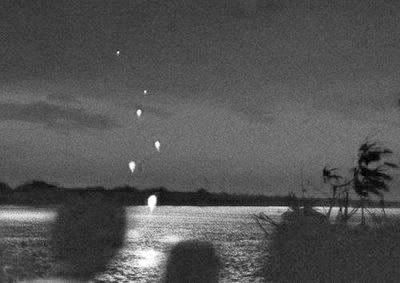
Adding to their belief that such a creature actually exists are the Naga Fireballs phenomena. This phenomenon occurs mostly around late October every year. A series of "fireball lights" rise from the Mekong River into the night sky. This is a similar effect to the St Elmo's Fire or Will O' the Wisp phenomena.

[The Will-o'-the-wisp phenomenon]

So are the legends true? Was a Naga really caught by soliders as seen in the photo? A quick investigation reveals that this photo was not faked, but more likely a photo or a normal oarfish.


This is a photo of some people holding up a dead oarfish I found on the internet. Notice the similarities?

Further research reveals that the photograph is actually that taken by USN LT DeeDee Van Wormer, of an oarfish found in late 1996 by US Navy SEAL trainees on the coast of Coronado, California.


This is a picture of the news report accompanying the actual photograph.

So the legend has been debunked. But how did a picture taken in the USA in 1996 become known as a famous photo said to be taken in Laos in 1973?

My research brought me to this article A Big Fish Tale written by Trevor Ranges. He surmised that an enterprising entrepreneur in Laos or Thailand probably chanced upon this photo on the internet and siezed the opportunity to use it for financial gain. The story and photo, coupled with the locals' strong beliefs in the creature, fueled the legend and so it grew.

There you have it. A legend debunked through simple investigation on the Internet. I mentioned my findings to my Laos associate.

She replied, "Well, even if its not a Naga in the photo, we still strongly believe that the Naga still resides in the river and we must respect it."

As a Master of the Paranormal, I would choose to believe that some creature must exists in the waters of the Mekong, otherwise there would not be such firm beliefs from the locals.

Whether its existence can be proven or not remains to be seen.
Read more >>

Tuesday, March 27, 2012

My Aunt Mai and the Neglected Boy

Source: Your Ghost Stories

This an old story that happened a long time ago back in Laos. This was the story that happened to my aunt, my mom's sister. My aunt Mai was the eldest unwed girl in her village at the age of 17. So she was the mother figure to a lot of the children in the neighborhood.

There was a young boy at the age of 6 that Mai took care of day in and day out, because his parents were constantly arguing and violence was involved. Divorce is considered to be a disgrace and one would rather die than have a divorce back then.

One night, the little boy ended up at Mai's front door, shivering. Mai took him in and warmed the boy up. The boy said his parents were arguing all night, then it was silent and he noticed that he was home alone. Now these were not regular insulated homes, the homes, back then, were just huts made of banana leaves and twigs.

The entire village must have heard them arguing that night, but ignored it. Morning came and the boy's parents still did not come to claim the boy. Mai took the boy next door to his house and knocked on the door, yet no one opened. Night came and Mai heard voices coming from the little boy's house. So she took the boy and went next door. She kicked the door open and to her surprise she saw another woman in the arms of the boy's father. Mai apologized for intruding but explained the reason why she was there - to bring his son home.

Days turned into weeks, no one in the village heard or seen of the boy's mother since that night. The mother's parents came to the house demanding to speak with their daughter but the boy's father would say she had left with another man. The village knew the mother was not the type to do such a thing, and gossips filled the community that he had murdered her but there wasn't enough evidence to prove it. The father went around the county with his new bride, leaving his only son to Mai to take care of. The boy was not sad, did not mention he missed his mother, nor did he shed a tear for her... Mai got concerned.

One morning, Mai went to pick up the boy from his house. The boy came out of the house, waved in the direction of his father - his father who wasn't looking at him - and came out of the house with a smile. Mai asked him why he was so happy. He said his mother is taking him away from here. Mai was confused, she asked, "Where IS your mother?" The little boy replied, "Dad loves her a lot now, every day he carries her on his back." Mai's mouth dropped. The boy said, "Just look at them, aren't they happy" as he looked into the house toward his father. Mai looked inside, she only saw the father's back turned facing them with his new wife cooking - no sign of the mother.

My aunt said a week after that the little boy mysteriously passed away. Some said it was due to an illness that he contracted and since they lived in the rural, nothing could save him but my aunt said it was because his mother came to get him away from his horrible father.
Read more >>

Wednesday, September 21, 2011

The Ancient Mystery of the ‘Plain Of Jars'


Maybe you noticed already, that I’m a fan of Laos. This has a number of reasons, one being, that Laos is today, what Thailand was 20 years ago. It’s a laid-back secluded country, with lot’s of mysteries, unique activities and quirky originalities.`

Can you imagine a place on earth, where huge stone jars are scattered on a giant plain; like the Gods just stood up from their meal and left all their pots and containers lie around? This is how it looks in a secret place in Laos - welcome to the ‘Plain of Jars’:

The Plain of Jars is an historic cultural site in Laos, containing thousands of enormous stone or clay jars, which lie scattered throughout the Xieng Khouang plain in the Laotian Highlands at the northern end of the Annamese Cordillera, the principal mountain range of Indochina.

Lao stories and legends claim that there was a race of giants who once inhabited the area. Local legend tells of an ancient king called Khun Cheung, who fought a long, victorious battle against his enemy. He supposedly created the jars to brew and store huge amounts of lao lao rice wine to celebrate his victory.

Although there is no scientific explanation as to how these jars found their way onto the plain, nor what purpose they served, Archaeologists have come up with the wildest theories, among them a claim declaring them brewery cauldrons.

Other say, the jars are enormous urns, around 2,000 years old. There is speculation again, that the plain was at the connection point of old Caravan Routes coming from India and the jars were simply unloaded here, but forgotten in time.
Read more >>

Thursday, November 25, 2010

Ethnic Chinese Groups Vampires ( 中华僵尸)


Despite that Egypt and India has been considered the birthplace of the vampire. However , the home of the vampire is actually from Tibet. The Greece's Santorini island is traditionally the most vampire-infested place in the world

Contradict speaking, European Sources claimed that the world's first vampire was from China ! In the past, based on many ancient European sources, it has been firmly believed by many that Vampires originated from China and it was through the silk road it next spread over into India followed by the middle east , then the Mediterranean eventually into the whole of Europe.



Chinese vampires is being known as the Jiang Shi. The types of Vampires in China can varies from the different region , provinces & even Ethnic groups. Chinese Vampires has many variations. The below 2 would some examples.

The Beheaded Vampire
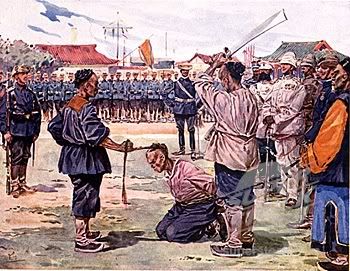


This a vampire whose head has been chop off ! The head flies around during the night constantly seeking for it's own body with the objective of uniting with it's own original body.
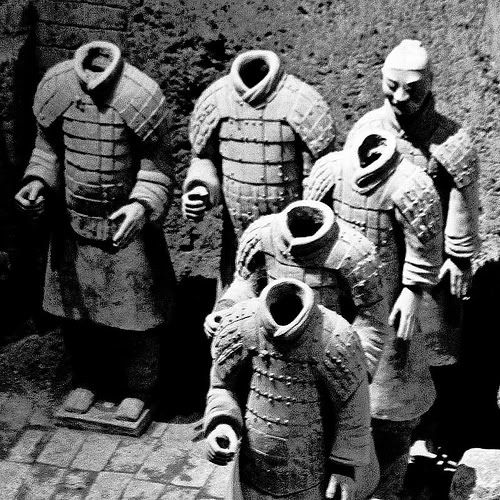


By itself, this flying head is a vampire and is very powerful. Do bare in mind that this beheaded vampire must never reunite with a body. This is because once it does, it will become even far much more powerful and unstoppable than before. You will have to once again separate it from the body and separately destroy the body and head in order to fully destroy it.
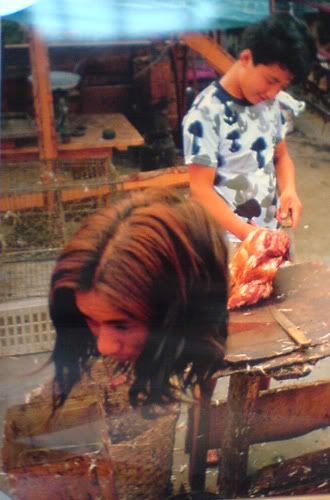

Sometimes it can operate separately ! The head is looking for the body and the body is looking for it's own head. However this is not in every case.

There are also cases where which this head will seek for substitute body. In such cases, this substitute will be from a living human.

Blood Demon (血魔)
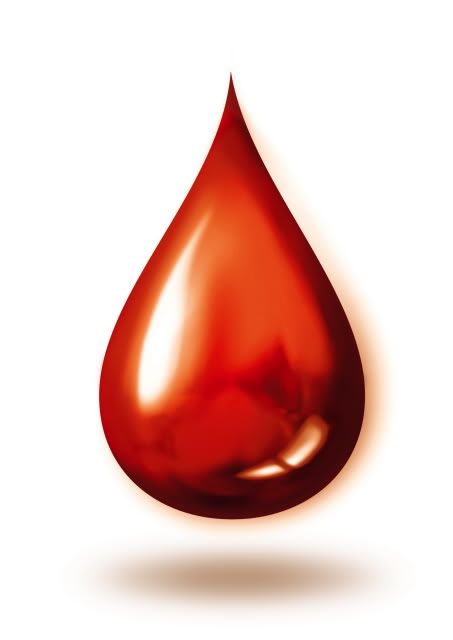


Very little is known about this demon. What is known is that this demon is far much more superior than the vampire. Vampires in comparison with this Blood Demon (血魔) is considered to be very inferior. Even a gang of vampires cannot defeat one single Blood Demon (血魔) at all !

The Blood Demon (血魔) comprises from the element of blood. It has been said that it was a ill fated human who led a life of misery, Hate, anger, and vengeance whom under some form of encounters that had him transformed into a demon of blood element which is known to be as the Blood Demon (血魔).

When a blood curse from this Blood Demon (血魔) is being casted on it's victim, The victim will become extremely insanely murderous, merciless , brutal, cruel & violent. This victim will have inhumanly behavior like some unleashed beast or monster that cannot be contained. He or She will have a Strong passion for killing and loves the sight of blood.

There are only 56 Ethnic groups which are being classified and categorized as the official and recognized ethnic groups of mainland China. Any other Ethnic groups who do not belong to this 56 are considered to be as unofficial and unrecognized in China.

Let's have a look a few of these various vampires of the different ethnic Chinese groups or different Chinese regions.

Ethnic Manchurian Chinese Vampire
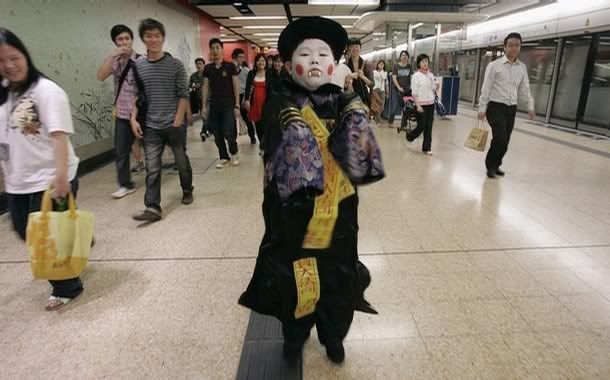


The Most common Vampires known to most of us from the media is the Ethnic Manchurian Chinese Vampires which is very zombie like and it jumps and hops around. They rise from their graves or coffins to find victims. They don't speak human languages as they communicate with one another in their own vampire language. Their body is very stiff and hard. They also do not feel any pain.

Ethnic Mongolian Chinese Vampire

In the province of Inner Mongolia which is part of China as well as it's neighbor, Mongolia, The Mongol Ethnic groups also have their own versions of Vampires as well.

The Mongol's Version of Vampire would be :
Aniukha
Mongolian God of Time
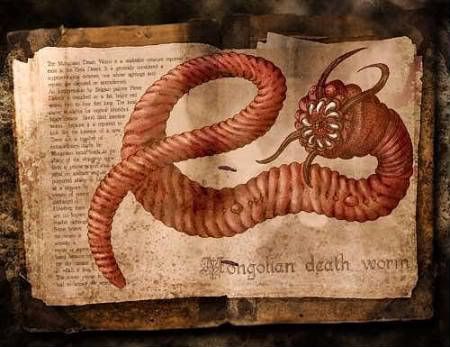
Mongolian Death Worm ( Sometimes considered to be as a Vampire)


Aniukha

This Ethnic Mongolian Chinese vampire, Aniukha is the spirit of a shaman who has used his power to return from the dead. All shamans have returned from the dead once: a ritual death and rebirth is part of their initiation into becoming a shaman.

However, even though the shaman exists on the threshold between life and death, he is expected to use the powers this grants him only for the good of his community. When he uses these powers for his own ends, he can become a fearsome being indeed. Once a shaman has become an Aniukha, the best way to dispose of him is to drive an aspen stake through his corpse and then cremate him

Ethnic Tibetan Chinese Vampires

The below would be a list of some of Vampire types from the Tibet province of China.

1) Bhagavan Vajra Heruka
2) Vajra Krotishaurima
3) Ratna-Herucka
4) Padma-Heruka
5) Dark-Green Ghasmari
6) Kerimas
7) The Lotus Order
8) Dakini
9) Khadro
10) Tibetan Lord of Death
11) Yama the Tibetan Devil

China's province of Tibet and many of the other regions of China is just like India as in that they possesses rich pantheon of supernatural entities and that many of them had some form of vampiric qualities. Much of it was also shared with neighboring nations such as Nepal, Sikkim, Mongolia and many more.

As for the Tibetans, the most visible of the vampiric entities were the so-called Wrathful Deities who appeared in The Tibetan Book of the Dead. This volume described what Tibetan Buddhists believed would be experienced by individuals in the days immediately following their death.

During these days, the deceased generally wandered into an area dominated by karma (the law of consequences) where the higher impulses of the heart gave way to the reasonings of the brain centers. The heart impulses were personified by the Peaceful Deities.

The brain reasonings were personified by the Wrathful Deities. Contemporary writers on Tibetan Buddhism have generally emphasized that the deities were not objectively real, but were the products of the person picturing aspects of the self. However, in traditional Buddhist lore, they were pictured as part of a true supernatural realm.

The Wrathful Deities are also known as the 58 blood-drinking deities, these vampires were figures representing the brain's reason and the deceased's vampire activities, which appeared to the spirit of the recently dead from the eight day onwards whilst they wandered the karma-dominated zones of the afterlife in Buddhist teachings. These include:
Bhagavan Vajra- Heruka, Vajra-Krotishaurima, Ratna-Herucka, Padma-Heruka, Dark-Green Ghasmari, plus Eight Kerimas and The Lotus Order.

For example, the blood-drinking deities of the Vajra order appeared on the ninth day. Here the intellect was represented by Bhagavan Vajra-Heruka. In one hand he held a human scalp. He was embraced by his mother, Vajra-Krotishaurima, whose right hand held a red shell filled with blood that she placed at her son's mouth.

On the next day, one encountered Ratna-Heruka, who appeared like Vajra-Heruka, but was yellow rather than blue. The red Padma-Heruka appeared on the eleventh day. On the twelfth day, the blood-drinking deities of the Lotus Order were encountered. On the thirteenth day, the eight Kerimas were encountered. These deities had the heads of various animals and engaged in different vampiric and ghoulish actions.

One, the Dark-Green Ghasmari, for example, held a scalp filled with blood that she stirred with a dorje (a holy object) then drank from it. Other similar deities appeared daily throughout the fourteenth day. The dying person was given instructions on relating to the deities and prayers to acknowledge them. Individuals were also told to call upon the name of their own guru and their personal deity to sustain them in the loneliness of the after-death realms. It should be noted that these deities did not attack the individual who encountered them, rather they were pictured as general representations of vampiric actions previously committed by the deceased.

Dakini

A terrible and beautiful demi-goddess from the Tibetan tradition. The Dakinis appear to a person during the process of dying, and they are part of the long visionary journey that ensues after physical death and before the deceased chooses to reincarnate.

The Dakinis are ambivalent beings for they appear in frightening and terrible forms to the deceased, but only in order to get the dead person to address issues about his past life and resolve his attachments so he can move on to a higher existence. Many of the Dakinis are vampyric in nature, being described as naked women, sometimes with the heads of animals, who drink blood from chalices made of human skulls.

The Dakinis appear with the “peaceful and wrathful deities,” beings who, like the Dakinis, exhibit ghastly vampyric natures in an attempt to convince the deceased of the impermanency of the flesh.

Tibetan Lord of Death

The Tibetan Lord of Death, who, like the Nepalese Lord of Death and the Mongolian God of Time, subsisted by drinking the blood of sleeping people. This Tibetan god had a green face and a blue-green body. In his clawed hand he held the Wheel of Life.

The Nepalese god had three blood-shot eyes with flames issuing from his eyebrows and thunder and lightning from his nostrils. In his hands, he carried a sword and a cup of blood. He was decorated with human skulls. The Mongolian god, with his prominent canine teeth, was seen amidst a storm over a bloody sea.

There was also a belief in the pursuit of the living by the dead. The dead were cremated, in part, to prevent the soul from attempting to re-enter it. The soul after death, like person before death, became the object of ritual, in this case to keep it from interacting improperly with the realm of the living.

Sikkim Vampire

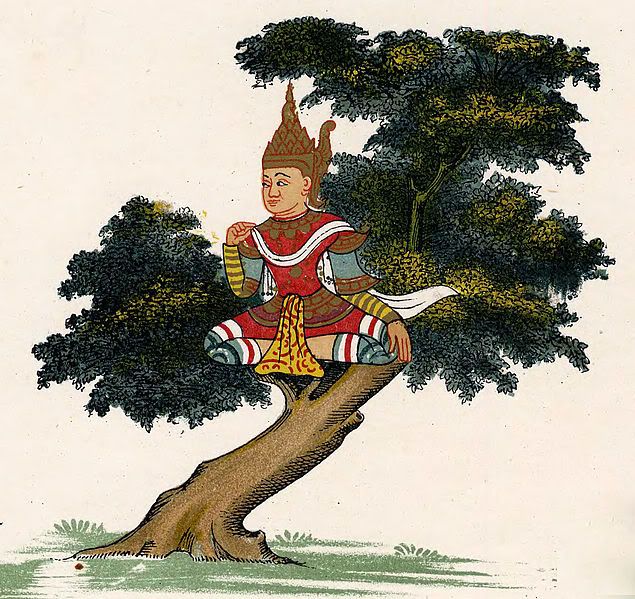
Sikkim is a neighbor to Tibet and during early eighteenth century, Princess Pedi Wangmo, the monarch's half-sister, plotted to kill her half-brother. With the assistance of a Tibetan doctor, she bled Chador Namgyal to death and drank his blood. She escaped the palace but was soon caught. Both she and her accomplice were killed. It was believed, by some, that after death she became a vampire. Her story was recounted in a fresco in a monastery in Sinon near Mt. Kanchenjunga.

Regions, Provinces and Neighbors' Vampires of China
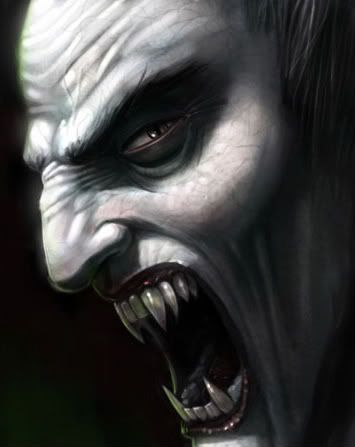


In fact, much of the vampires from India, Nepal and Bhutan can also be found in Tibet. Some of the Tibetan vampires can be found in her neighboring nations or regions.


As for the province of Yunan, much of the Thai (Siamese) and Myanmar ( Burma) vampires can also be found there and likewise some of the Chinese vampires from Yunan province can also be found in Indo-China , Myanmar (Burma) and Thailand ( Siam).


For the province of Xinjiang where the Ugyhur ethnic group are one of the main and biggest groups in that region, it is very likely that the vampires there are mainly those Turkish and Middle eastern Vampires types.


In the province of Heilongjiang which borders Manchuria region, and Mongolia as well as Russia, There, lies many Ethnic Russian Chinese and hence Russian Vampires can also be found near that region of China.
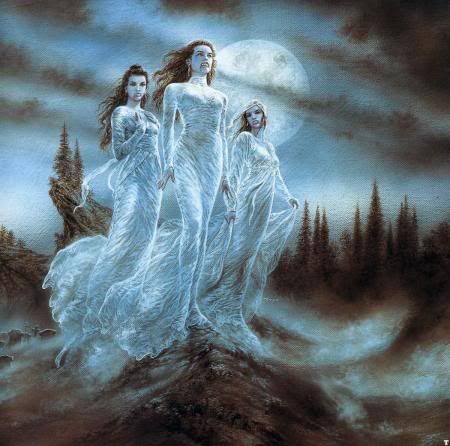
Read more >>

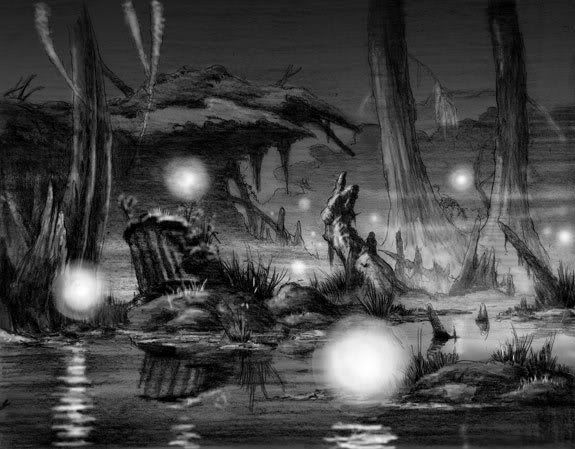
The Will-o'-the-wisp phenomenon

By Joan Seth

Will-o'-the-wisps are traditional depictions of ghostly lights often seen at night or twilight over swamps or marshes. They resemble flickering lights and are said to disappear suddenly when approached. Here, we take a look at various types of Will-o'-the-wisps in various Asian folklore.


Chir Batti (Ghost light) of Banni grasslands and the adjoining marshy salt flats of the Rann of Kutch in Gujarat State, India. It is described as a strange light as bright as a mercury lamp that changes its color to blue, red and yellow and resembles a moving ball (reported also pear shaped form) of fire, which may moves as fast as an arrow but may also stop. It is not just one light, but could appear at several places. The light has also been observed to becomes two from one.

Doggaebi bul (도깨비불) in Korea, "Doggaebi" being a traditional friendly monster with one or two horns on the head, and "bul" meaning fire.

Gandaspati in Indonesia, especially Central Java, a wicked spirit in flame that can take the form a dragon, and causes the death of whoever touches it.


Guǐ huǒ (鬼火) in Chinese, literally ghost fire. Often seen in graveyards or other places where dead bodies gather. As the dead bodies rot and decay phosphine is produced which spontaneously ignites in air in hot weather, the flames producing the sporadic lights seen in hot summer nights. Sometimes also referring to the completely different phenomena of phosphorescence or more rarely, ball lightning.


Kolli vai pisaasu, a Tamil term used to describe a ghost (pisaasu) with burning embers (kolli) in its mouth (vai). There is a contention whether will-o'-the-wisp and kolli vai pisaasu are the same.


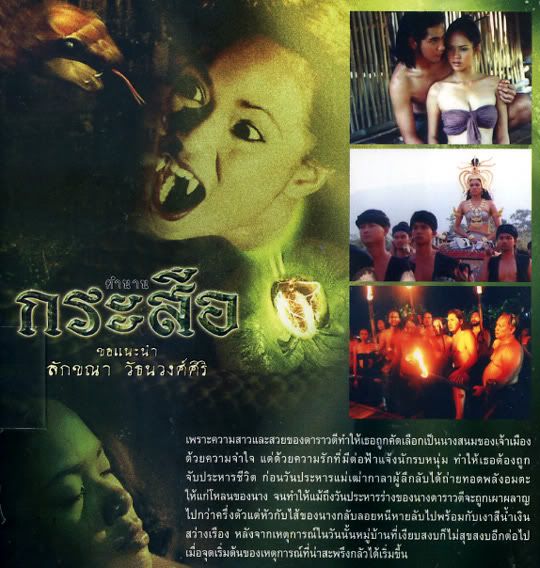
Kra Sue (ไฟกระสือ) Thai. Appears in the shape of fire ball flying over the dumping areas where, in the old times, Siamese people buried their excrement and the midwives dumped the placenta after giving birth. Hence it is believed that this "ghost" lived on the consumption of this waste. It is claimed that the fireball flickers on the heartbeat rhythm so that it is assumed to be the soul of a woman. Some reported that the true form of Kra Sue is a head of woman together with her entire digestion organs from esophagus to entrails, a heart, and lungs, flying in the night time preying on small lives. The flickering light observed is emitted from her heart.


Mekong lights or Nekha lights in Thailand and Laos are one of those fantastic manifestations of nature that science has yet to adequately explained. Apparently, in the Mekong River, near Nong Khai, Thailand, lights will appear under the river within a length of a few hundred meters. These lights slowly float to the surface and then shoot out like missles into the sky and out of sight. They are the size of beach balls. The local name for them is the Nekha lights. The Nekha is a large fish which lives in the river. Locals also claim the lights are actually the eggs layed by a giant serpent.


Onibi (鬼火) Japanese meaning ghost/demon fire. It's sometimes associated with or mistaken for the trickster 人魂 (hitodama or "human soul"), blue or green floating balls of fire assumed to be souls of people with unfinished business. Other Japanese myths consider the phenomenon a trick of the kitsune, employing their "fox-fire" (kitsune-bi) to lead travelers astray.
Read more >>

Tuesday, November 9, 2010

What ARE Myanmar Vampires all about

Among one of the most Fierce Vampires in the continent of Asia are those of India, Thailand and Myanmar.

Thaye - Tases

Thaye or Tasei were disembodied evil spirits with appearances of people that are tall , dark, huge ears, long tongues and tusk-like teeth. They resided near villages at the local cemeteries. On occasion they assumed characteristics of vampires and ghouls and fed on corpses or went into the village to attack living people.They entered the towns during the noon or by dark and causes minor illness.

Most of the Myanmar vampires were when human, evil ! The thaye / tasei, were malevolent ghosts that because of their evil earthly life, condemned to their disembodied state until they had worked out their karmic difficulties and were eventually reborn into another body. These disembodied ghosts, at times, took on a kind of visible materiality.

In the folklore, protection from ghosts was provided by a Lehpwe, an amulet for a variety of purposes. One such amulet consisted of a drawing of an elephant made from the letters of the Myanmar alphabet. Popular in earlier centuries was tattooing of the body in the area between the navel and the knee. There were also specific rituals to banish ghosts from a village, both brief ones for individual use and longer ones for the community.

Akathaso


It is an evil tree-spirit similar to the Yara-Ma-Yha!

They are natss (spirits) who inhabit trees in Burmese folklore. They are believed to live on the tops of trees, and are guardians of the sky. Yokkhaso and bhummaso are are also nats that live on the trunks and roots of the trees respectively.

Kephn


KEPHN is one of the Burmese Vampires species that's both a Vampire as well as a powerful Sorcerer. Among the Karen tribes of Burma generally linked to sorcery, Kephn is in the shape of a floating head and stomach and it's preferred meal is the human soul.

The description of the Kephn is very similar to the 'Penanggalan of Malysia/Indonesia and the Phii Krasue of Thailand. This Sorcerer which has a pact with the demonic forces, transforms at the dead of night into a ghoulish floating head and stomach. When in this new apparition shape, the Kephn sucks the souls of the living and can even transport these souls into the bodies of the long deceased - creating zombie slaves.

The Kephn are incredibly strong and deceptively crafty. They can be easily disposed of in the daytime ( when still in the form of the human sorcerer which summoned it), decapitation and immediate cremation is recommended.

When this brutal creature roams the night in the full supernatural splendor, it's best to hunt it with a team of up to a dozen prepared and well armed people. Decapitation and burning the remains is still the most noted course of action.

The only human being known to have been able to defeat a Kephn in one-on-one combat was a Ghurka, a well trained Burmese soldier, using a superbly crafted KUKRI KNIFE based on legends.

TASE

Another Evil Burmese creatures is the TASE ! This psychic entities are difficult to distinguish between a vampire or a ghost. They are a breed of blood drinking specters associated with spreading plague and disease.

Actually, there are three subspecies of the Tase, the first and most rare among is the Hminza-Tase. It is a demon which possesses the bodies of animals such as owls, crocodiles, tigers or other creatures, and then slaughters the species. Afterwards it proceeds to lure humans into remote parts of the woods, rip them to pieces and drink their blood.

The second subspecies is the Thabet-Tase, consisting of the angry spirit of woman who has died in childbirth. They feed of the sexual energies of men, especially in their sleep, and delight in trying to stop newly married couples from having any children.

The third is the Thaye-Tase, disgusting giants which spread disease, and are believed to be trapped spirits who've gone insane from being stuck between planes of existence.

Swawmx

Despite involved in much vampiric activities, A Swawmx is likely to be a Vampire Deity worshiped by the Burmese.
Read more >>

Monday, November 8, 2010

What are Thai Vampires all about? ( อะไรคือ Vampires ไทยทั้งหมดเกี่ยวกับ? )

Among the Vampires of Asia, Thai/Myanmar and India Vampires are among one of the most ferocious ones of Asia.

Phii / Phi- ( Other names : Phii Song Nang - Phii Krasue)


The Phii was one of countless spirits from Thai mythology. Phi were believed to inhabit the countryside and were the ghosts of people killed by animals, women died in childbirth, dead people who did not have proper funeral rites, and those sudden unexpected deaths. These were the sources of various forms of attacks including vampirism. They bit, scratched, and caused disease.

For the Various occult practitioners, the ways of the Phii were pretty well known to them. Maw Du or a Seer would be called upon cases where a person had been attacked by the Phii. The Maw Dus will use various spells and incantation to get rid of the phi. They also sold charms to prevent the attack of the phi.

Phii Song Nang


Phii Song Nang is basically identical to the Pontianak of Indonesia and Malaysia. They appeared as beautiful young women and attacked and vampirized young men. A seer or 'Maw Du' can be called upon to make spells and incantations to get rid of this Phii.

Phii Krasue


The Phii Krasue is a very scary ghost in Thai mythology. The Phii Krasue is very similar to the Pelagganan of Malaysia and Kappa of Japan as in that it It is a flying head with entrails hanging from below. It has a voracious hunger for blood and intestines and a tendency to feed from people's bottoms with its long tongue. It uses its long flicking tongue to lick the dead carcass and sharp teeth to chew on it. It has a similarity with a ghost type from Malaysia called the penanggalan

The Phii Krasue is a phenomenon which has some similarities to the vampires of Eastern Europe in that it is an ‘undead’ creature that exists by drinking the blood of the living. It often takes the shape of a handsome man or beautiful woman in order to lure its victims.

Unlike the Manananggal of the Philippines, the Penanggalan of Malaysia/Indonesia the Nukekubi of Japan, a Phii Krasue cannot be killed/destroyed. Destruction of its carcass is ineffectual, as its spirit will transmigrate to another body. But, to the very maximum it can be temporarily disabled by wounds to its physical body.


The only way to be permanently rid of a Phii Krasue is to appease the spirit that inhabits it. Since a Phii Krasue is created by an intense desire for revenge at the moment of death, the way to appease it is to find out what wrong has been done, and to right it. If this can be achieved, the spirit will be free to be reborn to a new life in the natural cycle of reincarnation.
Read more >>

Saturday, October 9, 2010

Asian 'Unicorn' Captured, Dies in Laos

Asian 'unicorn,' the twin-horned Saola, was spotted in Laos. Due to its rarity, the animal is likened to the mythical unicorn.


Laotian villagers found and captured the Saola (Pseudoryx nghetinhensis) and took it back to their community in August and it died a few days later, a report issued by the International Union for Conservation of Nature (IUCN) said.

It is not clear as to why the villagers captured the animal, which they found in the forest held sacred by locals in the remote Xaychamphon District.

Before it died, it was photographed—the first record confirmed since 1999, when automatic camera traps took pictures of the species.

No biologist has ever seen a Saola in the wild, IUCN noted.

"The government of Lao PDR and WCS are to be commended for their rapid response and efforts to save this animal,” William Robichaud, Coordinator of the IUCN Saola Working Group said in a statement.

[Click here to read full article]
Read more >>

Tuesday, September 14, 2010

Batutut - Crytids

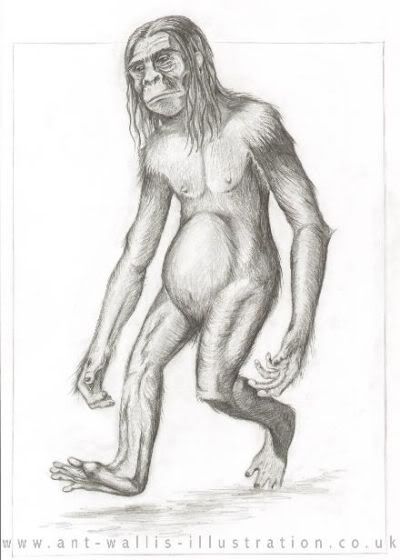
The Batutut is a hominid of legend across Vietnam, Laos and Malaysia and was first sighted in1918 according to local history. Described as being covered from head to toe in hair with the exception of a leathery looking neck and a pot belly, the Batutut is said to be approximately 4 feet tall and sightings of female Batutut describe them as having extremely sagging breasts. Otherwise resembling a human the Batutut is said to walk more like an ape.


Some of the more credible accounts of for the existence of Batutut came between 1970 – early 80s’. John Mackinnon who is a very well known zoologist discovered what were described as footprints akin to that of a human but smaller and were located deep in the Malaysian rain forest. This was the first credible source and was dated 1970. Some time later in 1982 extremely similar footprints were discovered in Vietnam by a well known professor Tran Hong Viet, the Vietnamese call these Batutut ‘Orang Pendek’ which literally means ‘short man’.

In some of the more isolated villages of Sumatra locals claim to have even had close encounters with Batutut, in some cases even offering food and sharing moments watching as the Batutut would eat and speak in an unidentified dialect.

[Click here to read full article]
Read more >>

Wednesday, March 17, 2010

7 Ton Giant Jars Mystery of Laos

Located in Laos, near the Eastern border with Viet Nam, the stone jars are found in small clusters. At the most well known site, Ban Ang, the jars seem to be positioned on top of a steep hill. The jars, often weighing as much as 7 tons, appear to have been made at a different site and then moved to their present locations. They are from 3 to 10 feet in height and some span more than a meter in diameter. All are made from very hard stone, mostly granite but some have been carved from sandstone containing quartz, feldspar and mica.


Picture is (C) copyright to Viewzone.com

Carving the jars, considering that there are thousands of them, must have been a remarkable feat for such a sparcely populated region. Scientists estimate that the age of these jars is around 2500 to 3000 years old. Some are so finely carved that it appears they must have been made on a huge lathe. Others are artistically carved in a prism shape. Some have even been found with human forms decorating them.


Picture is (C) copyright to Viewzone.com

[Click here to read full article]
Read more >>

Friday, January 8, 2010

10 mysterious cryptids of Asia (Part 1)

by Joan Seth

From the snowy mountains to the deep ocean, many people claim to have witnessed or found evidence pointing to an "animal", which they believe it to be "undiscovered".

The science behind the study of unknown animals is called Cryptozoology. Here is a rundown of 10 mysterious animals that are said to reside in Asia. Part two coming soon.

1)Yeren


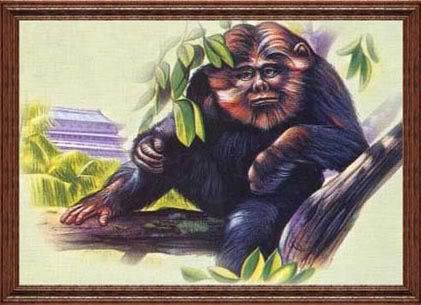
The Yeren (literally means "Wild Man" in Chinese) is said to be a primate-like creature that is found in the Hubei region of China.
Authorities there have records of up to 400 sightings since the 1920s. Since then, the local government has supported the locals on studies of this animal. Funding and support were given to scientists to find any concrete evidence of this animal. Till date, no one has ever done so.

Click here for an video on the Yeren

Click here for an another video on the Yeren


2) Sigbin


The Sigbin is said to come out at night in the Philippines to suck blood from victims' shadows. People have said that it resembles a hornless goat with very long ears and a long tail used as a whip. It is also said to emit a nauseating odor, while walking with its head lowered between its hind legs.

The animal will seek children during Holy Week, to kill for their hearts. According to the locals, there are some powerful people who are able to control these animals and thus able to keep them as pets. If done so, the Sigbin is said to bring wealth and luck to its owners.

3) Bukit Timah Monkey Man


Commonly known as the BTM, this creature is said to reside in the Bukit Timah Nature Reserve in Singapore. Sightings of this animal are very rare. Most of the local accounts come from Malay folklore, sightings by Japanese soldiers during World War II and in recent years, from the local residents.

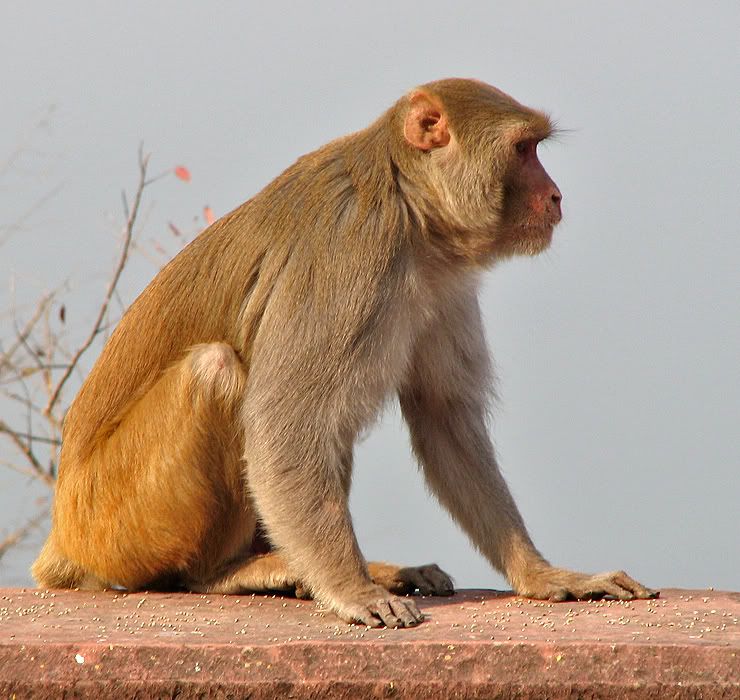
Recent local sightings state that it mainly comes out at night in the nature reserve, walking around, presumably looking for food. However, experts agree that this has been a case of mistaken identity; instead, the local sightings refer to the Rhesus Macaque Monkeys that dwell commonly in the area.

Click here for an article on the Bukit Timah Monkey Man

4) Con Rit


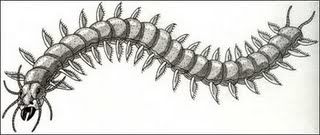
This monstrosity is said to dwell in the seas of the South East Asia region. Throughout the ages there have been numerous sightings of Con Rit. In 1899, there was a report that some sailors observed a sea monster that possessed an immense number of fins, and measured about 45 metres long. It managed to swim and keep pace with the ship for half an hour.

Long ago, people thought that giant squid were the stuff of myths and legends, until real giant squid were captured and documented. What are the odds that a giant centipede resides in the oceans, awaiting discovery by science?

5) Ishii


This is a legendary sea monster that is found in Japan. According to legend, Issie was a white mare which had a little foal, and they lived together on the shore of lake Ikeda. However, one day, the foal was kidnapped by a samurai.

Issie jumped into the lake to find her child, and in her despair she transformed into a giant, saurian beast, which since then frequently surfaces,trying to find her lost child.

This monster is described to be saurian in appearance, which means it looks like a reptile (probably a lizard). Saurians also included extinct dinosaur-like creatures.

6) Ahool


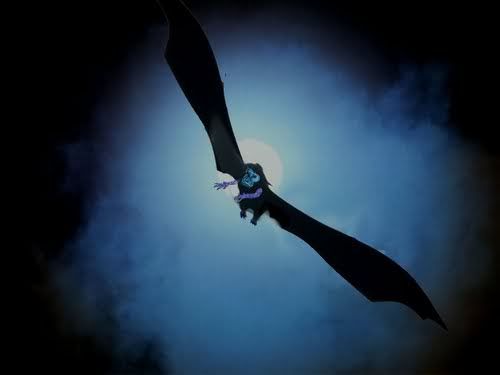
The Ahool is said to be a giant bat-like creature found in Indonesia. Others describe it as a flying primate or a living pterosaur.

It is described as having an ape-like head with large dark eyes, large claws on its forearms, and a body of gray fur. The most intriguing and astounding feature is that it is said to have a wingspan of 3 m. This is almost twice as long as the largest (known) bat in the world, the common flying fox.

Experts believe that the sightings of this creature are actually large Earless Owls.

7) Orang Pendek


Indonesian for “Short Person”, this is supposedly a primate-like creature that dwells in the forests of Sumatra. It has been sighted and documented for at least the past hundred years. Sightings specify that this creature has short fur and stands up to 1.5 meters tall.

The most number of sightings occur within the Kerinci regency of central Sumatra and the borders of Taman Nasional Kerinci Seblat. Some of the common characteristics of this animal reported by eyewitnesses include that it is largely herbivorous, is short legged with long arms, have been spotted in trees and underwater. Some people even claim to see it fly!

Click here for an article on the Orang Pendek

8) Phaya Naga


The Phaya Naga are said to be serpent-like creatures that live in the Mekong river in Laos. The Naga fireballs are attributed to these creatures.

Local Lao folklore states that the Phaya Naga are protectors of Vientiane and Laos. The myth of the Phaya Naga is incorporated extensively into Lao iconography and in Lao culture.

Experts believe that they could be overgrown giant mottled eels, a yet to be discovered species of eel or just methane.

9) Lake Tianchi Monster


This is the name given to a lake monster that dwells in Heaven Lake in Jilin Province of China and Pyanggang Province in North Korea.

In 1903, an sighting claimed that a large buffalo-like creature attacked 3 people, but after the creature was shot 6 times, it escaped into the water.

Recent reports describe the monster as having a humanoid head attached to a 1.5 meter long neck. It is said to have grey and smooth skin.

Click here for an another video on the Lake Tianchi Monster

10) Mongolian Death Worm


Eyewitnesses accounts describe it as a bright red worm that can grow up to 1.5 meters long. It is difficult to tell its head from its tail, as it has no visible eyes, nostrils or mouth.

The locals also claim that it has the ability to spit sulphuric acid and discharge electricity which can easily kill a human. Touching it directly will also cause instant death. Least to say, the locals are understandably afraid of it, and aim to steer clear of it.

Scientists reject the possibility that such creatures exist, because of the improbably large numbers necessary to maintain a breeding population and because climate and food supply issues make their survival in reported habitats unlikely.

Click here for an another video on the Mongolian Death Worm
Read more >>
 
Asia Paranormal Google Page Rank
AsiaParanormal Blogger Template "Sleek 2" Designed by HypeSeek © 2012