


The story of Noah's Ark and the Great Flood is one of the most famous from the Bible, and now an acclaimed underwater archaeologist thinks he has found proof that the biblical flood was actually based on real events.
In an interview with Christiane Amanpour for ABC News, Robert Ballard, one of the world's best-known underwater archaeologists, talked about his findings. His team is probing the depths of the Black Sea off the coast of Turkey in search of traces of an ancient civilization hidden underwater since the time of Noah.
Ballard's track record for finding the impossible is well known. In 1985, using a robotic submersible equipped with remote-controlled cameras, Ballard and his crew hunted down the world's most famous shipwreck, the Titanic.
Now Ballard is using even more advanced robotic technology to travel farther back in time. He is on a marine archeological mission that might support the story of Noah. He said some 12,000 years ago, much of the world was covered in ice.
[Click here to read full article]
Read more >>
A personal message from Oregon Chang

Have you had a close encounter story or witnessed something unusual that you would like to share?
Do you wish to collaborate with Asia Paranormal through link or content exchange?
Do you have any enquiries or feedback?
Email us at AsiaParanormal@gmail.com
We look forward to hearing from you!
Follow us on


Vote for us!
Best regards, on behalf of team AsiaParanormal
Do you wish to collaborate with Asia Paranormal through link or content exchange?
Do you have any enquiries or feedback?
Email us at AsiaParanormal@gmail.com
We look forward to hearing from you!
Follow us on
Vote for us!
Best regards, on behalf of team AsiaParanormal
Master Orthodox Occultist Oregon Chang, The 17th generation Disciple
of Seven Stars Sword Master Hebei China
Showing posts with label Turkey. Show all posts
Showing posts with label Turkey. Show all posts
Friday, December 21, 2012

Thursday, December 20, 2012
Mayan apocalypse: Turkish village becomes latest doomsday hotspot
A Turkish village has become the latest apocalypse hotspot, with believers of the Mayan calendar prediction that the world will end on December 21 flooding into the area.
Some New Age spiritualists are convinced of a December 21 "doomsday" foretold by Mayan hieroglyphs – at least according to some interpretations.
Sirince, a village of around 600 inhabitants near the ancient Greek city of Ephesus, has a positive energy according to the doomsday cultists, who say that it is close to an area where Christians believe the Virgin Mary ascended to heaven.
The Mayan prophecy has sparked a tourism boom in the village, which is now expected to host more than 60,000 visitors according to local media.
"It is the first time we witness such an interest during the winter season," said Ilkan Gulgun, one of the hotel owners in Sirince, quoted by the media.
[Click here to read full article]
Read more >>
Some New Age spiritualists are convinced of a December 21 "doomsday" foretold by Mayan hieroglyphs – at least according to some interpretations.
Sirince, a village of around 600 inhabitants near the ancient Greek city of Ephesus, has a positive energy according to the doomsday cultists, who say that it is close to an area where Christians believe the Virgin Mary ascended to heaven.
The Mayan prophecy has sparked a tourism boom in the village, which is now expected to host more than 60,000 visitors according to local media.
"It is the first time we witness such an interest during the winter season," said Ilkan Gulgun, one of the hotel owners in Sirince, quoted by the media.
[Click here to read full article]
Sunday, October 14, 2012
Ancient Asian Wonders of the World ( Mausoleum at Halicarnassus )
why and what makes Mausoleum at Halicarnassus a wonder of ancient world of Asia in present day Turkey?
View the Video
The Mausoleum at Halicarnassus or Tomb of Mausolus (in Greek, Μαυσωλεῖον τῆς Ἁλικαρνασσοῦ) was a tomb built between 353 and 350 BC in the Greek colony of Halicarnassus for Mausolus, a satrap in the Persian Empire, and Artemisia II of Caria, his wife and sister. The structure was designed by the Greek architects Satyros and Pythis. It stood approximately 45 m (148 ft) in height, and each of the four sides was adorned with sculptural reliefs created by each one of four Greek sculptors — Leochares, Bryaxis, Scopas of Paros and Timotheus. The finished structure was considered to be such an aesthetic triumph that Antipater of Sidon identified it as one of his Seven Wonders of the Ancient World.
The Mausoleum of Halicarnassus:
The Mausoleum at Halicarnassus or Tomb of Mausolus (in Greek, Μαυσωλεῖον τῆς Ἁλικαρνασσοῦ) was a tomb built between 353 and 350 BC at Halicarnassus (present Bodrum, Turkey) for Mausolus, a satrap in the Persian Empire, and Artemisia II of Caria, his wife and sister. The structure was designed by the Greek architects Satyros and Pythius of Priene. The Mausoleum stood approximately 45 m (148 ft) in height, and each of the four sides was adorned with sculptural reliefs created by each one of four Greek sculptors — Leochares, Bryaxis, Scopas of Paros and Timotheus. The finished structure of the mauloseum was considered to be such an aesthetic triumph that Antipater of Sidon identified it as one of his Seven Wonders of the Ancient World.
Read more >>
View the Video
The Mausoleum at Halicarnassus or Tomb of Mausolus (in Greek, Μαυσωλεῖον τῆς Ἁλικαρνασσοῦ) was a tomb built between 353 and 350 BC in the Greek colony of Halicarnassus for Mausolus, a satrap in the Persian Empire, and Artemisia II of Caria, his wife and sister. The structure was designed by the Greek architects Satyros and Pythis. It stood approximately 45 m (148 ft) in height, and each of the four sides was adorned with sculptural reliefs created by each one of four Greek sculptors — Leochares, Bryaxis, Scopas of Paros and Timotheus. The finished structure was considered to be such an aesthetic triumph that Antipater of Sidon identified it as one of his Seven Wonders of the Ancient World.
The Mausoleum of Halicarnassus:
The Mausoleum at Halicarnassus or Tomb of Mausolus (in Greek, Μαυσωλεῖον τῆς Ἁλικαρνασσοῦ) was a tomb built between 353 and 350 BC at Halicarnassus (present Bodrum, Turkey) for Mausolus, a satrap in the Persian Empire, and Artemisia II of Caria, his wife and sister. The structure was designed by the Greek architects Satyros and Pythius of Priene. The Mausoleum stood approximately 45 m (148 ft) in height, and each of the four sides was adorned with sculptural reliefs created by each one of four Greek sculptors — Leochares, Bryaxis, Scopas of Paros and Timotheus. The finished structure of the mauloseum was considered to be such an aesthetic triumph that Antipater of Sidon identified it as one of his Seven Wonders of the Ancient World.
Saturday, October 13, 2012
Ancient Asian Wonders of the World (Hagia Sophia)
Hagia Sophia was a legacy of the Byzantium (Roman Empire), the Eastern Roman Empire established in present day Turkey.
What and why makes this building a wonder ?
View the videos
Hagia Sophia-The legacy of Byzantium
Hagia Sophia Cathedral (Holy wisdom) was build up by two Greek architects Anthemius and Isidorus during the reign of Emperor Justinian.
Hagia Sophia (from the Greek: Ἁγία Σοφία, "Holy Wisdom"; Latin: Sancta Sophia or Sancta Sapientia; Turkish: Aya Sofya) is a former Orthodox patriarchal basilica, later a mosque, and now a museum in Istanbul, Turkey. From the date of its dedication in 360 until 1453, it served as the cathedral of Constantinople, except between 1204 and 1261, when it was converted to a Roman Catholic cathedral under the Latin Patriarch of Constantinople of the Western Crusader established Latin Empire. The building was a mosque from 29 May 1453 until 1934, when it was secularized. It was opened as a museum on 1 February 1935
Hagia Sophia (Άγια Σοφία in Greek), the Church of Holy Wisdom, known variously as Sancta Sophia in Latin or Ayasofya in Turkish, is an ancient cathedral of the Church of Constantinople located in modern-day Istanbul, Turkey. It was converted to a mosque by the Turks and is now used as a museum. It is universally acknowledged as one of the great buildings of the world and a reference point in history of architecture. (The church is sometimes mistakenly called "Saint Sophia," as though it were named for a saint called Sophia.)
The first great church on the site was built by Constantius II, the son of Constantine the Great, but was burned down during the Nika riots of 532. The building was rebuilt in its present form between 532 and 537 under the personal supervision of emperor Justinian the Great. It is one of the greatest surviving examples of Byzantine architecture. Of great artistic value was its decorated interior with mosaics and marble pillars and coverings. The temple itself was so richly and artistically decorated that Justinian is believed to have said Νενίκηκά σε Σολομών: "Solomon, I have surpassed you!"
Interior of Hagia Sophia
The architects of the church were Isidore of Miletus and Anthemius of Tralles, professors of geometry at the University of Constantinople. Justinian's basilica was at once the culminating architectural achievement of late antiquity and the first masterpiece of Byzantine architecture. Its influence, both architecturally and liturgically, was widespread and enduring in the Orthodox, Roman Catholic, and Muslim worlds alike.
Hagia Sophia is covered by a central dome with a diameter of 31 meters (102 feet), slightly smaller than the Pantheon's. The dome seems rendered weightless by the unbroken arcade of arched windows under it, which help flood the colorful interior with light. The dome is carried on pendentives: four concave triangular sections of masonry which solve the problem of setting the circular base of a dome on a rectangular base. In Hagia Sophia the weight of the dome passes through the pendentives to four massive piers at the corners. Between them the dome seems to float upon four great arches.
At the western (entrance) and eastern (liturgical) ends, the arched openings are extended by half domes carried on smaller semidomed exedras. Thus a hierarchy of dome-headed elements build up to create a vast oblong interior crowned by the main dome, a sequence unexampled in antiquity.
The structure has been severely damaged several times by earthquakes. The dome collapsed after an earthquake in 558; its replacement fell in 563. There were additional partial collapses in 989 and 1346.
All interior surfaces are sheathed with polychrome marbles, green and white with purple porphyry and gold mosaics, encrusted upon the brick. On the exterior, simple stuccoed walls reveal the clarity of massed vaults and dome.
For over 900 years the Hagia Sophia was the seat of the Patriarch of Constantinople and a principal setting for imperial ceremonies. It was converted to a mosque at the Fall of Constantinople to the Ottoman Turks under Sultan Mehmet II in 1453. Since Islam considers the depiction of the human form to be blasphemous— that is, it is iconoclastic—Hagia Sophia's iconographic mosaics were covered with plaster. For almost 500 years the principal mosque of Istanbul, Ayasofya, served as model for many of the Ottoman mosques of Constantinople such as the Shehzade Mosque, the Suleiman Mosque, and the Rustem Pasha Mosque.
Read more >>
What and why makes this building a wonder ?
View the videos
Hagia Sophia-The legacy of Byzantium
Hagia Sophia Cathedral (Holy wisdom) was build up by two Greek architects Anthemius and Isidorus during the reign of Emperor Justinian.
Hagia Sophia (from the Greek: Ἁγία Σοφία, "Holy Wisdom"; Latin: Sancta Sophia or Sancta Sapientia; Turkish: Aya Sofya) is a former Orthodox patriarchal basilica, later a mosque, and now a museum in Istanbul, Turkey. From the date of its dedication in 360 until 1453, it served as the cathedral of Constantinople, except between 1204 and 1261, when it was converted to a Roman Catholic cathedral under the Latin Patriarch of Constantinople of the Western Crusader established Latin Empire. The building was a mosque from 29 May 1453 until 1934, when it was secularized. It was opened as a museum on 1 February 1935
Hagia Sophia (Άγια Σοφία in Greek), the Church of Holy Wisdom, known variously as Sancta Sophia in Latin or Ayasofya in Turkish, is an ancient cathedral of the Church of Constantinople located in modern-day Istanbul, Turkey. It was converted to a mosque by the Turks and is now used as a museum. It is universally acknowledged as one of the great buildings of the world and a reference point in history of architecture. (The church is sometimes mistakenly called "Saint Sophia," as though it were named for a saint called Sophia.)
The first great church on the site was built by Constantius II, the son of Constantine the Great, but was burned down during the Nika riots of 532. The building was rebuilt in its present form between 532 and 537 under the personal supervision of emperor Justinian the Great. It is one of the greatest surviving examples of Byzantine architecture. Of great artistic value was its decorated interior with mosaics and marble pillars and coverings. The temple itself was so richly and artistically decorated that Justinian is believed to have said Νενίκηκά σε Σολομών: "Solomon, I have surpassed you!"
Interior of Hagia Sophia
The architects of the church were Isidore of Miletus and Anthemius of Tralles, professors of geometry at the University of Constantinople. Justinian's basilica was at once the culminating architectural achievement of late antiquity and the first masterpiece of Byzantine architecture. Its influence, both architecturally and liturgically, was widespread and enduring in the Orthodox, Roman Catholic, and Muslim worlds alike.
Hagia Sophia is covered by a central dome with a diameter of 31 meters (102 feet), slightly smaller than the Pantheon's. The dome seems rendered weightless by the unbroken arcade of arched windows under it, which help flood the colorful interior with light. The dome is carried on pendentives: four concave triangular sections of masonry which solve the problem of setting the circular base of a dome on a rectangular base. In Hagia Sophia the weight of the dome passes through the pendentives to four massive piers at the corners. Between them the dome seems to float upon four great arches.
At the western (entrance) and eastern (liturgical) ends, the arched openings are extended by half domes carried on smaller semidomed exedras. Thus a hierarchy of dome-headed elements build up to create a vast oblong interior crowned by the main dome, a sequence unexampled in antiquity.
The structure has been severely damaged several times by earthquakes. The dome collapsed after an earthquake in 558; its replacement fell in 563. There were additional partial collapses in 989 and 1346.
All interior surfaces are sheathed with polychrome marbles, green and white with purple porphyry and gold mosaics, encrusted upon the brick. On the exterior, simple stuccoed walls reveal the clarity of massed vaults and dome.
For over 900 years the Hagia Sophia was the seat of the Patriarch of Constantinople and a principal setting for imperial ceremonies. It was converted to a mosque at the Fall of Constantinople to the Ottoman Turks under Sultan Mehmet II in 1453. Since Islam considers the depiction of the human form to be blasphemous— that is, it is iconoclastic—Hagia Sophia's iconographic mosaics were covered with plaster. For almost 500 years the principal mosque of Istanbul, Ayasofya, served as model for many of the Ottoman mosques of Constantinople such as the Shehzade Mosque, the Suleiman Mosque, and the Rustem Pasha Mosque.
Thursday, June 28, 2012
Mysterious 12,000-Year-Old Gobekli Tepe
June 16, 2012 Gobekli Tepe 8 miles northeast of Sanliurfa, Turkey - On Wednesday, June 13, 2012, as the sun rose I was standing on the Gobekli Tepe hilltop. Ramps have been built around the archaeological excavations of mysterious, thin, tall (16 to 19 feet), T-shaped, elegantly carved limestone pillars placed carefully in circular patterns over some 30 acres a thousand feet above the valley floor and sculpted with odd, even unrecognizable, animals, insects and humanoid figures to be detailed in Part 2.
I joined Boston University geologist Robert M. Schoch, Ph.D., his wife Katie and their Turkish tour team of Gregory Poplawski and Jack Jakubowsky from Poland and Turkish guide Suat
Dokumaci, who led our group of about 40 Americans from Istanbul through many other ancient Greek, Roman and Byzantine archaeological sites as we traveled southeastward to Gobekli Tepe during the first two weeks of June 2012.
Gobekli Tepe in Turkish means a “potbelly hill” first studied in a 1964 survey by Istanbul University and University of Chicago scientists, who concluded the hill could not be an entirely natural feature. But not until 1994 did German archaeologist Klaus Schmidt, Ph.D., begin excavating layer-by-layer, carefully dating and studying the surrounding soils as he dug.
[Click here to read full article]
Read more >>
I joined Boston University geologist Robert M. Schoch, Ph.D., his wife Katie and their Turkish tour team of Gregory Poplawski and Jack Jakubowsky from Poland and Turkish guide Suat
Dokumaci, who led our group of about 40 Americans from Istanbul through many other ancient Greek, Roman and Byzantine archaeological sites as we traveled southeastward to Gobekli Tepe during the first two weeks of June 2012.
Gobekli Tepe in Turkish means a “potbelly hill” first studied in a 1964 survey by Istanbul University and University of Chicago scientists, who concluded the hill could not be an entirely natural feature. But not until 1994 did German archaeologist Klaus Schmidt, Ph.D., begin excavating layer-by-layer, carefully dating and studying the surrounding soils as he dug.
[Click here to read full article]
Saturday, March 3, 2012
12,000 Years Old Unexplained Structure
Göbekli Tepe, is a hilltop sanctuary erected on the highest point of an elongated mountain ridge some 15 km northeast of the town of Şanlıurfa, in southeastern Turkey and 500 miles away from Istanbul, Turkey. It is the most astonishing archaeological discovery in modern times and also thought to be the oldest advanced civilization on Earth.
Read more >>
Wednesday, February 22, 2012
Two archaeological sites surveyed on Mount Ararat
CAMBRIDGE, MA.- Harvard University educated archaeologist and director of the Paleontological Research Corporation, Dr. Joel Klenck, surveyed and completed a preliminary analysis of two sites on Mount Ararat in Turkey discovered by a Kurdish guide, Ahmet Ertugrul. “The research areas are noteworthy”, states Klenck, “and comprise a large wood structure and cave with an archaeological assemblage that appears to be mostly from the Late Epipaleolithic Period.” These assemblages at other sites in the Near East have calibrated radiocarbon dates between 13,100 and 9,600 B.C.
Located at elevations above 4,200 meters on Mount Ararat and covered by layers of ice and stones, he states: “The wood structure shows various states of preservation and exhibits a wide array of plant materials including structures made of cypress and one room with a floor covered by chickpea seeds.” Klenck additionally notes, “I was most impressed by the artifactual assemblage, particularly four stone bowls, grinding or hammer stones, lithic cores and debitage.”
It also appears that the wood construction was visited in later periods. Ceramic bowls from Chalcolithic (5,800-3,000 B.C.) and Bronze Age (3,000-1,200 B.C.) periods were placed in or near the structure. He adds, “These artifacts most likely represent brief visits to the site during later periods since these bowls differ from the Epipaleolithic remains that comprise most of the assemblage.”
Klenck reports, “The surface scatter of the wood above the large structure is 121.1 meters in length and 23.8 meters in width. The construction is at least 5.2 meters deep and several measurements of the exterior walls exhibit angles moving inward toward the base of the edifice. Also, there are stair-like features that descend through the middle of the multi-storied structure and mortise-and-tenon construction.” He notes, “The structure is buried under tons of stones and ice and most of the edifice remains unexplored.”
[Click here to read full article]
Read more >>
Located at elevations above 4,200 meters on Mount Ararat and covered by layers of ice and stones, he states: “The wood structure shows various states of preservation and exhibits a wide array of plant materials including structures made of cypress and one room with a floor covered by chickpea seeds.” Klenck additionally notes, “I was most impressed by the artifactual assemblage, particularly four stone bowls, grinding or hammer stones, lithic cores and debitage.”
It also appears that the wood construction was visited in later periods. Ceramic bowls from Chalcolithic (5,800-3,000 B.C.) and Bronze Age (3,000-1,200 B.C.) periods were placed in or near the structure. He adds, “These artifacts most likely represent brief visits to the site during later periods since these bowls differ from the Epipaleolithic remains that comprise most of the assemblage.”
Klenck reports, “The surface scatter of the wood above the large structure is 121.1 meters in length and 23.8 meters in width. The construction is at least 5.2 meters deep and several measurements of the exterior walls exhibit angles moving inward toward the base of the edifice. Also, there are stair-like features that descend through the middle of the multi-storied structure and mortise-and-tenon construction.” He notes, “The structure is buried under tons of stones and ice and most of the edifice remains unexplored.”
[Click here to read full article]
Tuesday, December 27, 2011
Turkish in Medieval Cambodia?
An incredibly busy day today – exams are drawing near – and so Beach is going to put up a cheat post with apologies, using an extract sent in by a reader. This appeared a couple of weeks ago and was pasted under a previous post on Amazons. However, Beachcombing is not interested, at least for present purposes, in the same thing as his correspondent: female fighting and fighters. His mouth though dropped open when the question of the queen’s language in the extract below came up. So much so that he has spent a lazy few minutes, in an otherwise frenetic day, looking into this question and has got nowhere.
On the second day after our arrival at the port of Kailukari the princess summoned the captain, officers and merchants to a banquet she had prepared for them, according to her custom…. When I greeted the princess she said to me in Turkish, ‘How are you? Are you well?’ She seated me near her…She asked me from which country I came. I said ‘From India’. She said: ‘The pepper country?’ I said yes. She asked about that country and events there and I answered her. She said ‘I must invade it and take possession of it. Its wealth and its soldiers please me.’ I said to her ‘do so….
Some basic background. This text appears in the fourteenth century Travels of Ibn Battutah. Ibn Battutah is a generally and demonstrably truthful correspondent, though there are some concerns about later additions to his original. Kailukari, the port where the queen dwells, is a bit of a mystery. But it is certainly to the east of India. Cambodia is one of the solutions given though there is no need to be so exact. It appears that this was a nation in contact with India and also a nation that was not of the faith (i.e. Islam). Let’s keep it generic and just think of the south-east Asia.
[Click here to read full article]
Read more >>
On the second day after our arrival at the port of Kailukari the princess summoned the captain, officers and merchants to a banquet she had prepared for them, according to her custom…. When I greeted the princess she said to me in Turkish, ‘How are you? Are you well?’ She seated me near her…She asked me from which country I came. I said ‘From India’. She said: ‘The pepper country?’ I said yes. She asked about that country and events there and I answered her. She said ‘I must invade it and take possession of it. Its wealth and its soldiers please me.’ I said to her ‘do so….
Some basic background. This text appears in the fourteenth century Travels of Ibn Battutah. Ibn Battutah is a generally and demonstrably truthful correspondent, though there are some concerns about later additions to his original. Kailukari, the port where the queen dwells, is a bit of a mystery. But it is certainly to the east of India. Cambodia is one of the solutions given though there is no need to be so exact. It appears that this was a nation in contact with India and also a nation that was not of the faith (i.e. Islam). Let’s keep it generic and just think of the south-east Asia.
[Click here to read full article]
Monday, April 18, 2011
8,000-year-old remains of early Anatolians discovered in Istanbul
Two skeletons dating back 8,500 years, making them the oldest ever found in what is now Turkey, have been discovered during archaeological excavations in Istanbul’s Yenikapı area.
“Such remains have not been discovered during the excavation before; these are the oldest graves in Anatolia,” said Dr. Yasemin Yılmaz, an expert on anthropology and prehistory, who expressed excitement about the find.
According to Yılmaz, the use of wooden blocks – preserved to this day – to cover the coffins makes them distinctive from other finds.
Since the excavations around Yenikapı, the site of the ongoing construction on the Marmaray tunnel underneath the Marmara Sea, started in 2004, many shipwrecks, amphoras, cemeteries and around 40,000 artifacts have been uncovered in the area.
[Click here to read full article]
Read more >>
“Such remains have not been discovered during the excavation before; these are the oldest graves in Anatolia,” said Dr. Yasemin Yılmaz, an expert on anthropology and prehistory, who expressed excitement about the find.
According to Yılmaz, the use of wooden blocks – preserved to this day – to cover the coffins makes them distinctive from other finds.
Since the excavations around Yenikapı, the site of the ongoing construction on the Marmaray tunnel underneath the Marmara Sea, started in 2004, many shipwrecks, amphoras, cemeteries and around 40,000 artifacts have been uncovered in the area.
[Click here to read full article]
Monday, March 21, 2011
Turkish woman chases UFOs around Lake Van
Semra Şalvan Cezlan is a civil engineer married with a daughter and the representative of a consultancy firm in the eastern province of Van. It’s an ordinary life, as she put it. But some believe Cezlan is an informer due to her area of interest and yet others think she is schizophrenic. For Cezlan is an “ufologist.” She plans to pitch a tent at Lake Van and observe aliens, because she claims the Lake Van monster is an USO, a type of UFO that knows how to swim.
Cezlan smiles and says, “I don’t have any intention to make others believe.” She seems seasoned to being mocked all the time, even at home.
Cezlan has been doing research on extraterrestrials for a decade. She has helped people who say that they saw a UFO or aliens for the last two years, gets in contact with them, gives the message, “You are not alone,” and explains what probably happens next. Her interest in UFOs goes back to her childhood.
[Click here to read full article]
Read more >>
Cezlan smiles and says, “I don’t have any intention to make others believe.” She seems seasoned to being mocked all the time, even at home.
Cezlan has been doing research on extraterrestrials for a decade. She has helped people who say that they saw a UFO or aliens for the last two years, gets in contact with them, gives the message, “You are not alone,” and explains what probably happens next. Her interest in UFOs goes back to her childhood.
[Click here to read full article]
Saturday, March 12, 2011
Derinkuyu : Ancient Underground City
In 1963 in Cappadocia, Turkey, a man working on a wall in his basement made an astonishing discovery. Behind the wall was a mysterious room he had never seen. This strange room led to another one … then that one led to another musty room … then another one. By chance, he had stumbled upon the ancient underground city of Derinkuyu.
As archaeologists studied this fascinating labyrinth, they realized it was only the tip of the iceberg. In fact, they discovered the complex had a total of 11 floors, reaching over 300’ below the surface! It was opened for visitors as of 1969 and to date, only ten percent of the underground city is accessible for tourists. Its eight floors extend at a depth of approximately 85 m.
Derinkuyu is notable for its large multi-level underground city, which is a major tourist attraction. The historical region of Cappadocia, where Derinkuyu is situated, contains several historical underground cities, carved out of a unique geological formation, and were largely used by early Christians as hiding places.
Derinkuyu is a town and district of Nevşehir Province in the Central Anatolia region of Turkey. According to 2000 census, population of the district is 24,631 of which 11,092 live in the town of Derinkuyu. The district covers an area of 445 km2 (172 sq mi), and the average elevation is 1,300 m (4,265 ft), with the highest point being Mt. Ertaş at 1,988 m (6,522 ft).
[Click here to read full article]
Read more >>
As archaeologists studied this fascinating labyrinth, they realized it was only the tip of the iceberg. In fact, they discovered the complex had a total of 11 floors, reaching over 300’ below the surface! It was opened for visitors as of 1969 and to date, only ten percent of the underground city is accessible for tourists. Its eight floors extend at a depth of approximately 85 m.
Derinkuyu is notable for its large multi-level underground city, which is a major tourist attraction. The historical region of Cappadocia, where Derinkuyu is situated, contains several historical underground cities, carved out of a unique geological formation, and were largely used by early Christians as hiding places.
Derinkuyu is a town and district of Nevşehir Province in the Central Anatolia region of Turkey. According to 2000 census, population of the district is 24,631 of which 11,092 live in the town of Derinkuyu. The district covers an area of 445 km2 (172 sq mi), and the average elevation is 1,300 m (4,265 ft), with the highest point being Mt. Ertaş at 1,988 m (6,522 ft).
[Click here to read full article]
Monday, November 22, 2010
In Turkey lies Noah's Ark
Many believe that Mount Ararat in Turkey hold the remains of Noah's Ark
Could the Ark of Noah that the Bible speak be actually true and really located in Turkey?
Quran or Bible's Declearation of NOAH'S ARK ?
Quran 11-44. And it was said: "O earth! Swallow up your water, and O sky! Withhold (your rain)." And the water was diminished (made to subside) and the Decree (of Allaah) was fulfilled (i.e. the destruction of the people of Nuh (Noah). AND IT (THE SHIP) RESTED ON MOUNT JUDI, and it was said: "Away with the people who are Zalimuun (polytheists and wrong-doing)!"
Martin Wroe, LONDON - Noah's Ark has been found on the Turkish-Iranian border, 32 kilometres from Mount Ararat, according to the leader of a team of scientists that has been investigating the site for six years.
The Turkish government is so convinced by the findings that, after years of intransigence, it has designated the site one of special archaeological interest and agreed to its excavation next summer.
The remote site contains a buried, ship-like object, resting an altitude of 2,300 metres. At 170 metres long and 45 metres wide, it conforms almost exactly to the 300 cubit by 50 cubit boat that God told Noah to build, according to Genesis 6 in the Bible.
On surrounding terrain, the American and Middle Eastern scientists have identified huge stones with holes carved at one end, which they believe are "drogue-stones," dragged behind ships in the ancient world to stabilise them. Radar soundings indicate unusual levels of iron-oxide distribution.
Salih Bayraktutan, head of geology at Turkey's Ataturk University, estimates the age of the 'vessel' at more than 100,000 years. "It is a man-made structure and for sure it is Noah's Ark." The site is directly below the mountain of Al Judi, named in the Koran as the Ark's resting place.
David Fasold, an American shipwreck specialist with no religious affiliation, has led the investigation. He says subsurface radar surveys of the site have produced "very good pictures." "The radar imagery at about 25 metres down from the stern is so clear that you can count the floorboards between the walls."
He believes the team has found the fossilised remains of the upper deck and that the original reed substructure has disappeared. But the findings have infuriated the scores of Christian Ark-hunters who travel to Turkey, convinced the Ark will only be found on Mount Ararat.
Some of Fasold's team of geophysicists and geologists are reserving final judgement until the excavation and carbon-dating. But in a British TV series on the environment next month, team member Vendyl Jones, a Middle East archaeologist and inspiration for film character Indiana Jones, says it is "between maybe and probably" that they have found Noah's Ark.
================
True or fake? Christainity or Islam? Bible or Quran declearation of Noah Ark? you decide for yourself
Sunday, November 21, 2010
Noah's Ark discovery in Turkey

Turkish daily news hurriyet reports that a group of Hong Kong and Turkish evangelical explorers said Monday they believe they may have found Noah's Ark at the top of Turkey’s legendary Mount Ararat.
The biblical story says God decided to flood the earth after seeing how corrupt it had become and told Noah to build an ark and fill it with two of every animal species.
After the flood waters receded, the Bible says, the ark came to rest on a mountain. Many believe Mount Ararat, the highest point in the region, is where the ark and its inhabitants came aground
[Click here to read full article]
Wednesday, January 27, 2010
10 mysterious cryptids of Asia (Part 2)
by Joan Seth
Here's the second part of the article.
1) Almas

The Almas is a hominid cryptid said to inhabit the Caucasus and Pamir Mountains of central Asia, and the Altai Mountains of southern Mongolia.
Through alleged eyewitness accounts, alleged footprint discoveries and interpretations of long-standing native traditions that have been anthropologically collected.
Experts have declared that they are either just mythological creatures or a relict population of Neanderthals. Others have claimed that they are humans, but with mental disorders and thus discarded from society.
2) Buru

Said to have lived in a certain province of India in the past, the Buru was an aquatic reptile-like cryptid. This reptile was reportedly hunted to extinction by the locals.
Traditional speculation was that the Buru was actually a crocodile. However, the locals describe the Buru as having characteristics such as an elongated neck and a forked tongue. This would place it looking similar to a monitor lizard.
Some experts claim it to be a large species of lungfish instead.
3) The Devil Bird

The Devil Bird or commonly known as the Ulama, is a cryptid that dwells in the Sri Lankan jungles. It is said to emit a blood thirsty scream at night while flying. It is said that its scream is a portent of death.
From local witnesses descriptions, it would closely resemble an owl actually. In 2001, a Spot-Bellied Eagle Owl was captured and was believed to be the mythical Devil Bird in question.
4) Kting Voar

Also known as the Snake Eating Cow, the Kting Voar is a cryptid from Cambodia and Vietnam.
The creature is normally described as a cow-like animal with peculiar twisting horns about 45 centimetres long. The local myths attribute a number of feats to this animal; most particularly, snakes are part of its diet.
Specimens collected and tested were either fake or found out to belong to a normal cow. Many experts do believe in the existence of this animal, and it is actually listed as Endangered in the IUCN list.
5) Ropen

The Ropen is a flying cryptid from the jungles of Papua New Guinea. It is described as featherless and having a tail length of 25% of its wingspan.
Various accounts either describe it as a demonic spirit, a bat-like animal or a Pterosaur. It is believed to be nocturnal and exhibits bioluminescence and thrives on a diet of fish and sometimes human flesh.
Many expeditions to the Papua New Guinea to observe the creature have reported seeing weird flying lights in the jungle at night. Till date, no explanation can be given for such phenomena.
6) Akkorokamui

Akkorokamui is a water cryptid from Japan. It is said to resemble either a giant octopus or a giant squid. Its most striking feature is its red coloured skin.
Although it is said to grow to an enormous size and despite is striking skin colouration, so far, it has only been spotted from far distances.
The locals are understandably afraid of it, as it has been known to capsize boats. They would bring along sickles in their boats to protect themselves from this creature.
7) Veo

The Veo is a cryptid said to dwell on the island of Rinca, Indonesia. It is describe to resemble a scaly ant-eater or pangolin, and has the size of a horse.
No modern pangolins grow to that size, but there was evidence that a large pangolin that grew up to 8 feet lived on the nearby islands of Java and Borneo.
The Veo is described as being a nocturnal, mountain-dwelling creature, subsisting on a diet of ants and termites. Cryptozoologists have suggested that the Veo may represent a relict population of the extinct Manis paleojavanicus.
8) Lake Van Monster
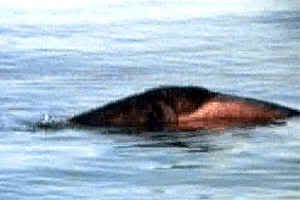
Living in Lake Van in Eastern Turkey, comes the appropriately named Lake Van Monster. Similar to other lake monsters in other parts of the world, it has been described to be either a Plesiosaur or Ichthyosaurus.
In 1997, a man reportedly shot a video of the monster swimming in the lake. After careful examination by experts, many have questioned its authenticity. It is likely to be a hoax.
Skecptics also point out that such a hoax would bring tourist revenue to this region of Turkey.
9) Mande Barung

The Mande Barung is said to inhibit within the remote forests of North East India and Bangladesh.
It is generally described as a large, hairy bipedal hominoid, similar to its cousins the Bigfoot, Yeti, Orang Pendek, etc.
Most scientific experts consider the Mande Barung to be a combination of folklore and hoaxes.
10) Simurgh

The Simurgh is a mythical flying creature similar to a griffin or phoenix. It is commonly found in Persian myths and legends.
The Simurgh has been described as having the foreparts of a dog, the wings and tail of a peacock and the claws of a lion, gigantic enough to carry off an elephant or a whale.
Ultimately, experts believe it to be just a mythological and legendary creature, rather than an actual animal.
Read more >>
Here's the second part of the article.
1) Almas
The Almas is a hominid cryptid said to inhabit the Caucasus and Pamir Mountains of central Asia, and the Altai Mountains of southern Mongolia.
Through alleged eyewitness accounts, alleged footprint discoveries and interpretations of long-standing native traditions that have been anthropologically collected.
Experts have declared that they are either just mythological creatures or a relict population of Neanderthals. Others have claimed that they are humans, but with mental disorders and thus discarded from society.
2) Buru
Said to have lived in a certain province of India in the past, the Buru was an aquatic reptile-like cryptid. This reptile was reportedly hunted to extinction by the locals.
Traditional speculation was that the Buru was actually a crocodile. However, the locals describe the Buru as having characteristics such as an elongated neck and a forked tongue. This would place it looking similar to a monitor lizard.
Some experts claim it to be a large species of lungfish instead.
3) The Devil Bird
The Devil Bird or commonly known as the Ulama, is a cryptid that dwells in the Sri Lankan jungles. It is said to emit a blood thirsty scream at night while flying. It is said that its scream is a portent of death.
From local witnesses descriptions, it would closely resemble an owl actually. In 2001, a Spot-Bellied Eagle Owl was captured and was believed to be the mythical Devil Bird in question.
4) Kting Voar
Also known as the Snake Eating Cow, the Kting Voar is a cryptid from Cambodia and Vietnam.
The creature is normally described as a cow-like animal with peculiar twisting horns about 45 centimetres long. The local myths attribute a number of feats to this animal; most particularly, snakes are part of its diet.
Specimens collected and tested were either fake or found out to belong to a normal cow. Many experts do believe in the existence of this animal, and it is actually listed as Endangered in the IUCN list.
5) Ropen
The Ropen is a flying cryptid from the jungles of Papua New Guinea. It is described as featherless and having a tail length of 25% of its wingspan.
Various accounts either describe it as a demonic spirit, a bat-like animal or a Pterosaur. It is believed to be nocturnal and exhibits bioluminescence and thrives on a diet of fish and sometimes human flesh.
Many expeditions to the Papua New Guinea to observe the creature have reported seeing weird flying lights in the jungle at night. Till date, no explanation can be given for such phenomena.
6) Akkorokamui
Akkorokamui is a water cryptid from Japan. It is said to resemble either a giant octopus or a giant squid. Its most striking feature is its red coloured skin.
Although it is said to grow to an enormous size and despite is striking skin colouration, so far, it has only been spotted from far distances.
The locals are understandably afraid of it, as it has been known to capsize boats. They would bring along sickles in their boats to protect themselves from this creature.
7) Veo
The Veo is a cryptid said to dwell on the island of Rinca, Indonesia. It is describe to resemble a scaly ant-eater or pangolin, and has the size of a horse.
No modern pangolins grow to that size, but there was evidence that a large pangolin that grew up to 8 feet lived on the nearby islands of Java and Borneo.
The Veo is described as being a nocturnal, mountain-dwelling creature, subsisting on a diet of ants and termites. Cryptozoologists have suggested that the Veo may represent a relict population of the extinct Manis paleojavanicus.
8) Lake Van Monster
Living in Lake Van in Eastern Turkey, comes the appropriately named Lake Van Monster. Similar to other lake monsters in other parts of the world, it has been described to be either a Plesiosaur or Ichthyosaurus.
In 1997, a man reportedly shot a video of the monster swimming in the lake. After careful examination by experts, many have questioned its authenticity. It is likely to be a hoax.
Skecptics also point out that such a hoax would bring tourist revenue to this region of Turkey.
9) Mande Barung
The Mande Barung is said to inhibit within the remote forests of North East India and Bangladesh.
It is generally described as a large, hairy bipedal hominoid, similar to its cousins the Bigfoot, Yeti, Orang Pendek, etc.
Most scientific experts consider the Mande Barung to be a combination of folklore and hoaxes.
10) Simurgh

The Simurgh is a mythical flying creature similar to a griffin or phoenix. It is commonly found in Persian myths and legends.
The Simurgh has been described as having the foreparts of a dog, the wings and tail of a peacock and the claws of a lion, gigantic enough to carry off an elephant or a whale.
Ultimately, experts believe it to be just a mythological and legendary creature, rather than an actual animal.
Sunday, January 24, 2010
Sheep gives birth to human-faced lamb
by CNNTurk
A SHEEP gave birth to a dead lamb with a human-like face. The lamb was born in a village not far from the city of Izmir, Turkey.
Erhan Elibol, a vet, performed a caesarean on the animal to take the lamb out, but was horrified to see that the features of the lamb's snout bore a striking resemblance to a human face.

Picture is (C) copyright to Daily Telegraph
“I’ve seen mutations with cows and sheep before. I’ve seen a one-eyed calf, a two-headed calf, a five-legged calf. But when I saw this youngster I could not believe my eyes. His mother could not deliver him so I had to help the animal,” the 29-year-old veterinary said.
The lamb’s head had human features on – the eyes, the nose and the mouth – only the ears were those of a sheep.
Click here to read full article
Read more >>
A SHEEP gave birth to a dead lamb with a human-like face. The lamb was born in a village not far from the city of Izmir, Turkey.
Erhan Elibol, a vet, performed a caesarean on the animal to take the lamb out, but was horrified to see that the features of the lamb's snout bore a striking resemblance to a human face.
Picture is (C) copyright to Daily Telegraph
“I’ve seen mutations with cows and sheep before. I’ve seen a one-eyed calf, a two-headed calf, a five-legged calf. But when I saw this youngster I could not believe my eyes. His mother could not deliver him so I had to help the animal,” the 29-year-old veterinary said.
The lamb’s head had human features on – the eyes, the nose and the mouth – only the ears were those of a sheep.
Click here to read full article
Thursday, December 24, 2009
Wednesday, December 23, 2009
Turkey UFO 2008, I've broken down this video to show some Enhanced Still Images of two alien being. It looks as if theyre wearing a Jewish Cap... Or is it some
type of metal helmet?
Anyhow the Original video to the images can be viewed at:
http://www.siriusufo.org/tr/?fx=sayfa_ac&url=html/english/kumburgaz_2008.asp
Tuesday, December 22, 2009
Ufo caught on Live Tv News! Turkey! (Slient Mode)
TV news crew captures a serious of UFO shapceships coming in from the distance. The event attracts a crowd of people who look on in shook!
(this video is in slient mode)
U.F.O Istanbul / Kumburgaz Turkey (2008)
One of the most significant UFO videos of all time that also cover two extraterrestrials were caught on tape in Istanbul This extraordinary incident took place in a compound in Kumburgaz/Istanbul was witnessed by nearly a dozen of residents and filmed by a night guard in several different times. The images captured are expected to have a emendous impact throughout the world and be listed as the most important UFO/extraterrestrial images ever filmed. As is well known, UFOs and proof of extraterrestrial life have been frequently witnessed by both government officials and civilians in Turkey as well as throughout the world. In several cases, these observations were captured on tape by amateur cameras.
Subscribe to:
Posts (Atom)


