


A personal message from Oregon Chang

Have you had a close encounter story or witnessed something unusual that you would like to share?
Do you wish to collaborate with Asia Paranormal through link or content exchange?
Do you have any enquiries or feedback?
Email us at AsiaParanormal@gmail.com
We look forward to hearing from you!
Follow us on


Vote for us!
Best regards, on behalf of team AsiaParanormal
Do you wish to collaborate with Asia Paranormal through link or content exchange?
Do you have any enquiries or feedback?
Email us at AsiaParanormal@gmail.com
We look forward to hearing from you!
Follow us on
Vote for us!
Best regards, on behalf of team AsiaParanormal
Master Orthodox Occultist Oregon Chang, The 17th generation Disciple
of Seven Stars Sword Master Hebei China
Showing posts with label Mongolia. Show all posts
Showing posts with label Mongolia. Show all posts
Tuesday, October 9, 2012

Monday, October 8, 2012
Something Strange spotted in Gobi desert

The objects were spotted using Google Maps and resulted in a substantial amount of speculation – especially among conspiracy theorists. Could we be looking at China’s equivalent of Area 51? Or signs of an ancient lost civilization? Or some form of guidance system for alien spacecraft? Or …?
[Click here to read full article]
Friday, May 27, 2011
Japanese Language Origins
As with all other languages, the Japanese language can be understood formally as a set of lingusitic characteristics or subjectively as a way of experiencing and ordering the world. However, unlike other languages, Japanese is unique to both linguists and to the people speaking the language. The Japanese by and large believe their language to be a highly unique language—some believe it to be unlike any other language in existence. Western linguists believe that Japanese is a language clearly related to other, Northern Asian languages, but there is a fair amount of disagreement among them. Suffice it to say that Japanese is the only human language where we can't quite decide where it came from or what other languages it's related to.
From the point of view of the Japanese, the experience of this language is based on two, widely held beliefs about the language. First, the Japanese believe that the language is somehow highly unique—almost a language unto itself. Second, the Japanese believe that their language is extremely difficult for non-Japanese to read or understand. In fact, the Japanese have a name for non-Japanese who can speak and understand the language: hen gaijin , or "crazy foreigners." So the "experience" of Japanese as a language is an exclusive experience, a sense that one is participating in a language that no others can share or penetrate.
From a Western perspective, Japanese is not an overly difficult language to learn (Chinese and Old Irish are considerably more difficult) nor is it a unique language. There, however, the agreement ends. For it's uncertain exactly what language family Japanese comes from. There are three main theories about the origin of the Japanese language among both Western and Japanese linguists:
1. Japanese is an Altaic language related to Korean, Mongolian, and Turkish.
2. Japanese is an Austronesian language related to Papuan, Malayan and other Pacific languages.
3. Japanese is a Souteast Asian language related to Vietnamese, Tibetan, Burmese or, in one school of thought, the Tamil languages of southern India and Ceylon.
Almost all linguists believe that Japanese
[Click here to read full article]
Read more >>
From the point of view of the Japanese, the experience of this language is based on two, widely held beliefs about the language. First, the Japanese believe that the language is somehow highly unique—almost a language unto itself. Second, the Japanese believe that their language is extremely difficult for non-Japanese to read or understand. In fact, the Japanese have a name for non-Japanese who can speak and understand the language: hen gaijin , or "crazy foreigners." So the "experience" of Japanese as a language is an exclusive experience, a sense that one is participating in a language that no others can share or penetrate.
From a Western perspective, Japanese is not an overly difficult language to learn (Chinese and Old Irish are considerably more difficult) nor is it a unique language. There, however, the agreement ends. For it's uncertain exactly what language family Japanese comes from. There are three main theories about the origin of the Japanese language among both Western and Japanese linguists:
1. Japanese is an Altaic language related to Korean, Mongolian, and Turkish.
2. Japanese is an Austronesian language related to Papuan, Malayan and other Pacific languages.
3. Japanese is a Souteast Asian language related to Vietnamese, Tibetan, Burmese or, in one school of thought, the Tamil languages of southern India and Ceylon.
Almost all linguists believe that Japanese
[Click here to read full article]
Thursday, May 5, 2011
The Lost Fleet of Kublai Khan Found?

700 years later, one man believes he has found the lost fleet. Kenzo Hayashida is Japan's leading marine archaeologist and he has spent the last 15 years devoted to the search for the lost fleet of Kublai Khan. Salvaging clues from the seabed he fits the pieces of the puzzle together, hoping to solve the riddle of the lost armada.
Kenzo's task will not be easy, for 700 years the fate of the fleet has remained one of Japan's most enduring mysteries.

[Click here to read full article]
Monday, May 2, 2011
Kublai Khan's Lost Fleet video 1
Seven hundred years ago the world was dominated by one superpower, the Mongol Empire. Only one conquest still eluded their leader, Khublai Khan - the mystical islands of Japan.
To seal his place in history, he constructed the biggest invasion force the world has ever seen, a fleet of more than 4,400 ships. But at this pivotal moment in world-history the fleet vanished without a trace. What force destroyed the Mongol armada?
Was it the legendary Japanese samurai? Human error? Or a natural disaster of catastrophic proportions? Now a Japanese marine archaeologist believes he has found the Mongol fleet. With an array of the latest marine forensic technology, he is revealing chilling new insights into the events of that fateful day. Can science finally solve the mystery of Khublai Khan's Lost Fleet?
Tuesday, April 5, 2011
UFO hovers over Mongolian airport: Proof of alien visits
by Michael Cohen
Chances are your government does not want you to see the astonishing UFO footage below. Whatever it might be, observers will have a tough time coming up with an earthly explanation for this event.
The UFO seen in the clip was caught on film at Hot-Hot airport in Inner-Mongolia late last year. Witnesses allege the UFO came down from the direction of the sun. This is not the first time a UFO has been spotted at a Mongolian airport. In march of last year an airport in the city of Batou was closed for a few hours due to an unidentified airborne object entering the airspace above it.
It is probably the world's worst kept secret that major governments are hiding alien visitation from the public for fear of ensuing instability. Many will regard the footage below as definite proof that we are not alone and beings from other world are aware of our existence and are able to travel to our planet.
Read more >>
Chances are your government does not want you to see the astonishing UFO footage below. Whatever it might be, observers will have a tough time coming up with an earthly explanation for this event.
The UFO seen in the clip was caught on film at Hot-Hot airport in Inner-Mongolia late last year. Witnesses allege the UFO came down from the direction of the sun. This is not the first time a UFO has been spotted at a Mongolian airport. In march of last year an airport in the city of Batou was closed for a few hours due to an unidentified airborne object entering the airspace above it.
It is probably the world's worst kept secret that major governments are hiding alien visitation from the public for fear of ensuing instability. Many will regard the footage below as definite proof that we are not alone and beings from other world are aware of our existence and are able to travel to our planet.
Thursday, November 25, 2010
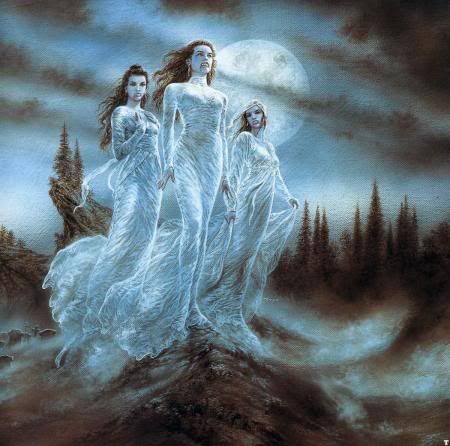
Ethnic Chinese Groups Vampires ( 中华僵尸)

Despite that Egypt and India has been considered the birthplace of the vampire. However , the home of the vampire is actually from Tibet. The Greece's Santorini island is traditionally the most vampire-infested place in the world
Contradict speaking, European Sources claimed that the world's first vampire was from China ! In the past, based on many ancient European sources, it has been firmly believed by many that Vampires originated from China and it was through the silk road it next spread over into India followed by the middle east , then the Mediterranean eventually into the whole of Europe.

Chinese vampires is being known as the Jiang Shi. The types of Vampires in China can varies from the different region , provinces & even Ethnic groups. Chinese Vampires has many variations. The below 2 would some examples.
The Beheaded Vampire

This a vampire whose head has been chop off ! The head flies around during the night constantly seeking for it's own body with the objective of uniting with it's own original body.
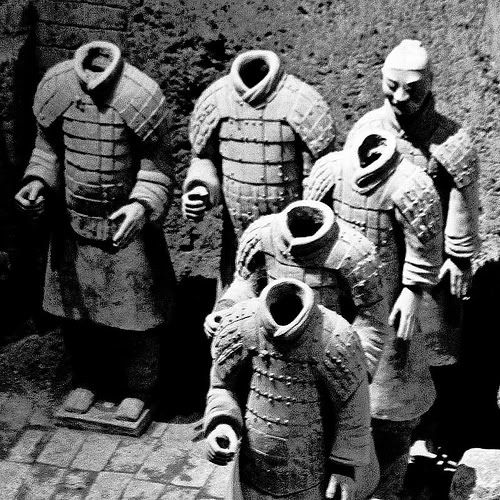
By itself, this flying head is a vampire and is very powerful. Do bare in mind that this beheaded vampire must never reunite with a body. This is because once it does, it will become even far much more powerful and unstoppable than before. You will have to once again separate it from the body and separately destroy the body and head in order to fully destroy it.

Sometimes it can operate separately ! The head is looking for the body and the body is looking for it's own head. However this is not in every case.
There are also cases where which this head will seek for substitute body. In such cases, this substitute will be from a living human.
Blood Demon (血魔)

Very little is known about this demon. What is known is that this demon is far much more superior than the vampire. Vampires in comparison with this Blood Demon (血魔) is considered to be very inferior. Even a gang of vampires cannot defeat one single Blood Demon (血魔) at all !
The Blood Demon (血魔) comprises from the element of blood. It has been said that it was a ill fated human who led a life of misery, Hate, anger, and vengeance whom under some form of encounters that had him transformed into a demon of blood element which is known to be as the Blood Demon (血魔).
When a blood curse from this Blood Demon (血魔) is being casted on it's victim, The victim will become extremely insanely murderous, merciless , brutal, cruel & violent. This victim will have inhumanly behavior like some unleashed beast or monster that cannot be contained. He or She will have a Strong passion for killing and loves the sight of blood.
There are only 56 Ethnic groups which are being classified and categorized as the official and recognized ethnic groups of mainland China. Any other Ethnic groups who do not belong to this 56 are considered to be as unofficial and unrecognized in China.
Let's have a look a few of these various vampires of the different ethnic Chinese groups or different Chinese regions.
Ethnic Manchurian Chinese Vampire
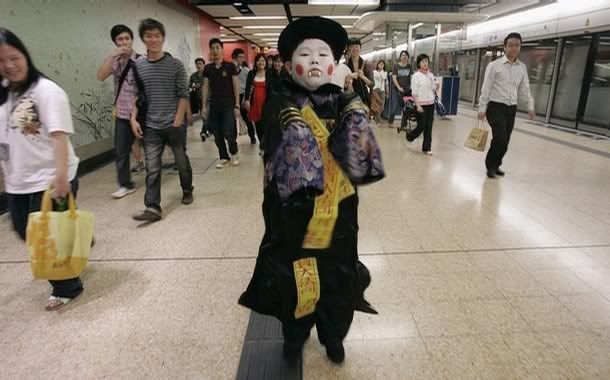
The Most common Vampires known to most of us from the media is the Ethnic Manchurian Chinese Vampires which is very zombie like and it jumps and hops around. They rise from their graves or coffins to find victims. They don't speak human languages as they communicate with one another in their own vampire language. Their body is very stiff and hard. They also do not feel any pain.
Ethnic Mongolian Chinese Vampire
In the province of Inner Mongolia which is part of China as well as it's neighbor, Mongolia, The Mongol Ethnic groups also have their own versions of Vampires as well.
The Mongol's Version of Vampire would be :
Aniukha
Mongolian God of Time
Mongolian Death Worm ( Sometimes considered to be as a Vampire)
Aniukha
This Ethnic Mongolian Chinese vampire, Aniukha is the spirit of a shaman who has used his power to return from the dead. All shamans have returned from the dead once: a ritual death and rebirth is part of their initiation into becoming a shaman.
However, even though the shaman exists on the threshold between life and death, he is expected to use the powers this grants him only for the good of his community. When he uses these powers for his own ends, he can become a fearsome being indeed. Once a shaman has become an Aniukha, the best way to dispose of him is to drive an aspen stake through his corpse and then cremate him
Ethnic Tibetan Chinese Vampires
The below would be a list of some of Vampire types from the Tibet province of China.
1) Bhagavan Vajra Heruka
2) Vajra Krotishaurima
3) Ratna-Herucka
4) Padma-Heruka
5) Dark-Green Ghasmari
6) Kerimas
7) The Lotus Order
8) Dakini
9) Khadro
10) Tibetan Lord of Death
11) Yama the Tibetan Devil
China's province of Tibet and many of the other regions of China is just like India as in that they possesses rich pantheon of supernatural entities and that many of them had some form of vampiric qualities. Much of it was also shared with neighboring nations such as Nepal, Sikkim, Mongolia and many more.
As for the Tibetans, the most visible of the vampiric entities were the so-called Wrathful Deities who appeared in The Tibetan Book of the Dead. This volume described what Tibetan Buddhists believed would be experienced by individuals in the days immediately following their death.
During these days, the deceased generally wandered into an area dominated by karma (the law of consequences) where the higher impulses of the heart gave way to the reasonings of the brain centers. The heart impulses were personified by the Peaceful Deities.
The brain reasonings were personified by the Wrathful Deities. Contemporary writers on Tibetan Buddhism have generally emphasized that the deities were not objectively real, but were the products of the person picturing aspects of the self. However, in traditional Buddhist lore, they were pictured as part of a true supernatural realm.
The Wrathful Deities are also known as the 58 blood-drinking deities, these vampires were figures representing the brain's reason and the deceased's vampire activities, which appeared to the spirit of the recently dead from the eight day onwards whilst they wandered the karma-dominated zones of the afterlife in Buddhist teachings. These include:
Bhagavan Vajra- Heruka, Vajra-Krotishaurima, Ratna-Herucka, Padma-Heruka, Dark-Green Ghasmari, plus Eight Kerimas and The Lotus Order.
For example, the blood-drinking deities of the Vajra order appeared on the ninth day. Here the intellect was represented by Bhagavan Vajra-Heruka. In one hand he held a human scalp. He was embraced by his mother, Vajra-Krotishaurima, whose right hand held a red shell filled with blood that she placed at her son's mouth.
On the next day, one encountered Ratna-Heruka, who appeared like Vajra-Heruka, but was yellow rather than blue. The red Padma-Heruka appeared on the eleventh day. On the twelfth day, the blood-drinking deities of the Lotus Order were encountered. On the thirteenth day, the eight Kerimas were encountered. These deities had the heads of various animals and engaged in different vampiric and ghoulish actions.
One, the Dark-Green Ghasmari, for example, held a scalp filled with blood that she stirred with a dorje (a holy object) then drank from it. Other similar deities appeared daily throughout the fourteenth day. The dying person was given instructions on relating to the deities and prayers to acknowledge them. Individuals were also told to call upon the name of their own guru and their personal deity to sustain them in the loneliness of the after-death realms. It should be noted that these deities did not attack the individual who encountered them, rather they were pictured as general representations of vampiric actions previously committed by the deceased.
Dakini
A terrible and beautiful demi-goddess from the Tibetan tradition. The Dakinis appear to a person during the process of dying, and they are part of the long visionary journey that ensues after physical death and before the deceased chooses to reincarnate.
The Dakinis are ambivalent beings for they appear in frightening and terrible forms to the deceased, but only in order to get the dead person to address issues about his past life and resolve his attachments so he can move on to a higher existence. Many of the Dakinis are vampyric in nature, being described as naked women, sometimes with the heads of animals, who drink blood from chalices made of human skulls.
The Dakinis appear with the “peaceful and wrathful deities,” beings who, like the Dakinis, exhibit ghastly vampyric natures in an attempt to convince the deceased of the impermanency of the flesh.
Tibetan Lord of Death
The Tibetan Lord of Death, who, like the Nepalese Lord of Death and the Mongolian God of Time, subsisted by drinking the blood of sleeping people. This Tibetan god had a green face and a blue-green body. In his clawed hand he held the Wheel of Life.
The Nepalese god had three blood-shot eyes with flames issuing from his eyebrows and thunder and lightning from his nostrils. In his hands, he carried a sword and a cup of blood. He was decorated with human skulls. The Mongolian god, with his prominent canine teeth, was seen amidst a storm over a bloody sea.
There was also a belief in the pursuit of the living by the dead. The dead were cremated, in part, to prevent the soul from attempting to re-enter it. The soul after death, like person before death, became the object of ritual, in this case to keep it from interacting improperly with the realm of the living.
Sikkim Vampire
Sikkim is a neighbor to Tibet and during early eighteenth century, Princess Pedi Wangmo, the monarch's half-sister, plotted to kill her half-brother. With the assistance of a Tibetan doctor, she bled Chador Namgyal to death and drank his blood. She escaped the palace but was soon caught. Both she and her accomplice were killed. It was believed, by some, that after death she became a vampire. Her story was recounted in a fresco in a monastery in Sinon near Mt. Kanchenjunga.
Regions, Provinces and Neighbors' Vampires of China
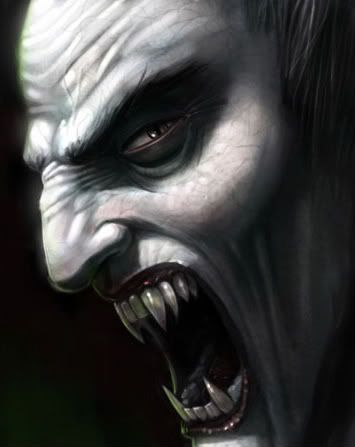
In fact, much of the vampires from India, Nepal and Bhutan can also be found in Tibet. Some of the Tibetan vampires can be found in her neighboring nations or regions.

As for the province of Yunan, much of the Thai (Siamese) and Myanmar ( Burma) vampires can also be found there and likewise some of the Chinese vampires from Yunan province can also be found in Indo-China , Myanmar (Burma) and Thailand ( Siam).
For the province of Xinjiang where the Ugyhur ethnic group are one of the main and biggest groups in that region, it is very likely that the vampires there are mainly those Turkish and Middle eastern Vampires types.

In the province of Heilongjiang which borders Manchuria region, and Mongolia as well as Russia, There, lies many Ethnic Russian Chinese and hence Russian Vampires can also be found near that region of China.
Monday, November 1, 2010
What is a Chinese Vampire All About ? 华人殭屍是什麼一回事?

What is a Chinese Vampire all about? Well, the impression that most of us have is those from the movies and we would often thought that only during the Qing dynasty which was the last dynasty of china that has vampires.
In actual fact, those you see from the movies are Manchurian Vampires to be more exact.
Chinese Vampires is all about that skipping, hopping , jumping or leaping around.
There are many grades of them. The rather lower grade ones, ya , they are the jumping ones something somewhat similar to what you see in the movies. However, the higher grades ones do not.
所谓吸血僵尸是什么?
我们大家都熟习的中华式吸血僵尸,恐怕只限于清朝。
其清朝为中国最后朝代,而电影中所见的吸血僵尸,只限于清朝而已。
有人视为满洲式僵尸。
中华式吸血僵尸, 所谓行走方式为一步一步往前跳。
吸血僵尸分阶级。低级的如电影中一步一步跳。高级才非也。

The Higher grades ones have the ability of transformations in animals etc.. and some even have the ability of elemental summoning or other forms of summoning !
The only way to really have a Chinese Vampire destroyed is by the means of cremation. They are really destroyed once they have been turned into ashes.
As long as they are not turned into ashes, they are never destroyed in the first place. If you want to destroy a Chinese, Do really destroy it and do not allow it a chance to escape and recover.
The reason would that once it fully recovers from the wounds and injuries you have inflected on it, it will be become more and more powerful that before. Defeating and destroying it simply just gets harder and harder each time by then.
The Common point of Vampires of Asia regardless which race or nationality it is from, as long as they are Asians they share a common point which is that they cannot cross water!
I am talking about rivers, lakes , oceans etc.. when i am say that they cannot cross waters. The only way is unless they are being transported across the waters by other means such as boat etc... But if it just crossing of the waters by themselves on their own, they are not able to do so.
高级吸血僵尸, 具有变身成动物等等, 或者操作火水风雷。
毁灭吸血僵尸的唯一方法,只限于焚化烧尸。 化成灰为灭。
不化成灰, 非灭。要毁灭中华式吸血僵尸就要彻底。
如果被打伤而有机恢复痊愈,就成不如前之强化敌军,随着败北次数愈难攻愈不落。
亚洲吸血鬼共同点乃: 无法渡水。
所谓水为川,湖,海。渡水体唯一方式为搭船。否则,渡海不可。
Things that can be used on a Chinese Vampire when exorcising it or protecting yourself would be as follows :
1) Garlic 大蒜
2) Glutinous rice 糯米 (they must not be cooked !)
3) Salt 鹽
The rest not mentioned, leave it to the exorcist master !
The above mentioned 3 are already fundamental and basic enough.
For your information, the Western or the Caucasian way of Vampire exorcism such as Holy water, the Cross, Bible or by the means of piercing the heart of the vampire cannot defeat or exorcist a Chinese Vampire. It is defiantly not applicable and has no effects on the Chinese Vampire.
There are many ways how a Vampire can come into existence. The below would just some out of the many.
1) Victims of Premature burial
2) Improper Death
3) Suicide 自殺
4) Desires to cause trouble to the living after death
5) Coffin exposed to Moonlight
6) Improper Burial Procedures
7) Died of a Violet Death
8) An angry and restless deceased when alive
9) or angry and restless dead on the living for postponing burial
10) A Black Cat that jump over the coffin 黑貓跳過棺材
To simplify how come a person can become into a vampire, it defiantly has something to do with the soul or spirit having troubles living the body when it really had should ! Hence, it became into a vampire, half dead half alive ! A dead not able to be really dead and the living that is not able to be alive.
It is only by the means of cremation that it can in peace finally once it has been turned into ashes. You can keep the ashes if you want to, but keep it properly this time and be very careful of it.
In any event that this ash is stolen, people who knows witchcraft and black magic can have this Vampire brought back to life again from the ashes. However if the ashes is being blown away by the wind and already scattered then this possibility is zero in the first place.
打退僵尸护身法,只唯有以下三点。
1) 大蒜
2) 糯米 (勿煮)
3) 盐
其他方式,由除魔高手处理。
以上三点为基。
西洋吸血鬼打退护身法例如:圣水,十字架,圣书,刺穿心脏,都无法打退中华僵尸 (下文省略成‘’中僵‘)。
中僵产生理由可多:例子如下
1) 过早埋葬
2)死法非自然
3)自杀
4)死后欲复生而在人间捣乱
5)棺材嗮月光
6) 不适合埋葬手续
7)暴力性死亡
8)死者生时持有执着
9)因埋葬日延期,走不下黄泉路
10)黑猫跳过棺材
人成中僵,有关人死后就魂无法脱尸。
结果,成为了半生半死的中僵。
只有焚化烧尸才能够让亡魂安息。
诺欲保管骨灰,要严管,要万分注意。
如果骨灰被夺走,黑魔术及亚述高手能够利用骨灰,让僵尸死而复生。
但如果骨灰被风吹散,死而复生可能性一切归零。
Monday, October 4, 2010
UFO shuts down Baotou Airport in China
An UFO had forced an airport in Baotou in Inner Mongolia to delay the landing of three planes by nearly an hour on Saturday night.The unidentified flying object was seen hovering about four kilometers east of the Baotou airport at 8pm.
AOL news reports, that according to a Baotou airport spokeswoman, "The airport received a notice from the Hohhot Air Traffic Management Bureau about the appearance of a UFO.
"To guarantee security, the aircraft heading for the airport had to land at secondary airports. Otherwise, it may have led to collisions."
[Click here to read full article]
Read more >>
AOL news reports, that according to a Baotou airport spokeswoman, "The airport received a notice from the Hohhot Air Traffic Management Bureau about the appearance of a UFO.
"To guarantee security, the aircraft heading for the airport had to land at secondary airports. Otherwise, it may have led to collisions."
[Click here to read full article]
Thursday, March 25, 2010
Mongolian Death Worm, Real or Fake?
Many have wonder if they exists. this video explains it to you and you form your own conclusion
Wednesday, February 24, 2010
Majestic Allghoi Khorkhoi of the Gobi Desert
By Chris Capps
The Allghoi Khorkhoi, as it is called, must be the most elusive living creature in the whole of the Gobi desert. And despite this, it is still a brightly lit and aggressive creature for those who have the unfortunate fate of encountering it first hand. Those who recognize the disturbing description may know it better as the "Mongolian Death Worm."

Picture is (C) copyright to Unexplainable.net
Roy Chapman Andrews, who is credited as being the inspiration for the character Indiana Jones in the film series of the same name, was the first to record the creature in a book entitled "On the Trail of Ancient Man." In the book Chapman described the creature as the Gobi people had described it, though he was a skeptic at heart and didn't believe there was anything more to the legend than mere stories. Still, those who described it to him, he says, did so down to the most minute of details.
Click here to read full article
Read more >>
The Allghoi Khorkhoi, as it is called, must be the most elusive living creature in the whole of the Gobi desert. And despite this, it is still a brightly lit and aggressive creature for those who have the unfortunate fate of encountering it first hand. Those who recognize the disturbing description may know it better as the "Mongolian Death Worm."
Picture is (C) copyright to Unexplainable.net
Roy Chapman Andrews, who is credited as being the inspiration for the character Indiana Jones in the film series of the same name, was the first to record the creature in a book entitled "On the Trail of Ancient Man." In the book Chapman described the creature as the Gobi people had described it, though he was a skeptic at heart and didn't believe there was anything more to the legend than mere stories. Still, those who described it to him, he says, did so down to the most minute of details.
Click here to read full article
Wednesday, January 27, 2010
10 mysterious cryptids of Asia (Part 2)
by Joan Seth
Here's the second part of the article.
1) Almas

The Almas is a hominid cryptid said to inhabit the Caucasus and Pamir Mountains of central Asia, and the Altai Mountains of southern Mongolia.
Through alleged eyewitness accounts, alleged footprint discoveries and interpretations of long-standing native traditions that have been anthropologically collected.
Experts have declared that they are either just mythological creatures or a relict population of Neanderthals. Others have claimed that they are humans, but with mental disorders and thus discarded from society.
2) Buru

Said to have lived in a certain province of India in the past, the Buru was an aquatic reptile-like cryptid. This reptile was reportedly hunted to extinction by the locals.
Traditional speculation was that the Buru was actually a crocodile. However, the locals describe the Buru as having characteristics such as an elongated neck and a forked tongue. This would place it looking similar to a monitor lizard.
Some experts claim it to be a large species of lungfish instead.
3) The Devil Bird

The Devil Bird or commonly known as the Ulama, is a cryptid that dwells in the Sri Lankan jungles. It is said to emit a blood thirsty scream at night while flying. It is said that its scream is a portent of death.
From local witnesses descriptions, it would closely resemble an owl actually. In 2001, a Spot-Bellied Eagle Owl was captured and was believed to be the mythical Devil Bird in question.
4) Kting Voar

Also known as the Snake Eating Cow, the Kting Voar is a cryptid from Cambodia and Vietnam.
The creature is normally described as a cow-like animal with peculiar twisting horns about 45 centimetres long. The local myths attribute a number of feats to this animal; most particularly, snakes are part of its diet.
Specimens collected and tested were either fake or found out to belong to a normal cow. Many experts do believe in the existence of this animal, and it is actually listed as Endangered in the IUCN list.
5) Ropen

The Ropen is a flying cryptid from the jungles of Papua New Guinea. It is described as featherless and having a tail length of 25% of its wingspan.
Various accounts either describe it as a demonic spirit, a bat-like animal or a Pterosaur. It is believed to be nocturnal and exhibits bioluminescence and thrives on a diet of fish and sometimes human flesh.
Many expeditions to the Papua New Guinea to observe the creature have reported seeing weird flying lights in the jungle at night. Till date, no explanation can be given for such phenomena.
6) Akkorokamui

Akkorokamui is a water cryptid from Japan. It is said to resemble either a giant octopus or a giant squid. Its most striking feature is its red coloured skin.
Although it is said to grow to an enormous size and despite is striking skin colouration, so far, it has only been spotted from far distances.
The locals are understandably afraid of it, as it has been known to capsize boats. They would bring along sickles in their boats to protect themselves from this creature.
7) Veo

The Veo is a cryptid said to dwell on the island of Rinca, Indonesia. It is describe to resemble a scaly ant-eater or pangolin, and has the size of a horse.
No modern pangolins grow to that size, but there was evidence that a large pangolin that grew up to 8 feet lived on the nearby islands of Java and Borneo.
The Veo is described as being a nocturnal, mountain-dwelling creature, subsisting on a diet of ants and termites. Cryptozoologists have suggested that the Veo may represent a relict population of the extinct Manis paleojavanicus.
8) Lake Van Monster
Living in Lake Van in Eastern Turkey, comes the appropriately named Lake Van Monster. Similar to other lake monsters in other parts of the world, it has been described to be either a Plesiosaur or Ichthyosaurus.
In 1997, a man reportedly shot a video of the monster swimming in the lake. After careful examination by experts, many have questioned its authenticity. It is likely to be a hoax.
Skecptics also point out that such a hoax would bring tourist revenue to this region of Turkey.
9) Mande Barung

The Mande Barung is said to inhibit within the remote forests of North East India and Bangladesh.
It is generally described as a large, hairy bipedal hominoid, similar to its cousins the Bigfoot, Yeti, Orang Pendek, etc.
Most scientific experts consider the Mande Barung to be a combination of folklore and hoaxes.
10) Simurgh

The Simurgh is a mythical flying creature similar to a griffin or phoenix. It is commonly found in Persian myths and legends.
The Simurgh has been described as having the foreparts of a dog, the wings and tail of a peacock and the claws of a lion, gigantic enough to carry off an elephant or a whale.
Ultimately, experts believe it to be just a mythological and legendary creature, rather than an actual animal.
Read more >>
Here's the second part of the article.
1) Almas
The Almas is a hominid cryptid said to inhabit the Caucasus and Pamir Mountains of central Asia, and the Altai Mountains of southern Mongolia.
Through alleged eyewitness accounts, alleged footprint discoveries and interpretations of long-standing native traditions that have been anthropologically collected.
Experts have declared that they are either just mythological creatures or a relict population of Neanderthals. Others have claimed that they are humans, but with mental disorders and thus discarded from society.
2) Buru
Said to have lived in a certain province of India in the past, the Buru was an aquatic reptile-like cryptid. This reptile was reportedly hunted to extinction by the locals.
Traditional speculation was that the Buru was actually a crocodile. However, the locals describe the Buru as having characteristics such as an elongated neck and a forked tongue. This would place it looking similar to a monitor lizard.
Some experts claim it to be a large species of lungfish instead.
3) The Devil Bird
The Devil Bird or commonly known as the Ulama, is a cryptid that dwells in the Sri Lankan jungles. It is said to emit a blood thirsty scream at night while flying. It is said that its scream is a portent of death.
From local witnesses descriptions, it would closely resemble an owl actually. In 2001, a Spot-Bellied Eagle Owl was captured and was believed to be the mythical Devil Bird in question.
4) Kting Voar
Also known as the Snake Eating Cow, the Kting Voar is a cryptid from Cambodia and Vietnam.
The creature is normally described as a cow-like animal with peculiar twisting horns about 45 centimetres long. The local myths attribute a number of feats to this animal; most particularly, snakes are part of its diet.
Specimens collected and tested were either fake or found out to belong to a normal cow. Many experts do believe in the existence of this animal, and it is actually listed as Endangered in the IUCN list.
5) Ropen
The Ropen is a flying cryptid from the jungles of Papua New Guinea. It is described as featherless and having a tail length of 25% of its wingspan.
Various accounts either describe it as a demonic spirit, a bat-like animal or a Pterosaur. It is believed to be nocturnal and exhibits bioluminescence and thrives on a diet of fish and sometimes human flesh.
Many expeditions to the Papua New Guinea to observe the creature have reported seeing weird flying lights in the jungle at night. Till date, no explanation can be given for such phenomena.
6) Akkorokamui
Akkorokamui is a water cryptid from Japan. It is said to resemble either a giant octopus or a giant squid. Its most striking feature is its red coloured skin.
Although it is said to grow to an enormous size and despite is striking skin colouration, so far, it has only been spotted from far distances.
The locals are understandably afraid of it, as it has been known to capsize boats. They would bring along sickles in their boats to protect themselves from this creature.
7) Veo
The Veo is a cryptid said to dwell on the island of Rinca, Indonesia. It is describe to resemble a scaly ant-eater or pangolin, and has the size of a horse.
No modern pangolins grow to that size, but there was evidence that a large pangolin that grew up to 8 feet lived on the nearby islands of Java and Borneo.
The Veo is described as being a nocturnal, mountain-dwelling creature, subsisting on a diet of ants and termites. Cryptozoologists have suggested that the Veo may represent a relict population of the extinct Manis paleojavanicus.
8) Lake Van Monster
Living in Lake Van in Eastern Turkey, comes the appropriately named Lake Van Monster. Similar to other lake monsters in other parts of the world, it has been described to be either a Plesiosaur or Ichthyosaurus.
In 1997, a man reportedly shot a video of the monster swimming in the lake. After careful examination by experts, many have questioned its authenticity. It is likely to be a hoax.
Skecptics also point out that such a hoax would bring tourist revenue to this region of Turkey.
9) Mande Barung
The Mande Barung is said to inhibit within the remote forests of North East India and Bangladesh.
It is generally described as a large, hairy bipedal hominoid, similar to its cousins the Bigfoot, Yeti, Orang Pendek, etc.
Most scientific experts consider the Mande Barung to be a combination of folklore and hoaxes.
10) Simurgh

The Simurgh is a mythical flying creature similar to a griffin or phoenix. It is commonly found in Persian myths and legends.
The Simurgh has been described as having the foreparts of a dog, the wings and tail of a peacock and the claws of a lion, gigantic enough to carry off an elephant or a whale.
Ultimately, experts believe it to be just a mythological and legendary creature, rather than an actual animal.
Saturday, January 9, 2010
The Truth Behind the Mongolian Death Worm
Braving violent sandstorms akin to fog with an attitude problem, tent-shredding twisters that blast men off their feet, and an ice river that caves in as their vehicles are crossing, the four men continue on their journey. Their thoughts are haunted by the creature they are tracking, a legendary beast said to be capable of spitting lethal corrosive venom, or killing from a distance with an electrical discharge. This was the quest to find the truth about the Mongolian Death Worm.

The intense experiences just described were critical moments for leading cryptozoologist, author and zoological journalist Richard Freeman, in the expedition he led in 2005. The mission: to track one of the world’s most fearsome cryptids, an animal that strikes terror into the hearts of many Mongolian people with its abhorrent appearance and deadly demeanour – and not just for those who have seen it.
Click here to read full article
Read more >>
The intense experiences just described were critical moments for leading cryptozoologist, author and zoological journalist Richard Freeman, in the expedition he led in 2005. The mission: to track one of the world’s most fearsome cryptids, an animal that strikes terror into the hearts of many Mongolian people with its abhorrent appearance and deadly demeanour – and not just for those who have seen it.
Click here to read full article
Friday, January 8, 2010
10 mysterious cryptids of Asia (Part 1)
by Joan Seth
From the snowy mountains to the deep ocean, many people claim to have witnessed or found evidence pointing to an "animal", which they believe it to be "undiscovered".
The science behind the study of unknown animals is called Cryptozoology. Here is a rundown of 10 mysterious animals that are said to reside in Asia. Part two coming soon.
1)Yeren
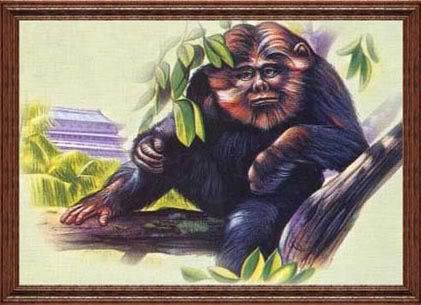
The Yeren (literally means "Wild Man" in Chinese) is said to be a primate-like creature that is found in the Hubei region of China.
Authorities there have records of up to 400 sightings since the 1920s. Since then, the local government has supported the locals on studies of this animal. Funding and support were given to scientists to find any concrete evidence of this animal. Till date, no one has ever done so.
Click here for an video on the Yeren
Click here for an another video on the Yeren
2) Sigbin

The Sigbin is said to come out at night in the Philippines to suck blood from victims' shadows. People have said that it resembles a hornless goat with very long ears and a long tail used as a whip. It is also said to emit a nauseating odor, while walking with its head lowered between its hind legs.
The animal will seek children during Holy Week, to kill for their hearts. According to the locals, there are some powerful people who are able to control these animals and thus able to keep them as pets. If done so, the Sigbin is said to bring wealth and luck to its owners.
3) Bukit Timah Monkey Man
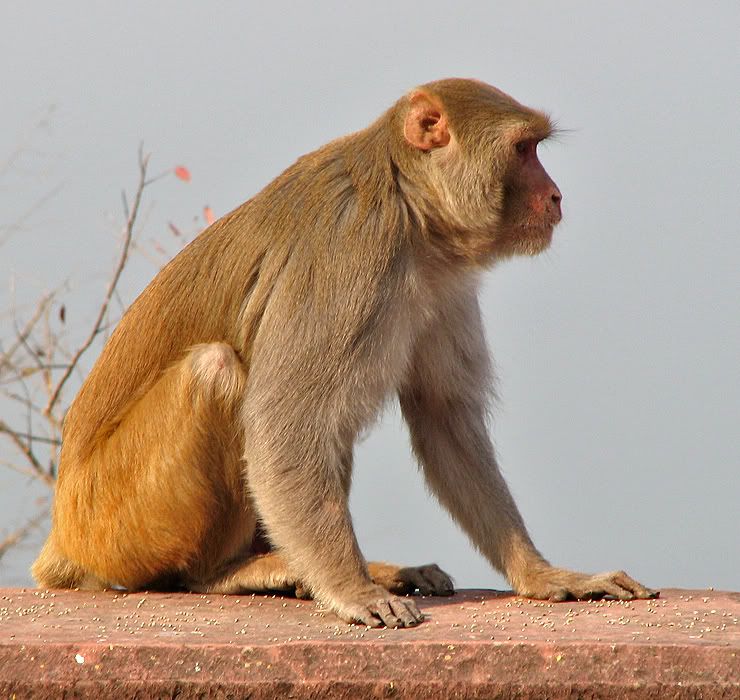
Commonly known as the BTM, this creature is said to reside in the Bukit Timah Nature Reserve in Singapore. Sightings of this animal are very rare. Most of the local accounts come from Malay folklore, sightings by Japanese soldiers during World War II and in recent years, from the local residents.
Recent local sightings state that it mainly comes out at night in the nature reserve, walking around, presumably looking for food. However, experts agree that this has been a case of mistaken identity; instead, the local sightings refer to the Rhesus Macaque Monkeys that dwell commonly in the area.
Click here for an article on the Bukit Timah Monkey Man
4) Con Rit
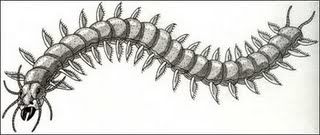
This monstrosity is said to dwell in the seas of the South East Asia region. Throughout the ages there have been numerous sightings of Con Rit. In 1899, there was a report that some sailors observed a sea monster that possessed an immense number of fins, and measured about 45 metres long. It managed to swim and keep pace with the ship for half an hour.
Long ago, people thought that giant squid were the stuff of myths and legends, until real giant squid were captured and documented. What are the odds that a giant centipede resides in the oceans, awaiting discovery by science?
5) Ishii

This is a legendary sea monster that is found in Japan. According to legend, Issie was a white mare which had a little foal, and they lived together on the shore of lake Ikeda. However, one day, the foal was kidnapped by a samurai.
Issie jumped into the lake to find her child, and in her despair she transformed into a giant, saurian beast, which since then frequently surfaces,trying to find her lost child.
This monster is described to be saurian in appearance, which means it looks like a reptile (probably a lizard). Saurians also included extinct dinosaur-like creatures.
6) Ahool
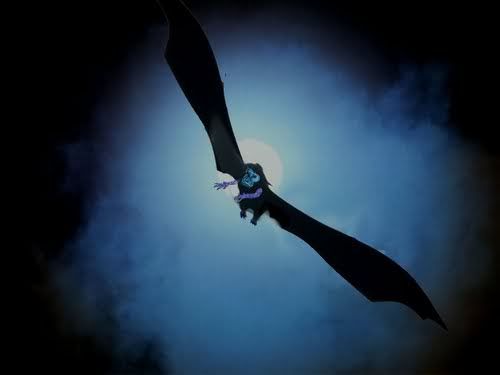
The Ahool is said to be a giant bat-like creature found in Indonesia. Others describe it as a flying primate or a living pterosaur.
It is described as having an ape-like head with large dark eyes, large claws on its forearms, and a body of gray fur. The most intriguing and astounding feature is that it is said to have a wingspan of 3 m. This is almost twice as long as the largest (known) bat in the world, the common flying fox.
Experts believe that the sightings of this creature are actually large Earless Owls.
7) Orang Pendek
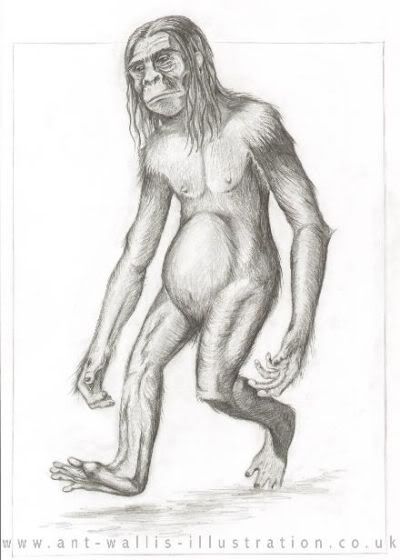
Indonesian for “Short Person”, this is supposedly a primate-like creature that dwells in the forests of Sumatra. It has been sighted and documented for at least the past hundred years. Sightings specify that this creature has short fur and stands up to 1.5 meters tall.
The most number of sightings occur within the Kerinci regency of central Sumatra and the borders of Taman Nasional Kerinci Seblat. Some of the common characteristics of this animal reported by eyewitnesses include that it is largely herbivorous, is short legged with long arms, have been spotted in trees and underwater. Some people even claim to see it fly!
Click here for an article on the Orang Pendek
8) Phaya Naga

The Phaya Naga are said to be serpent-like creatures that live in the Mekong river in Laos. The Naga fireballs are attributed to these creatures.
Local Lao folklore states that the Phaya Naga are protectors of Vientiane and Laos. The myth of the Phaya Naga is incorporated extensively into Lao iconography and in Lao culture.
Experts believe that they could be overgrown giant mottled eels, a yet to be discovered species of eel or just methane.
9) Lake Tianchi Monster

This is the name given to a lake monster that dwells in Heaven Lake in Jilin Province of China and Pyanggang Province in North Korea.
In 1903, an sighting claimed that a large buffalo-like creature attacked 3 people, but after the creature was shot 6 times, it escaped into the water.
Recent reports describe the monster as having a humanoid head attached to a 1.5 meter long neck. It is said to have grey and smooth skin.
Click here for an another video on the Lake Tianchi Monster
10) Mongolian Death Worm
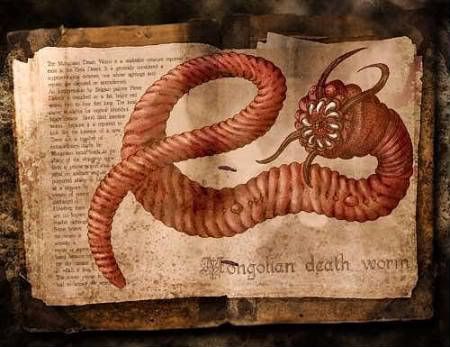
Eyewitnesses accounts describe it as a bright red worm that can grow up to 1.5 meters long. It is difficult to tell its head from its tail, as it has no visible eyes, nostrils or mouth.
The locals also claim that it has the ability to spit sulphuric acid and discharge electricity which can easily kill a human. Touching it directly will also cause instant death. Least to say, the locals are understandably afraid of it, and aim to steer clear of it.
Scientists reject the possibility that such creatures exist, because of the improbably large numbers necessary to maintain a breeding population and because climate and food supply issues make their survival in reported habitats unlikely.
Click here for an another video on the Mongolian Death Worm
Read more >>
From the snowy mountains to the deep ocean, many people claim to have witnessed or found evidence pointing to an "animal", which they believe it to be "undiscovered".
The science behind the study of unknown animals is called Cryptozoology. Here is a rundown of 10 mysterious animals that are said to reside in Asia. Part two coming soon.
1)Yeren
The Yeren (literally means "Wild Man" in Chinese) is said to be a primate-like creature that is found in the Hubei region of China.
Authorities there have records of up to 400 sightings since the 1920s. Since then, the local government has supported the locals on studies of this animal. Funding and support were given to scientists to find any concrete evidence of this animal. Till date, no one has ever done so.
Click here for an video on the Yeren
Click here for an another video on the Yeren
2) Sigbin
The Sigbin is said to come out at night in the Philippines to suck blood from victims' shadows. People have said that it resembles a hornless goat with very long ears and a long tail used as a whip. It is also said to emit a nauseating odor, while walking with its head lowered between its hind legs.
The animal will seek children during Holy Week, to kill for their hearts. According to the locals, there are some powerful people who are able to control these animals and thus able to keep them as pets. If done so, the Sigbin is said to bring wealth and luck to its owners.
3) Bukit Timah Monkey Man
Commonly known as the BTM, this creature is said to reside in the Bukit Timah Nature Reserve in Singapore. Sightings of this animal are very rare. Most of the local accounts come from Malay folklore, sightings by Japanese soldiers during World War II and in recent years, from the local residents.
Recent local sightings state that it mainly comes out at night in the nature reserve, walking around, presumably looking for food. However, experts agree that this has been a case of mistaken identity; instead, the local sightings refer to the Rhesus Macaque Monkeys that dwell commonly in the area.
Click here for an article on the Bukit Timah Monkey Man
4) Con Rit
This monstrosity is said to dwell in the seas of the South East Asia region. Throughout the ages there have been numerous sightings of Con Rit. In 1899, there was a report that some sailors observed a sea monster that possessed an immense number of fins, and measured about 45 metres long. It managed to swim and keep pace with the ship for half an hour.
Long ago, people thought that giant squid were the stuff of myths and legends, until real giant squid were captured and documented. What are the odds that a giant centipede resides in the oceans, awaiting discovery by science?
5) Ishii
This is a legendary sea monster that is found in Japan. According to legend, Issie was a white mare which had a little foal, and they lived together on the shore of lake Ikeda. However, one day, the foal was kidnapped by a samurai.
Issie jumped into the lake to find her child, and in her despair she transformed into a giant, saurian beast, which since then frequently surfaces,trying to find her lost child.
This monster is described to be saurian in appearance, which means it looks like a reptile (probably a lizard). Saurians also included extinct dinosaur-like creatures.
6) Ahool
The Ahool is said to be a giant bat-like creature found in Indonesia. Others describe it as a flying primate or a living pterosaur.
It is described as having an ape-like head with large dark eyes, large claws on its forearms, and a body of gray fur. The most intriguing and astounding feature is that it is said to have a wingspan of 3 m. This is almost twice as long as the largest (known) bat in the world, the common flying fox.
Experts believe that the sightings of this creature are actually large Earless Owls.
7) Orang Pendek
Indonesian for “Short Person”, this is supposedly a primate-like creature that dwells in the forests of Sumatra. It has been sighted and documented for at least the past hundred years. Sightings specify that this creature has short fur and stands up to 1.5 meters tall.
The most number of sightings occur within the Kerinci regency of central Sumatra and the borders of Taman Nasional Kerinci Seblat. Some of the common characteristics of this animal reported by eyewitnesses include that it is largely herbivorous, is short legged with long arms, have been spotted in trees and underwater. Some people even claim to see it fly!
Click here for an article on the Orang Pendek
8) Phaya Naga
The Phaya Naga are said to be serpent-like creatures that live in the Mekong river in Laos. The Naga fireballs are attributed to these creatures.
Local Lao folklore states that the Phaya Naga are protectors of Vientiane and Laos. The myth of the Phaya Naga is incorporated extensively into Lao iconography and in Lao culture.
Experts believe that they could be overgrown giant mottled eels, a yet to be discovered species of eel or just methane.
9) Lake Tianchi Monster
This is the name given to a lake monster that dwells in Heaven Lake in Jilin Province of China and Pyanggang Province in North Korea.
In 1903, an sighting claimed that a large buffalo-like creature attacked 3 people, but after the creature was shot 6 times, it escaped into the water.
Recent reports describe the monster as having a humanoid head attached to a 1.5 meter long neck. It is said to have grey and smooth skin.
Click here for an another video on the Lake Tianchi Monster
10) Mongolian Death Worm
Eyewitnesses accounts describe it as a bright red worm that can grow up to 1.5 meters long. It is difficult to tell its head from its tail, as it has no visible eyes, nostrils or mouth.
The locals also claim that it has the ability to spit sulphuric acid and discharge electricity which can easily kill a human. Touching it directly will also cause instant death. Least to say, the locals are understandably afraid of it, and aim to steer clear of it.
Scientists reject the possibility that such creatures exist, because of the improbably large numbers necessary to maintain a breeding population and because climate and food supply issues make their survival in reported habitats unlikely.
Click here for an another video on the Mongolian Death Worm
Thursday, December 10, 2009
Ghost Town of Mongolia
Planning on spending some time living off the land in Mongolia, we made an unexpected discovery deep in the middle of nowhere.
Base of UFO in Mongolia?
What does this appears to you to be ? A Tentage? some abandoned Soviet Base, A Radar Station or did the Alliens really officially set up a Base in Mongolia?
Friday, November 27, 2009
David Farrier to embark on hunt for Mongolian Death Worm
Two New Zealanders will leave for Mongolia's Gobi Desert next week on an ambitious expedition to find the fabled acid-spitting and lightning-throwing Mongolian death worm.
The worm has never been documented but some Mongolians are convinced it exists. They call it Allghoi Khorkhoi, or "intestine worm" because it resembles a cow's intestine and is about 1.5m long.
They say it jumps out of the sand and kills people by spitting concentrated acid or shooting lightning from its rectum over long distances.
Auckland-based journalist David Farrier, who is organising the expedition, and Motueka-based cameraman Christie Douglas, leave on Tuesday to spend two weeks in the Gobi, trying to verify the worm's existence and making a documentary about it.
They will hire local Mongolians to help them; a guide, translator and cook.
Click here to read full article
Read more >>
The worm has never been documented but some Mongolians are convinced it exists. They call it Allghoi Khorkhoi, or "intestine worm" because it resembles a cow's intestine and is about 1.5m long.
They say it jumps out of the sand and kills people by spitting concentrated acid or shooting lightning from its rectum over long distances.
Auckland-based journalist David Farrier, who is organising the expedition, and Motueka-based cameraman Christie Douglas, leave on Tuesday to spend two weeks in the Gobi, trying to verify the worm's existence and making a documentary about it.
They will hire local Mongolians to help them; a guide, translator and cook.
Click here to read full article
The Search for Ghengis Khan In Mongolia, Ambivalence Greets Efforts to Find the Great Khan's Tomb
According to legend, when Genghis Khan died in 1227 in what is now northern China, his lieutenants wanted to keep the death a secret from the Mongols’ enemies. So as the party accompanying his body made its way back to Mongolia, they killed every person they saw on the way - more than 20,000 - so news of the death wouldn’t spread. Then, when they buried Genghis, they either redirected a river to cover the site, or set horses to trample the ground so no trace would be seen, or killed all the people who buried him, and then killed those killers.
There is no hard evidence that any of those things happened. It may well be that they are after-the-fact embellishments designed to explain a remarkable circumstance of history: the location of Genghis’ tomb remains a mystery.
The Mongol Empire receded almost as fast as it spread -- a fact that may have played a big role in keeping Genghis’ final resting place a secret. For centuries, the people of Mongolia retained a traditional, nomadic lifestyle that left little time to contemplate the distant past. In the 20th century, the Soviet Union dominated Mongolia and, while it modernized the country, it feared Mongolian nationalism, and so discouraged any deep look into the nation’s history.
But the last 20 years have seen a burst of interest in Genghis Khan. Abroad, his reputation as a bloodthirsty barbarian has undergone a substantial revision, thanks in part to books like the bestselling Genghis Khan and the Making of the Modern World. Meanwhile, a new, high-budget museum exhibition is touring the United States that emphasizes some innovations developed by Genghis Khan, including intercontinental commerce, religious pluralism and meritocracy.
Click here to read full article
Read more >>
There is no hard evidence that any of those things happened. It may well be that they are after-the-fact embellishments designed to explain a remarkable circumstance of history: the location of Genghis’ tomb remains a mystery.
The Mongol Empire receded almost as fast as it spread -- a fact that may have played a big role in keeping Genghis’ final resting place a secret. For centuries, the people of Mongolia retained a traditional, nomadic lifestyle that left little time to contemplate the distant past. In the 20th century, the Soviet Union dominated Mongolia and, while it modernized the country, it feared Mongolian nationalism, and so discouraged any deep look into the nation’s history.
But the last 20 years have seen a burst of interest in Genghis Khan. Abroad, his reputation as a bloodthirsty barbarian has undergone a substantial revision, thanks in part to books like the bestselling Genghis Khan and the Making of the Modern World. Meanwhile, a new, high-budget museum exhibition is touring the United States that emphasizes some innovations developed by Genghis Khan, including intercontinental commerce, religious pluralism and meritocracy.
Click here to read full article
Subscribe to:
Posts (Atom)


